CM Sai's Office: ₹626 Cr Disbursed to 66 Lakh Women
Synopsis
The Chhattisgarh Chief Minister's Office announced the 29th instalment of Mahatari Vandan Yojana on 12 July 2026, crediting over ₹626 crore directly to the accounts of more than 66 lakh women beneficiaries, reinforcing the BJP-led government's flagship women's economic empowerment programme.
Key Takeaways
The 29th instalment of Mahatari Vandan Yojana was disbursed on 12 July 2026 by the Chhattisgarh government.
Over 66 lakh women beneficiaries received funds directly in their bank accounts via DBT .
Total amount transferred in this instalment exceeds ₹626 crore .
The scheme was launched in early 2024 as a flagship initiative of CM Vishnu Deo Sai's BJP-led government.
The programme is part of a broader trend of recurring women-centric cash-transfer schemes across Indian states, including Madhya Pradesh's Ladli Behna Yojana .
The Women and Child Development Department of Chhattisgarh is the nodal implementing agency.
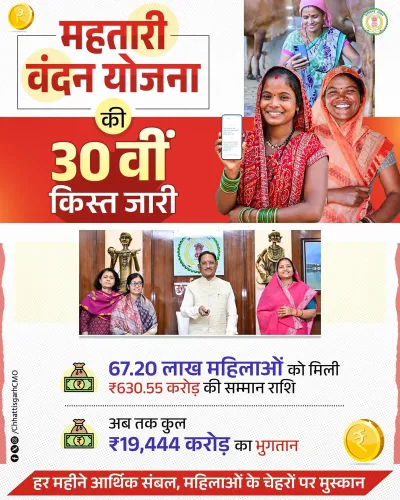
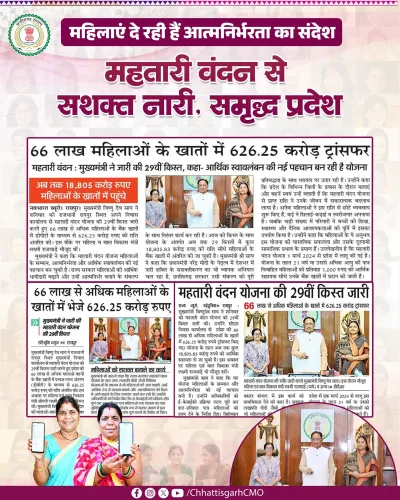
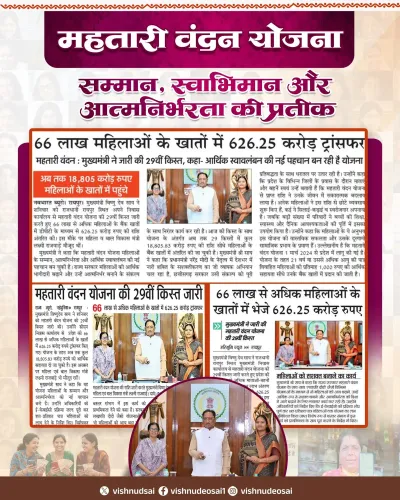
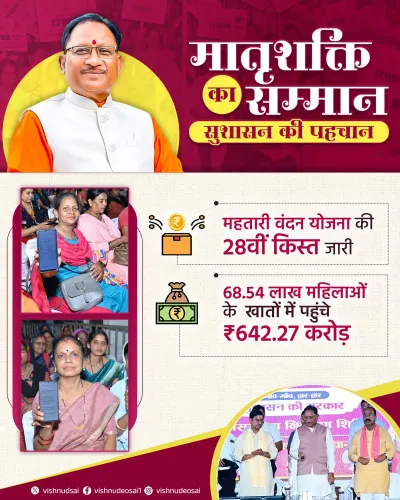
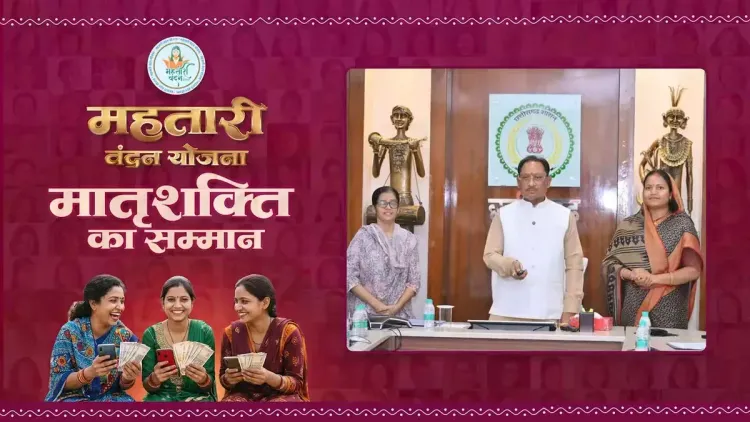
The Chief Minister's Office of Chhattisgarh announced on Sunday, 12 July 2026 that the 29th instalment of the Mahatari Vandan Yojana has been credited directly to the bank accounts of over 66 lakh women beneficiaries across the state, with a total outlay exceeding ₹626 crore.
Context
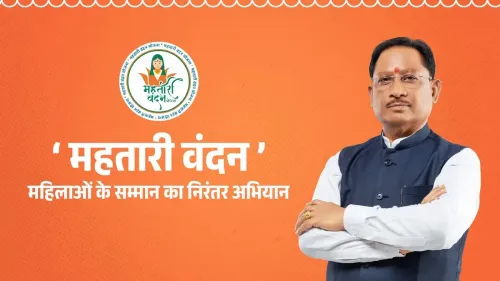
The CMO's post, addressed to Chief Minister Vishnu Deo Sai and the Women and Child Development Department of Chhattisgarh, declared: 'Sashakt matrashakti hi viksit Chhattisgarh ki aadharshila hai' ('Empowered women are the cornerstone of a developed Chhattisgarh'). The disbursement was framed as an act of honour and financial empowerment for the state's mothers and sisters, reinforcing the administration's stated commitment to women's self-reliance.
The funds were transferred through the Direct Benefit Transfer (DBT) architecture, ensuring the money reaches beneficiaries without intermediaries. The government described the instalment as a step toward bolstering women's 'self-confidence, self-reliance, and economic independence.'
Policy Backdrop
Mahatari Vandan Yojana was formally launched in early 2024 as a flagship initiative of the BJP-led Chhattisgarh government following its victory in the 2023 assembly elections. The scheme provides recurring monthly cash transfers directly to eligible women in the state, positioning itself as a tool for long-term economic autonomy rather than one-time relief.
The programme is part of a broader national trend: since 2020, several Indian states have rolled out recurring women-centric cash-transfer schemes using DBT infrastructure. Comparable initiatives include Madhya Pradesh's Ladli Behna Yojana and similar programmes in Jharkhand and Rajasthan, reflecting a competitive political economy around women's welfare entitlements.
Stakeholders and Impact
The scheme's primary beneficiaries are women from rural and semi-urban households across Chhattisgarh, a state where female workforce participation and household consumption levels have historically lagged national averages. With over 66 lakh accounts receiving funds in a single instalment, the programme's reach makes it one of the larger state-level women's DBT schemes in central India.
The Women and Child Development Department of Chhattisgarh (@WCDCgGov) is the nodal agency overseeing implementation. Beneficiary households stand to use the monthly inflows for consumption, savings, or micro-enterprise — outcomes that independent evaluations of comparable schemes in other states have begun to document.
What's Next
With the 29th instalment now credited, attention will turn to the continuity of subsequent monthly disbursements and whether the state government commissions or publishes independent assessments of the scheme's impact on household consumption and female labour-force participation. Any revision to the monthly transfer amount or expansion of the beneficiary base would also be significant markers to watch.
The consistent monthly cadence of disbursements — now in its 29th cycle — signals institutional entrenchment of the programme, making it a structural feature of the state's welfare architecture rather than a campaign-season measure.
Point of View
Making it politically costly to discontinue. The scale of ₹626 crore per month to over 66 lakh women places Chhattisgarh among the more ambitious state-level DBT programmes in central India, inviting comparison with Madhya Pradesh's Ladli Behna model that helped consolidate the BJP's 2023 mandate there. The absence of published independent impact assessments, however, leaves open the question of whether the transfers are translating into measurable gains in female economic participation or merely supplementing household income. As more states adopt similar schemes, the political economy of women's cash transfers is becoming a defining axis of sub-national governance competition.
NationPress
11 Oct 2026
Frequently Asked Questions
What is Mahatari Vandan Yojana in Chhattisgarh?
Mahatari Vandan Yojana is a direct-benefit-transfer scheme launched by the Chhattisgarh government in early 2024 that provides recurring monthly financial support to eligible women in the state to promote economic self-reliance.
How much money was released in the 29th instalment of Mahatari Vandan Yojana?
The 29th instalment disbursed more than ₹626 crore directly into the bank accounts of over 66 lakh women beneficiaries across Chhattisgarh on 12 July 2026.
Who is the Chief Minister overseeing Mahatari Vandan Yojana?
Chief Minister Vishnu Deo Sai of the BJP-led Chhattisgarh government has overseen the implementation of Mahatari Vandan Yojana since the scheme's launch in early 2024.
How does Mahatari Vandan Yojana compare to Madhya Pradesh's Ladli Behna Yojana?
Both are state-level recurring cash-transfer schemes for women delivered via DBT infrastructure; Ladli Behna Yojana in Madhya Pradesh served as an influential model for similar programmes across central Indian states, including Mahatari Vandan in Chhattisgarh.
Which department implements Mahatari Vandan Yojana?
The Women and Child Development Department of Chhattisgarh is the nodal agency responsible for implementing and administering the Mahatari Vandan Yojana.