CM Sai releases 29th instalment of Mahatari Vandan Yojana
Synopsis
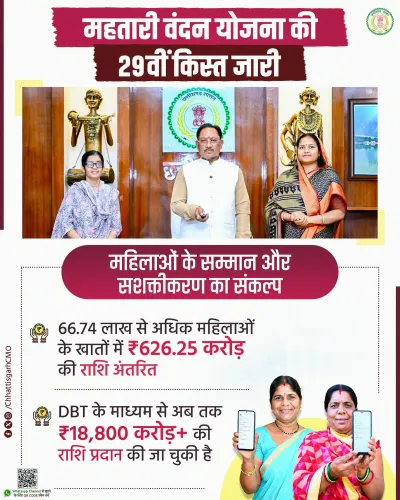
Chief Minister Vishnu Dev Sai on 11 July 2026 released the 29th instalment of Mahatari Vandan Yojana, crediting ₹626.25 crore to over 66.74 lakh women via DBT. Cumulative transfers under the scheme have now crossed ₹18,805.83 crore, making it one of Chhattisgarh's largest active welfare programmes.
Key Takeaways
CM Vishnu Dev Sai released the 29th monthly instalment of Mahatari Vandan Yojana on 11 July 2026 . ₹626.25 crore was transferred directly to the bank accounts of more than 66 lakh 74 thousand women via DBT.
Cumulative disbursements under the scheme have reached ₹18,805.83 crore since inception.
The scheme targets women beneficiaries across Chhattisgarh , with a strong focus on rural and tribal households.
The programme mirrors a national trend of state-level unconditional cash transfers for women, with Madhya Pradesh's Ladli Behna Yojana as a key policy precedent.
Future focus will be on budget allocations for 2026-27 and potential expansion of beneficiary coverage.
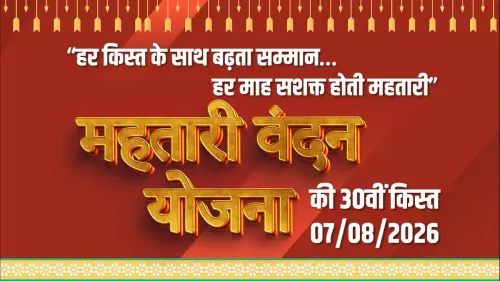
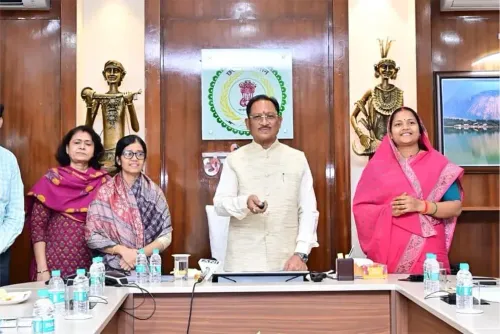
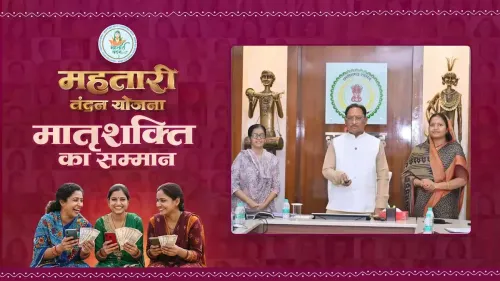
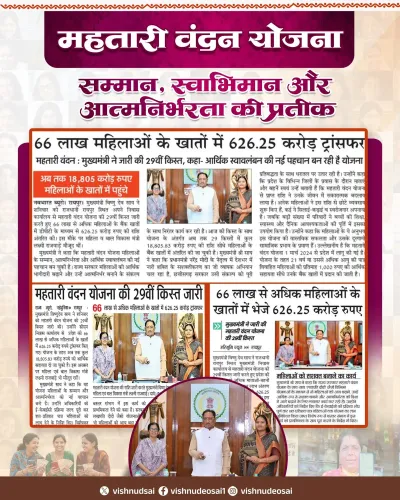
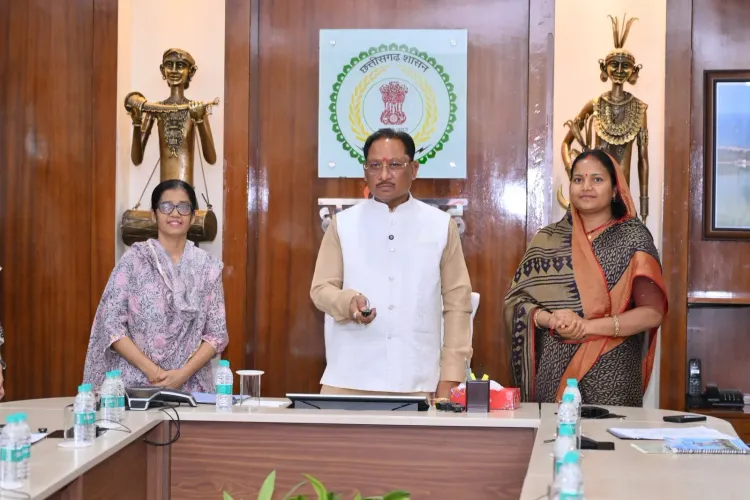
The Chief Minister's Office of Chhattisgarh announced on Saturday, 11 July 2026 that Chief Minister Vishnu Dev Sai released the 29th instalment of the Mahatari Vandan Yojana, transferring ₹626.25 crore directly into the bank accounts of more than 66 lakh 74 thousand women across the state via the Direct Benefit Transfer (DBT) mechanism.
The official post stated: 'महतारी वंदन योजना: हर महीने खुशियों का नोटिफिकेशन' ('Mahatari Vandan Yojana: a notification of joy every month'), adding that the cumulative disbursement under the scheme has now reached ₹18,805.83 crore transferred to mothers and sisters of Chhattisgarh.
Context
The Mahatari Vandan Yojana is a monthly cash-transfer programme launched by the Bharatiya Janata Party government in Chhattisgarh after CM Vishnu Dev Sai was sworn in following the state assembly elections of December 2023. The scheme provides recurring financial support to eligible adult women with disbursements routed through the national DBT infrastructure. Each monthly instalment is positioned as a direct, unconditional transfer aimed at boosting household income for women, particularly in the state's large rural and tribal belt.
Policy Backdrop
The programme fits into a wider national pattern of state governments launching targeted women's cash-transfer schemes since 2022. Madhya Pradesh's Ladli Behna Yojana, introduced in 2023, provided a visible template for neighbouring states, offering monthly support to women beneficiaries and demonstrating the political and administrative viability of such transfers at scale. The underlying delivery architecture — the central Direct Benefit Transfer framework scaled nationally from 2013 onward — enables real-time, verifiable credit to individual bank accounts, reducing leakage and intermediaries.
Both BJP-ruled and opposition-ruled states have adopted variants of this model, reflecting a broad consensus across the political spectrum on unconditional cash transfers as an empowerment tool for women. Chhattisgarh's scheme is among the larger state-level programmes by beneficiary count, covering more than 66 lakh women per monthly cycle.
Stakeholders and Impact
The primary beneficiaries are women from rural and semi-urban households across Chhattisgarh, a state with a substantial tribal population and historically lower female workforce participation rates. Monthly transfers of this scale — averaging roughly ₹938 per beneficiary per instalment based on the figures cited — are intended to provide a baseline income floor, reduce dependence on informal credit, and support consumption at the household level. With cumulative outflows crossing ₹18,805 crore, the scheme represents one of the state government's largest single-line welfare expenditures.
Rural households stand to benefit not only from the direct cash infusion but also from the formalisation of banking relationships that DBT enrolment requires, which can improve access to other financial products over time.
What's Next
Attention will now turn to Chhattisgarh's state budget allocations for 2026-27 and any legislative debate on expanding beneficiary coverage or revising the monthly transfer amount. The government's use of the hashtag #AatmnirbharNari (self-reliant woman) alongside #SamriddhChhattisgarh (prosperous Chhattisgarh) signals that the scheme will remain central to the administration's public messaging. Sustained fiscal headroom and continued DBT infrastructure reliability will be key determinants of the programme's uninterrupted monthly delivery going forward.
Point of View
800 crore, the scheme has become one of the most significant recurring fiscal obligations of the Sai administration. The programme sits within a broader pan-India arc of women-targeted DBT schemes that have reshaped state welfare politics since 2022, making such transfers a near-mandatory feature of incumbent governments' public legitimacy strategies. The key political and fiscal question going into the 2026-27 budget cycle is whether Chhattisgarh can sustain — and potentially expand — this outlay without compressing capital expenditure.
NationPress
10 Oct 2026
Frequently Asked Questions
What is Mahatari Vandan Yojana in Chhattisgarh?
Mahatari Vandan Yojana is a Chhattisgarh government scheme that provides monthly cash transfers directly to eligible women's bank accounts via the Direct Benefit Transfer (DBT) system, aimed at financial empowerment of mothers and sisters across the state.
How much has been released in the 29th instalment of Mahatari Vandan Yojana?
The 29th instalment released on 11 July 2026 amounted to ₹626.25 crore, credited to the accounts of more than 66 lakh 74 thousand women beneficiaries.
What is the total amount disbursed under Mahatari Vandan Yojana so far?
As of the 29th instalment on 11 July 2026, the cumulative disbursement under Mahatari Vandan Yojana stands at ₹18,805.83 crore.
Who launched Mahatari Vandan Yojana and when?
The scheme was launched by the Bharatiya Janata Party government in Chhattisgarh under Chief Minister Vishnu Dev Sai, who took office in December 2023 following the state assembly elections.
Is Mahatari Vandan Yojana similar to Ladli Behna Yojana?
Yes, both schemes follow the same model of unconditional monthly cash transfers to adult women via DBT. Madhya Pradesh's Ladli Behna Yojana, launched in 2023, served as a key policy template that Chhattisgarh and other states have adapted.