Smriti Irani warns of attempts to destabilise India like Bangladesh, Nepal
Synopsis
BJP leader Smriti Irani on November 3, 2026 warned that forces attempting to destabilise India — as they did Bangladesh, Nepal, and Europe — will face a strong reply from every BJP worker, in a post that doubles as a cadre mobilisation signal.
Key Takeaways
Smriti Irani , senior BJP leader, issued a direct warning on November 3, 2026 against attempts to destabilise India.
She specifically cited Bangladesh , Nepal , and Europe as examples of regions allegedly subjected to engineered instability.
Bangladesh witnessed a significant political upheaval and regime change in 2024 , which BJP leaders had flagged as a concern.
The post is directed at the BJP 's ground-level cadre, urging them to be the front-line response to any destabilisation attempt.
The BJP has an established rhetorical pattern of framing domestic political challenges as externally inspired — this post continues that arc.
No specific triggering event in India was identified in the post; opposition reaction is the key development to watch.
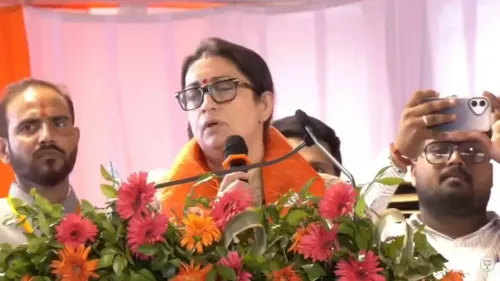
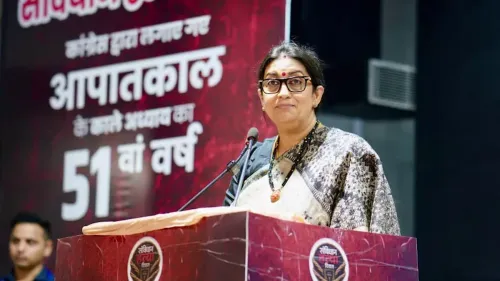
A sharp warning from a senior BJP rank: those who believe India can be rendered unstable — the way Bangladesh and Nepal have been — will face a decisive pushback from every BJP worker on the ground. BJP leader Smriti Irani posted the combative message on X on Tuesday, November 3, 2026, in what amounts to a direct mobilisation call to the party's vast cadre.
Posting in Hindi, Irani wrote: 'जिन्हें लगता है कि वे यूरोप, बांग्लादेश और नेपाल की तरह भारत को भी अस्थिर कर देंगे, उन्हें भाजपा का हर कार्यकर्ता करारा जवाब देगा।' — translated: 'Those who think they will destabilise India the way they have destabilised Europe, Bangladesh and Nepal will get a resounding reply from every BJP worker.'Bangladesh and Nepal as the cautionary frames
Bangladesh — India's eastern neighbour — experienced significant political upheaval and a regime change in 2024, an event that drew considerable concern from BJP leaders at the time. Nepal, to India's north, has long carried a reputation for revolving-door governments and periodic political crises. By placing both countries alongside Europe in the same sentence, Irani is constructing a geographic arc of instability and suggesting India is being targeted by the same forces. This framing is not new to the Bharatiya Janata Party. The party has periodically invoked examples of political turbulence in neighbouring or distant nations to argue that domestic protests or political challenges are externally inspired rather than organically driven. The intended audience here is clearly the party's own cadre — the message is less a diplomatic statement and more a call to arms for ground-level workers.Cadre mobilisation dressed as a warning
Irani's post carries a dual function. On the surface it is a warning directed outward — at unnamed actors presumed to be engineering instability. In practice it is an inward-facing morale signal, reminding BJP workers that their role is to be the first line of response to any such attempt. The phrase 'करारा जवाब' — a 'resounding' or 'fitting reply' — is deliberately active, not defensive. Irani served as a Union Minister holding the Women and Child Development and Minority Affairs portfolios and remains one of the party's most recognisable voices. Her post comes without identifying a specific triggering event, though the broader rhetorical pattern fits moments of perceived social or political tension. Whether opposition parties respond to the comparison — and whether senior BJP leaders amplify the framing — will tell us how far up the party's chain of command this messaging is set to travel.Point of View
She plugs India's current political moment into a regional narrative of vulnerability, implying the ruling party alone stands between order and chaos. The message is calibrated for internal consumption as much as external deterrence. Watch whether senior party figures echo the framing: if they do, it signals a coordinated pre-election or pre-session narrative push rather than a standalone comment.
NationPress
3 Nov 2026
Frequently Asked Questions
What did Smriti Irani say about destabilising India?
Smriti Irani posted on November 3, 2026 that those who think they can destabilise India — the way Bangladesh, Nepal, and Europe have been destabilised — will receive a resounding reply from every BJP worker.
Why did Smriti Irani mention Bangladesh and Nepal?
She used Bangladesh and Nepal as recent regional examples of political instability, suggesting similar forces may be attempting to create unrest in India. Bangladesh experienced a regime change in 2024 that BJP leaders had previously flagged with concern.
Who is Smriti Irani?
Smriti Irani is a senior leader of the Bharatiya Janata Party and a former Union Minister who held the Women and Child Development and Minority Affairs portfolios.
What is the BJP's pattern on raising external destabilisation concerns?
The BJP has periodically framed domestic protests or political challenges as externally inspired attempts at instability, often drawing parallels with unrest in neighbouring or other countries to argue the party is a guarantor of national stability.
What will be the key development to watch after Irani's post?
The main things to watch are reactions from opposition parties and whether other senior BJP leaders amplify or echo the same destabilisation framing in the coming days.