CM Dhami Hails 12 Years of Modi Govt's Security Doctrine

Synopsis
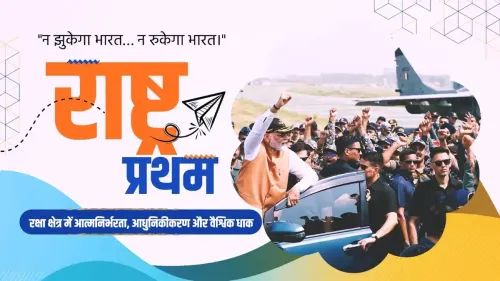
Uttarakhand CM Pushkar Singh Dhami marked 12 years of PM Modi's government by crediting it with a historic shift in India's security doctrine — from reactive rhetoric to decisive military action and defence self-reliance — citing the Surgical Strike, Balakot Air Strike, and Operation Sindoor as milestones.
Key Takeaways
Uttarakhand CM Pushkar Singh Dhami posted on 17 June 2026 under #12YearsOfSurakshitBharat , praising PM Modi's twelve-year security record.
He cited the 2016 Surgical Strike , the 2019 Balakot Air Strike , and Operation Sindoor as proof of India's shift to proactive counter-terror responses.
India now exports defence equipment, reversing its historical status as a major arms importer, according to the post.
The Atmanirbhar Bharat initiative and progressive negative import lists from 2020 onward have driven domestic defence manufacturing growth.
CM Dhami contrasted the current government's decisive responses with what he described as 'only concern and rhetoric' during Congress -era terror incidents.
Border infrastructure development has simultaneously strengthened military logistics and civilian connectivity in frontier states including Uttarakhand .
Uttarakhand Chief Minister Pushkar Singh Dhami on Wednesday, 17 June 2026, credited Prime Minister Narendra Modi's twelve-year tenure with transforming India's national security posture, citing decisive military operations and rapid strides in defence self-reliance as proof of a fundamentally stronger nation.
Context
Posting under the hashtag #12YearsOfSurakshitBharat ('12 Years of a Secure India'), CM Dhami wrote that under PM Modi's leadership India now advances with a 'zero tolerance policy toward terrorism' and sends the world a clear message that 'no compromise will be made on national security.' The post marks the completion of twelve years of the BJP-led government at the Centre, which took office in May 2014.
Dhami specifically named three operations as emblematic of the new security doctrine: the 2016 Surgical Strike across the Line of Control, the 2019 Balakot Air Strike, and Operation Sindoor — describing them collectively as demonstrations of 'the strength, firm resolve and determination of a new India.'
Policy Backdrop
The 2016 Surgical Strike, conducted by the Indian Army in response to the Uri attack, marked a documented shift from India's traditionally restrained approach to cross-border terrorism. The 2019 Balakot Air Strike by the Indian Air Force — targeting a Jaish-e-Mohammed facility in Pakistan following the Pulwama attack — further institutionalised proactive counter-terror responses under the same administration.
On the production side, the government launched the Atmanirbhar Bharat initiative in 2020, which set ambitious targets for indigenous defence manufacturing and reduced import dependence. Progressive negative import lists for defence items have since been notified, pushing domestic industry to fill gaps previously met through foreign procurement. CM Dhami noted that India is today exporting various defence equipment — a reversal from its historical position as one of the world's largest arms importers.
The post also drew a pointed contrast with the Congress era, asserting that terrorist incidents during that period were met only with 'concern and rhetoric,' whereas today's India 'retaliates and makes the world feel its strength.'
Stakeholders and Impact
The beneficiaries of the policy shift span India's armed forces, domestic defence manufacturers, and communities living along the northern and western borders. Accelerated border infrastructure — roads, tunnels, and forward logistics — has improved both military mobility and civilian connectivity in states like Uttarakhand, which shares a sensitive boundary with China and lies close to the Line of Control with Pakistan.
For the domestic defence industry, the indigenisation push has opened new revenue streams and export opportunities, with India now supplying equipment to partner nations — a development Dhami called evidence of how rapidly the country has 'empowered itself in military security and defence self-reliance.'
What's Next
Parliamentary deliberations on the next defence budget and ongoing trials of indigenously developed platforms will be closely watched as indicators of how far the self-reliance agenda has progressed. Upcoming editions of Aero India and DefExpo are expected to showcase new export contracts and platform demonstrations. Politically, the #12YearsOfSurakshitBharat messaging signals that BJP leaders intend to keep national security at the centre of the party's public narrative heading into future electoral cycles.
Point of View
Balakot, and Operation Sindoor into a single twelve-year arc, the party frames national security as a cumulative, leadership-driven achievement rather than a response to discrete crises. The explicit dig at Congress signals that security will remain a live partisan fault line well beyond the anniversary cycle. For a border state like Uttarakhand, where infrastructure and military readiness are tangible local concerns, such messaging carries particular resonance with the electorate.
NationPress
16 Sept 2026
Frequently Asked Questions
What is Operation Sindoor?
Operation Sindoor is a military operation referenced by CM Dhami alongside the 2016 Surgical Strike and 2019 Balakot Air Strike as examples of India's proactive counter-terror posture under PM Modi . Specific operational details remain limited in publicly available records.
What did CM Pushkar Singh Dhami say about India's defence in his post?
CM Dhami said that under PM Modi's twelve-year leadership, India has adopted a zero-tolerance policy on terrorism, conducted decisive military operations including the Surgical Strike and Balakot Air Strike, and transformed into a defence equipment exporter.
What is the Atmanirbhar Bharat defence initiative?
Atmanirbhar Bharat , launched in 2020 , is the government's self-reliance programme that includes targets for indigenous defence production, progressive negative import lists to reduce foreign procurement, and a push to grow India's defence export footprint.
What was the 2016 Surgical Strike?
The 2016 Surgical Strike was a cross-Line of Control operation conducted by the Indian Army in response to the Uri attack , widely regarded as marking India's shift from a purely defensive posture to calibrated, demonstrative military responses to cross-border terrorism.
Is India now exporting defence equipment?
Yes. CM Dhami's post and supporting policy records confirm that India has begun exporting various defence equipment to partner nations — a significant reversal from its earlier position as one of the world's largest arms importers, driven by the Atmanirbhar Bharat indigenisation push.