Giriraj Singh Hails Modi Govt's Zero-Tolerance Terror Policy
Synopsis
Union Textiles Minister Giriraj Singh marked 12 years of the Modi government's security doctrine on 17 June 2026, citing the Surgical Strike, Balakot Air Strike, and Operation Sindoor as proof that India's zero-tolerance stance on terrorism has moved from words to decisive military action.
Key Takeaways
Union Textiles Minister Giriraj Singh posted on 17 June 2026 citing three military operations as evidence of India's counter-terrorism resolve.
The 2016 Surgical Strike was India's first publicly acknowledged cross-LoC operation, conducted after the Uri attack .
The 2019 Balakot Air Strike targeted a Jaish-e-Mohammed facility inside Pakistan following the Pulwama attack .
Singh also highlighted Aatmanirbhar Bharat in defence production as a core pillar of the government's security architecture.
The post was tagged #12YearsOfSurakshitBharat , framing the occasion as a milestone anniversary of the Modi government's security doctrine.
India's defence indigenisation drive aims to reduce import dependence and boost domestic manufacturing of military platforms.
Union Textiles Minister Giriraj Singh on Wednesday, 17 June 2026 invoked three major military operations — the 2016 Surgical Strike, the 2019 Balakot Air Strike, and Operation Sindoor — to argue that India under Prime Minister Narendra Modi has translated its zero-tolerance stance on terrorism from rhetoric into decisive action.
Posting on X under the hashtags #12YearsOfSurakshitBharat and #SecureBharat, Singh wrote: 'Under the leadership of honourable Prime Minister Shri Narendra Modi Ji, India has not confined its zero-tolerance policy against terrorism to mere words, but has converted it into decisive action through the Surgical Strike, the Balakot Air Strike, and Operation Sindoor.'
The post marks what appears to be a 12-year milestone of the Modi government's security doctrine, framing the anniversary as an occasion to highlight a shift from strategic restraint to kinetic response.
Context
The 2016 Surgical Strike came in the wake of the Uri attack in Jammu and Kashmir, when Indian Army units crossed the Line of Control to target terrorist launch pads. It was the first time India publicly acknowledged such an operation, marking a significant departure from its traditional posture of deniability.
Three years later, following the Pulwama attack of February 2019, the Indian Air Force struck a Jaish-e-Mohammed facility in Balakot, deep inside Pakistani territory. That strike was widely seen as a further escalation of India's willingness to carry out cross-border counter-terrorism operations.
Policy Backdrop
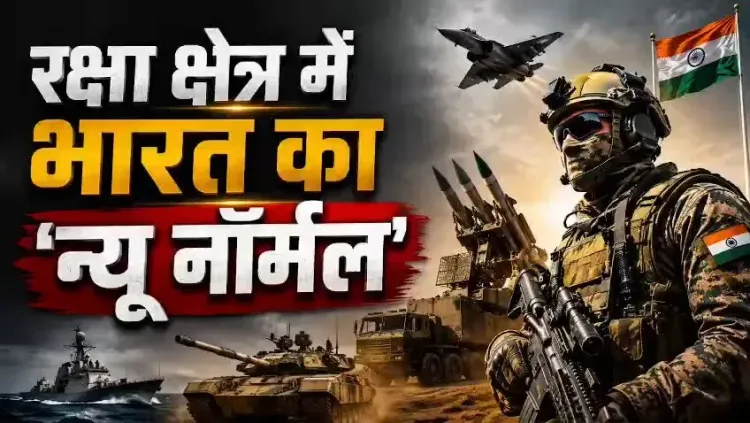
Singh's post also highlighted Aatmanirbhar Bharat in defence production as a pillar of the government's security architecture. Since 2014, India has pursued a policy of reducing import dependence for military platforms — including fighter aircraft, missiles, and ammunition — by boosting domestic manufacturing.
The government has set progressive targets for indigenisation, with the Ministry of Defence periodically releasing positive indigenisation lists that restrict imports of specified items to encourage domestic sourcing. Parliamentary debates on the defence budget have repeatedly underscored this shift in procurement philosophy.
Stakeholders and Impact
The framing of 12 years of a 'Surakshit Bharat' (Secure India) is directed at multiple audiences: the security establishment, the defence manufacturing sector, and the broader electorate. For the Indian Armed Forces, the narrative validates the operational decisions taken under the current political leadership.
For the domestic defence industry, the Aatmanirbhar Bharat emphasis signals continued policy support for indigenisation programmes. Defence public sector undertakings and private-sector partners stand to benefit from sustained government commitment to reducing the roughly 60–65 per cent import dependence that characterised India's defence procurement in earlier decades.
What's Next
The #12YearsOfSurakshitBharat campaign is likely to see further statements from BJP leaders across platforms, consolidating the party's messaging around national security ahead of future electoral cycles. Parliamentary sessions are expected to feature continued debate on the defence budget and the pace of indigenisation milestones.
As India's defence-industrial ecosystem matures, the government's ability to demonstrate tangible progress — in areas such as the indigenous Light Combat Aircraft programme, domestic missile systems, and ammunition self-sufficiency — will determine whether the Aatmanirbhar narrative translates into measurable strategic autonomy.
Point of View
Using milestone anniversaries to reinforce a narrative of decisive leadership. By bundling the Surgical Strike, Balakot, and Operation Sindoor into a single frame, the messaging positions the government as having institutionalised — rather than merely improvised — a muscular counter-terrorism posture. The simultaneous invocation of Aatmanirbhar Bharat signals that the party views defence indigenisation not just as an economic policy but as a sovereignty argument. As the #12YearsOfSurakshitBharat campaign unfolds, it will test whether the security narrative retains its resonance with voters a decade-plus into the Modi government.
NationPress
15 Sept 2026
Frequently Asked Questions
What is Operation Sindoor?
Operation Sindoor has been referenced by BJP leaders including Giriraj Singh as a military counter-terrorism action under the Modi government, alongside the 2016 Surgical Strike and the 2019 Balakot Air Strike, though comprehensive public details about the operation remain limited.
What was the Balakot Air Strike?
The Balakot Air Strike was an Indian Air Force operation conducted in February 2019 targeting a Jaish-e-Mohammed training facility in Balakot , Pakistan, in response to the Pulwama suicide bombing that killed over 40 CRPF personnel.
What was India's 2016 Surgical Strike?
The 2016 Surgical Strike was a cross-Line of Control operation by the Indian Army targeting terrorist launch pads in Pakistan-administered Kashmir, carried out after the Uri attack and publicly acknowledged by the Indian government — a first in modern Indian military history.
What is Aatmanirbhar Bharat in defence?
Aatmanirbhar Bharat in defence refers to India's policy of reducing dependence on military imports by boosting domestic manufacturing of weapons, aircraft, missiles, and ammunition, supported by positive indigenisation lists and increased defence production budgets since 2020 .
Who is Giriraj Singh?
Giriraj Singh is a senior BJP leader, Union Minister of Textiles , and Lok Sabha MP from Begusarai, Bihar , known for his vocal support of the Modi government's national security and Hindu nationalist positions.