Gadkari: India's security doctrine shifted under Modi's 12-year rule
Synopsis
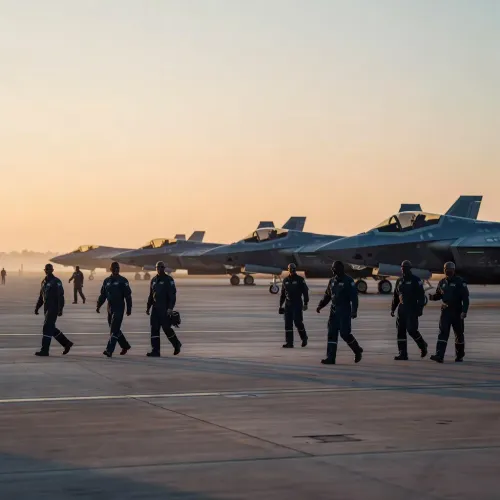
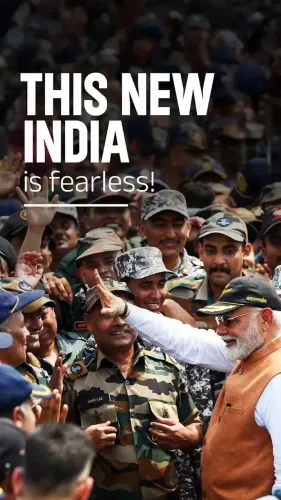
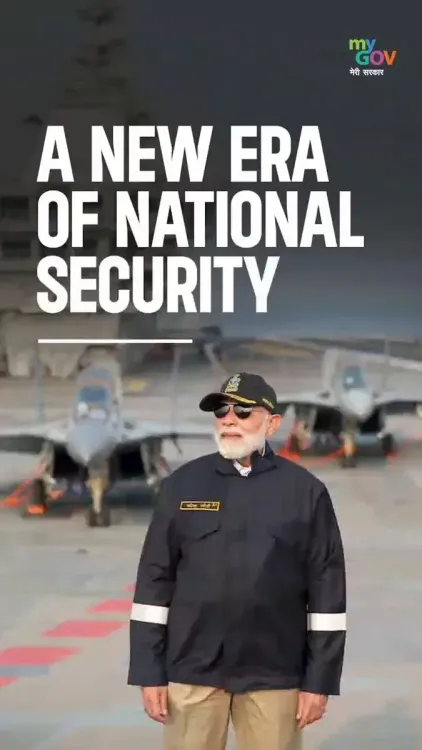
Senior BJP leader and Union Minister Nitin Gadkari has hailed PM Modi's twelve-year tenure as a turning point in India's security doctrine, citing the Surgical Strikes, the Balakot airstrike, and the push for defence self-reliance as evidence of a shift from strategic caution to decisive action.
Key Takeaways
Union Minister Nitin Gadkari posted on June 17, 2026 under #12YearsOfSurakshitBharat , crediting PM Modi's leadership with transforming India's security posture.
He cited the September 2016 Surgical Strikes and the February 2019 Balakot airstrike as defining moments of India's new 'zero tolerance' counter-terrorism doctrine.
The post links defence self-reliance and force modernisation to the government's long-term Viksit Bharat 2047 vision.
The Atmanirbhar Bharat initiative, launched in 2020 , underpins the indigenisation drive in defence production that Gadkari references.
The messaging is part of a coordinated BJP campaign marking twelve years of the Modi government, with senior ministers amplifying the security record.
Union Road Transport and Highways Minister Nitin Gadkari on Wednesday, June 17, 2026, credited Prime Minister Narendra Modi's twelve years in office with fundamentally transforming India's security posture — from one of strategic caution to what he described as 'zero tolerance against terrorism and decisive action.'
Context
Posting under the hashtag #12YearsOfSurakshitBharat (12 Years of a Secure India), Gadkari pointed to two landmark military operations as evidence of the shift: the September 2016 Surgical Strikes across the Line of Control, conducted in the aftermath of the Uri attack, and the February 2019 Balakot airstrike carried out by the Indian Air Force following the Pulwama attack. 'From Surgical Strikes to Balakot, India has redefined its response framework,' he wrote, framing both operations as markers of a new strategic calculus.
The post is part of a broader BJP communication exercise marking twelve years since the party came to power under PM Modi in May 2014, with senior leaders across ministries amplifying the government's record on multiple policy fronts.
Policy Backdrop
The 2016 Uri attack, in which militants killed 19 Indian Army soldiers at an army base in Jammu and Kashmir, prompted India to publicly acknowledge — for the first time — that its special forces had conducted cross-LoC strikes on militant launch pads. That acknowledgement itself was a departure from decades of official ambiguity about such operations.
Three years later, the Pulwama suicide bombing of February 14, 2019, which killed more than 40 Central Reserve Police Force personnel, led to the Balakot airstrike on February 26, 2019 — the first time India used air power to strike a target inside Pakistan since the 1971 war. Gadkari's post invokes both events as pillars of what the ruling party calls a doctrine of 'decisive action.'
On the self-reliance front, the Atmanirbhar Bharat initiative launched in 2020 formally set indigenisation targets for defence production, aiming to reduce India's historically high dependence on imported military hardware. Gadkari linked this effort to the broader vision of Viksit Bharat — the government's long-term goal of achieving developed-country status by 2047.
Stakeholders and Impact
The communities most directly affected by the security transformation Gadkari describes are border communities in Jammu and Kashmir, Ladakh, and other frontier regions, as well as the Indian Armed Forces whose operational mandate and equipment modernisation lie at the heart of the claimed shift. Accelerated border road construction — a portfolio that overlaps directly with Gadkari's own ministry — has been cited by the government as a strategic enabler for faster troop and logistics movement.
For the wider electorate, the messaging reinforces a national-security narrative that the BJP has consistently used as a political differentiator, contrasting its publicly acknowledged retaliatory strikes with the posture of previous administrations.
What's Next
Analysts and opposition parties are likely to scrutinise upcoming defence budgets for concrete indigenisation milestones and the completion timelines of strategic border-road projects — the two pillars Gadkari's post implicitly highlights. Whether the Viksit Bharat security vision translates into measurable benchmarks — from domestic defence production percentages to border infrastructure targets — will determine how the government's twelve-year security record is ultimately judged.
Point of View
Party-wide narrative exercise marking twelve years of BJP rule — with national security serving as the headline achievement. By invoking Surgical Strikes and Balakot in the same breath as Viksit Bharat, the BJP is consciously weaving hard-power credibility into its long-term development pitch, a pairing designed to appeal to both nationalist and aspirational voter blocs. The choice of a road-transport minister — rather than the Defence Minister — to amplify security messaging underscores how central this doctrine has become to the party's collective identity. The real test of the doctrine's institutional depth, however, lies in verifiable indigenisation milestones and border-infrastructure completion rates that remain to be publicly benchmarked.
NationPress
16 Sept 2026
Frequently Asked Questions
What are the Surgical Strikes Nitin Gadkari mentioned?
The Surgical Strikes refer to cross-Line of Control operations conducted by the Indian Army in September 2016 , targeting militant launch pads in Pakistan-administered Kashmir in response to the Uri attack that killed 19 Indian soldiers .
What was the Balakot airstrike?
The Balakot airstrike was an Indian Air Force operation on February 26, 2019 , targeting a terrorist facility in Balakot, Pakistan , carried out after the Pulwama suicide bombing killed more than 40 CRPF personnel on February 14, 2019 .
What is Viksit Bharat and how does it relate to defence?
Viksit Bharat is India's government-stated vision to achieve developed-country status by 2047 ; defence self-reliance and border security are framed as foundational pillars of that goal, alongside economic and social development targets.
What is the Atmanirbhar Bharat initiative in defence?
Launched in 2020 , Atmanirbhar Bharat (Self-Reliant India) set formal indigenisation targets for defence production, aiming to reduce India's dependence on imported military equipment and grow the domestic defence manufacturing sector.
Why is Nitin Gadkari, a road minister, posting about national security?
The post is part of a coordinated BJP campaign — #12YearsOfSurakshitBharat — in which senior party leaders across all ministries are amplifying the Modi government's twelve-year record, with national security as a central theme.