Sitharaman Marks 12 Years of Stronger India Security
Synopsis
Union Finance Minister Nirmala Sitharaman on 17 June 2026 joined the BJP's #12YearsOfSurakshitBharat campaign, highlighting India's transformed security architecture — stronger borders, growing defence exports, indigenisation mandates, and decisive counter-terrorism action — over 12 years of Modi government.
Key Takeaways
Union Finance Minister Nirmala Sitharaman posted on 17 June 2026 under #12YearsOfSurakshitBharat , marking 12 years of the Modi government .
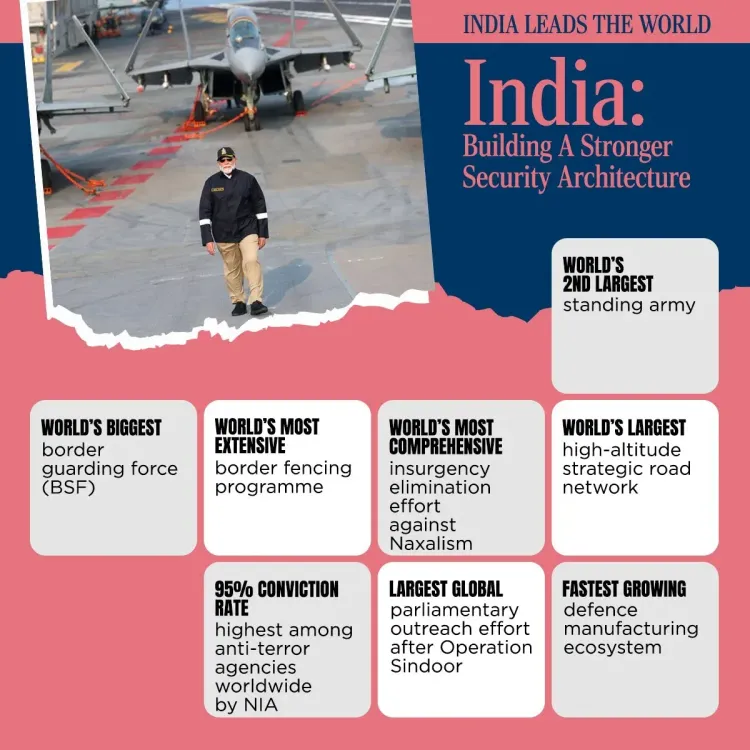
India's defence exports have grown from under USD 1 billion to over USD 2.5 billion annually over this period.
The government has notified four positive indigenisation lists banning imports of specified defence items to boost domestic production.
The Border Roads Organisation has accelerated strategic infrastructure along the LAC and LoC , especially after the 2017 Doklam and 2020 eastern Ladakh standoffs.
The iDEX platform and revised Defence Procurement Procedure (2020) have opened defence contracts to start-ups and private manufacturers.
Parliamentary discussion on the next Defence Budget and new indigenisation or export rules is expected in the coming session.
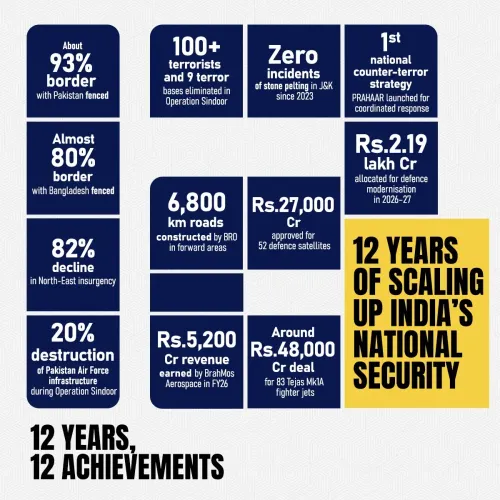
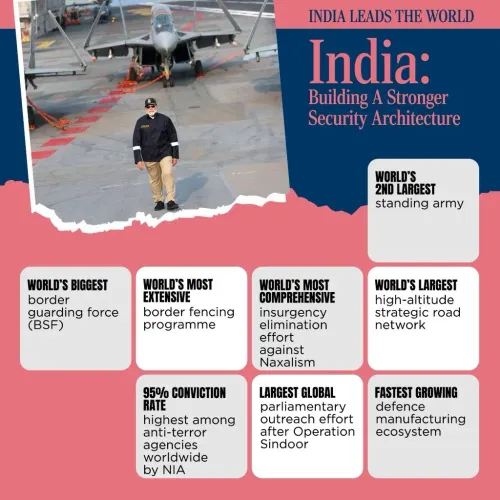
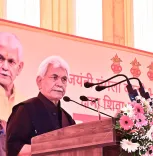
Union Finance Minister Nirmala Sitharaman on Wednesday, 17 June 2026 invoked the hashtag #12YearsOfSurakshitBharat to highlight what she described as a transformed national security architecture, citing stronger borders, modern defence capabilities, decisive counter-terrorism action, and a fast-growing domestic defence manufacturing ecosystem.
Context
The post marks 12 years since the Narendra Modi-led government assumed office in May 2014, a period the ruling BJP has consistently framed as a watershed in India's security posture. Sitharaman, who also holds the portfolio of Minister of Corporate Affairs, added her voice to what appears to be a coordinated party-wide commemoration under the #12YearsOfSurakshitBharat campaign. The phrase 'Surakshit Bharat' translates to 'Secure India' and encapsulates the BJP's messaging around border management, counter-terrorism, and defence self-reliance.
Policy Backdrop
The period in question has seen several landmark shifts in India's defence and security framework. Following the 2016 Uri attack, India publicly acknowledged cross-LoC surgical strikes, marking a decisive change in its counter-terrorism posture. The Defence Procurement Procedure was overhauled in 2020 to mandate higher indigenous content in acquisitions and to introduce the iDEX (Innovations for Defence Excellence) platform for start-up participation.
The government has also notified four positive indigenisation lists that ban the import of specified defence items, directly supporting domestic manufacturers. The Atmanirbhar Bharat initiative, launched in 2020, set ambitious defence production targets and raised FDI caps in the sector, aiming to transform India from a major arms importer into a competitive exporter. Defence exports have risen from under USD 1 billion to over USD 2.5 billion annually over this period. The Border Roads Organisation has simultaneously accelerated construction of strategic roads, bridges, and tunnels along the Line of Actual Control (LAC) and Line of Control (LoC), particularly following the 2017 Doklam and 2020 eastern Ladakh standoffs.
Stakeholders and Impact
The beneficiaries of this policy shift span multiple constituencies. India's armed forces have received higher capital outlays for modernisation, while domestic defence manufacturers — from large public-sector undertakings to private-sector firms and start-ups — have gained preferential access to procurement contracts. Border states such as Arunachal Pradesh, Sikkim, Uttarakhand, Himachal Pradesh, Jammu and Kashmir, and Ladakh have seen accelerated infrastructure development with direct implications for both civilian connectivity and military logistics.
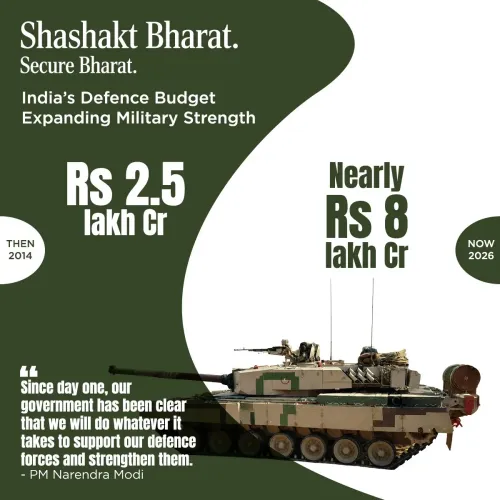
The finance ministry's role in this transformation is significant: it is Sitharaman's budgets that have allocated record capital expenditure to defence year after year, making her post more than symbolic. Her framing of a 'stronger, smarter security architecture' reflects the government's argument that fiscal prioritisation and industrial policy have been as decisive as operational decisions.
What's Next
Attention will now turn to the next Union Budget and the upcoming parliamentary session, where discussions on the Defence Budget, new indigenisation lists, and export facilitation rules are anticipated. The government's ability to sustain the pace of defence export growth and border infrastructure completion — particularly along the LAC — will be the practical test of the 'Surakshit Bharat' narrative that ministers like Sitharaman are now publicly anchoring to a 12-year milestone.
Point of View
Drawing a direct line between fiscal decisions — defence budgets, indigenisation mandates, FDI liberalisation — and strategic outcomes on the border and in counter-terrorism. For a finance minister, framing security achievements as part of her portfolio's legacy is a deliberate signal that economic and defence policy are being presented as a unified project. The post arrives at a moment when the government is expected to table another defence-heavy budget, making the timing as much about forward messaging as backward-looking commemoration. Analysts will watch whether the 'stronger, smarter security architecture' claim is followed by concrete new announcements in the parliamentary session ahead.
NationPress
19 Sept 2026
Frequently Asked Questions
What is #12YearsOfSurakshitBharat?
#12YearsOfSurakshitBharat is a BJP campaign hashtag marking 12 years since the Narendra Modi government took office in May 2014, highlighting achievements in national security, border infrastructure, defence manufacturing, and counter-terrorism.
What has India achieved in defence manufacturing in the last 12 years?
India's defence exports have grown from under USD 1 billion to over USD 2.5 billion annually. The government introduced positive indigenisation lists banning imports of specified defence items, launched the iDEX platform for start-ups, and revised the Defence Procurement Procedure to mandate higher indigenous content.
Why is Finance Minister Nirmala Sitharaman posting about defence and security?
As the minister who tables the Union Budget, Sitharaman's defence-capital allocations have directly funded border infrastructure and military modernisation, making her a central figure in the government's security narrative alongside the defence ministry.
What is Atmanirbhar Bharat in defence?
Atmanirbhar Bharat, launched in 2020, is India's self-reliance initiative that includes defence production targets, positive indigenisation lists banning specified imports, higher FDI caps in the defence sector, and platforms like iDEX to involve private firms and start-ups in defence manufacturing.
What is India's border infrastructure status along the LAC and LoC?
The Border Roads Organisation has significantly accelerated construction of strategic roads, bridges, and tunnels along the Line of Actual Control and Line of Control, with funding and pace increasing notably after the 2017 Doklam and 2020 eastern Ladakh standoffs.