Sitharaman Highlights 12-Year Rise in India's Defence Budget
Synopsis
Union Finance Minister Nirmala Sitharaman on 17 June 2026 marked 12 years of NDA governance by highlighting sustained increases in India's defence budget, citing strengthened military preparedness, modernisation of defence systems, and the push for indigenous manufacturing under Atmanirbhar Bharat.
Key Takeaways
Union Finance Minister Nirmala Sitharaman posted on 17 June 2026 highlighting a significant rise in India's defence budget over 12 years of NDA rule.
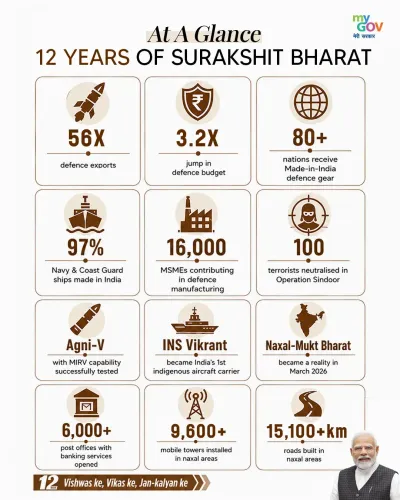
The post was tied to the hashtag #12YearsOfSurakshitBharat , framing defence spending growth as a governance milestone.
Sitharaman previously served as Defence Minister from 2017 to 2019 before taking charge of the Finance Ministry.
Key policy milestones include the Defence Procurement Procedure 2016 and Positive Indigenisation Lists from 2020 banning imports of specified defence items.
The Atmanirbhar Bharat initiative expanded in 2020 to cover defence manufacturing, aiming to reduce import dependence.
The next Union Budget and any supplementary demands for grants will be watched for updated defence allocation figures.
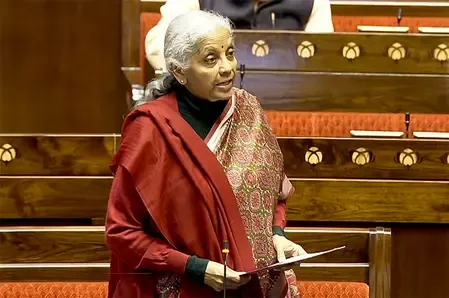
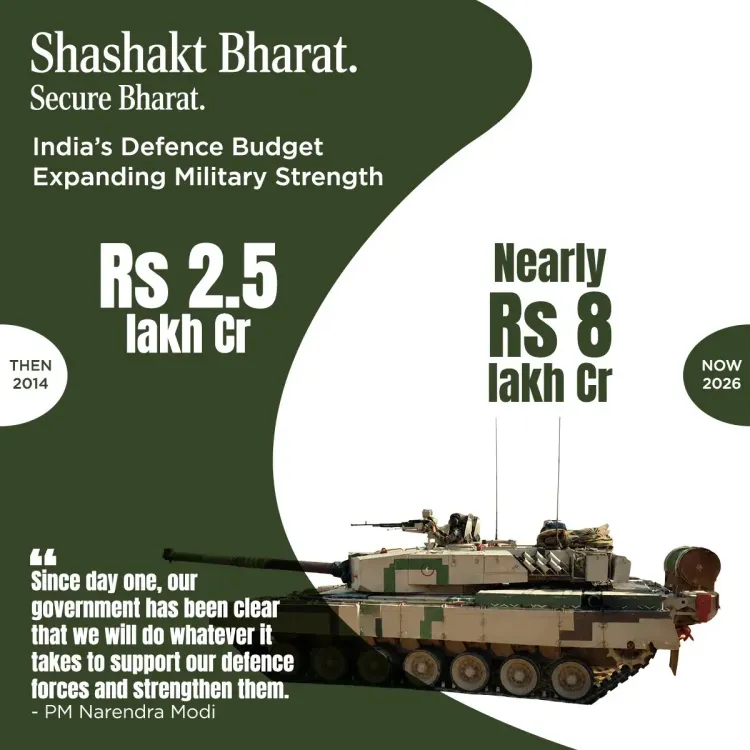
Union Finance Minister Nirmala Sitharaman on Wednesday, 17 June 2026 highlighted a significant increase in India's defence budget over the past 12 years, calling it a reflection of the government's resolve to strengthen military preparedness, modernise defence systems, and build a safer nation.
Context
Posting under the hashtag #12YearsOfSurakshitBharat (12 Years of a Secure India), Sitharaman wrote: 'A significant increase in India's defence budget over the last 12 years depicts our resolve to strengthen military preparedness, modernise defence systems and build a safer, more secure nation.' The post marks what the ruling Bharatiya Janata Party (BJP) is framing as a milestone anniversary of the National Democratic Alliance (NDA) government's tenure in office since 2014.
Sitharaman brings particular authority to the subject: before becoming Finance Minister in 2019, she served as Defence Minister from 2017 to 2019, making her one of the few Union Cabinet members to have directly overseen both defence procurement and budgetary allocations for the armed forces.
Policy Backdrop
The Union Budget 2014-15 marked the beginning of a pattern of sustained nominal increases in defence spending under successive NDA governments. Key structural reforms followed: the Defence Procurement Procedure 2016 revised acquisition categories to accelerate indigenous production, while Positive Indigenisation Lists — notified from 2020 onwards — progressively banned imports of specified defence items to promote domestic manufacturing.
The broader policy umbrella has been the Atmanirbhar Bharat (Self-Reliant India) initiative, which expanded in 2020 to explicitly cover defence manufacturing and import substitution. Together, these measures were designed to reduce India's historically high dependence on foreign arms suppliers while channelling budget allocations towards capital acquisitions, infrastructure, and technology upgrades for the Indian Armed Forces.
The Ministry of Defence oversees both revenue and capital outlays, the latter covering procurement of new platforms, weapons systems, and equipment for all three services and allied organisations.
Stakeholders and Impact
The primary beneficiaries of rising defence allocations are the Indian Army, Navy, and Air Force, which rely on capital budgets for force modernisation amid evolving regional security assessments. Domestically, the indigenisation drive has opened procurement channels for Indian defence manufacturers — both public-sector undertakings and private firms — reducing foreign exchange outflow on arms imports.
Defence industry stakeholders and ordnance establishments have watched successive budgets for signals on the pace of import substitution and the size of capital outlay earmarked for domestic procurement. The consistent upward trajectory in nominal allocations has been cited by the government as evidence of strategic prioritisation, even as analysts have noted that real-terms growth, when adjusted for inflation and currency fluctuations, tells a more nuanced story.
What's Next
The next Union Budget will be the definitive test of whether the nominal upward trend in defence spending continues and at what pace. Parliamentary watchers will also track any supplementary demands for grants during the monsoon session, which can reveal mid-year adjustments to defence allocations. With the #12YearsOfSurakshitBharat campaign framing defence spending as a governance achievement, the political conversation around military modernisation is likely to intensify ahead of the next budget cycle.
Point of View
With defence spending cast as a pillar of the NDA's national-security credentials. Coming from a minister who has held both the Defence and Finance portfolios, the statement carries institutional weight beyond a routine party claim. The emphasis on 'modernisation' and 'military preparedness' also signals that the government intends to keep defence spending as a high-salience issue in the lead-up to the next budget. The broader arc — from indigenisation lists to Atmanirbhar Bharat — suggests a deliberate effort to reframe India's defence posture as one of strategic self-reliance rather than mere expenditure growth.
NationPress
20 Sept 2026
Frequently Asked Questions
How has India's defence budget changed over the last 12 years?
India's defence budget has seen sustained nominal increases since the Union Budget 2014-15 , covering capital acquisitions, infrastructure, and technology upgrades for the armed forces. Finance Minister Nirmala Sitharaman cited this trend on 17 June 2026 as evidence of the government's commitment to military preparedness.
What is the #12YearsOfSurakshitBharat hashtag about?
#12YearsOfSurakshitBharat (12 Years of a Secure India) is a BJP campaign hashtag marking 12 years of NDA governance since 2014, used to highlight achievements across security, defence, and governance.
What is Atmanirbhar Bharat's role in India's defence sector?
Atmanirbhar Bharat , launched in 2014 and expanded in 2020, includes a specific defence manufacturing component that aims to reduce India's dependence on arms imports through Positive Indigenisation Lists and revised procurement procedures favouring domestic suppliers.
Was Nirmala Sitharaman ever India's Defence Minister?
Yes. Nirmala Sitharaman served as India's Defence Minister from 2017 to 2019 before being appointed Union Finance Minister, making her uniquely positioned to comment on both defence policy and budgetary allocations.
What are Positive Indigenisation Lists in India's defence policy?
Positive Indigenisation Lists are government-notified lists, introduced from 2020 onwards, that ban the import of specified defence items and mandate their procurement from domestic manufacturers, supporting the Atmanirbhar Bharat initiative.