Sitharaman marks 12 years of health reforms under NDA govt
Synopsis
Finance Minister Nirmala Sitharaman marked twelve years of NDA health reforms on 14 June 2026, highlighting affordable medicines via Jan Aushadhi and free hospitalisation under Ayushman Bharat's PM-JAY as transformative steps for crores of low-income Indians.
Key Takeaways
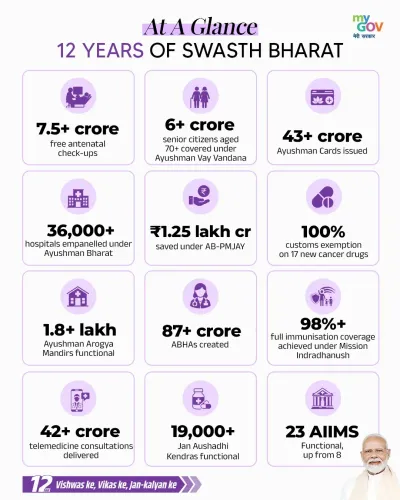
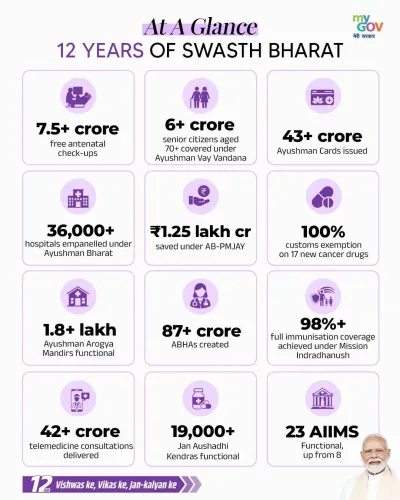
Finance Minister Nirmala Sitharaman posted on 14 June 2026 marking 12 years of NDA health reforms under the #12YearsOfSwasthBharat campaign.
Ayushman Bharat , launched on 23 September 2018 in Ranchi , is the flagship umbrella programme covering insurance and wellness centre components.
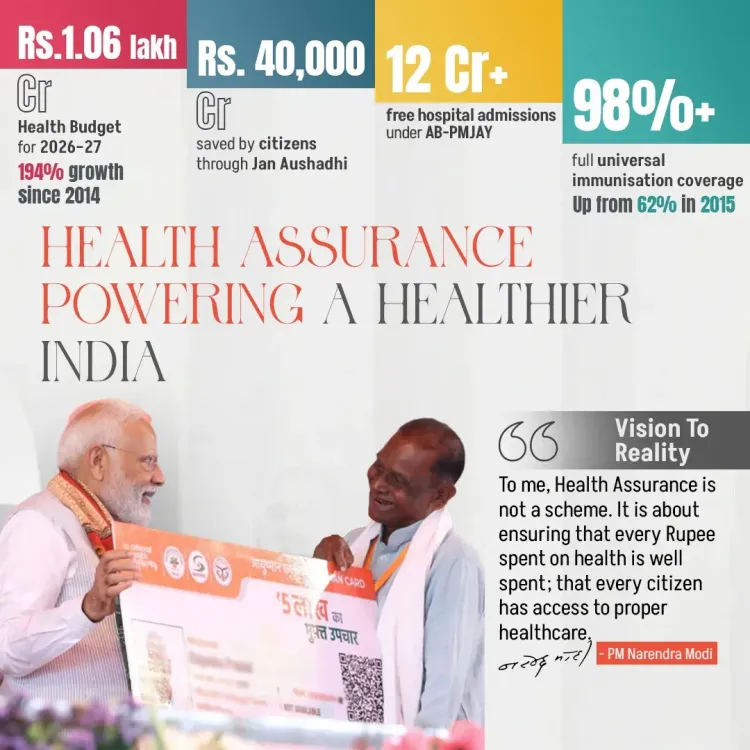
PM-JAY provides up to Rs 5 lakh annual hospitalisation cover per family, targeting low-income households.
The Pradhan Mantri Bhartiya Janaushadhi Pariyojana offers generic medicines at 50–90 per cent lower cost than branded alternatives through Jan Aushadhi Kendras .
The Union Budget 2026-27 health allocation and fresh PM-JAY utilisation data are the next key indicators to watch.
Union Finance Minister Nirmala Sitharaman on Sunday, 14 June 2026 highlighted twelve years of health-sector reforms under the NDA government, citing affordable medicines and free hospital care as cornerstones of a transformed public health landscape for crores of Indians.
Context
Sitharaman's post, tagged #12YearsOfSwasthBharat, marks what the ruling party frames as a milestone in its governance record on healthcare. The message points to two broad pillars: supply-side access to low-cost medicines and demand-side coverage through free hospitalisation, both central to the NDA's welfare narrative since 2014.
The phrase 'Swasth Bharat' ('Healthy India') has been a recurring motif in government communication, linking flagship schemes under a single umbrella brand aimed at low-income and rural households.
Policy Backdrop
The affordable-medicines plank rests chiefly on the Pradhan Mantri Bhartiya Janaushadhi Pariyojana (PMBJP), a network of Jan Aushadhi Kendras that sell quality generic medicines at prices 50 to 90 per cent lower than branded equivalents. The scheme was rebranded and scaled up from 2016 onward with dedicated expansion targets.
Free hospital care is anchored in Ayushman Bharat, formally launched on 23 September 2018 in Ranchi. Its insurance arm, the Pradhan Mantri Jan Arogya Yojana (PM-JAY), provides up to Rs 5 lakh annual health cover per family for secondary and tertiary care. The broader National Health Mission has continued to fund primary health infrastructure throughout this period, consistent with targets set under the National Health Policy 2017.
Stakeholders and Impact
The primary beneficiaries of these schemes are low-income households and rural health seekers who historically faced catastrophic out-of-pocket expenditure. PM-JAY was designed to cover the bottom 40 per cent of India's population by economic vulnerability, targeting families that lacked any form of health insurance.
Generic medicine outlets under PMBJP have expanded access in tier-2 and tier-3 cities as well as rural areas, reducing the financial burden of chronic disease management for millions of households. Both schemes together represent a shift from purely supply-side public health spending toward a mixed model combining insurance coverage with subsidised medicine access.
What's Next
Attention will now turn to the Union Budget 2026-27 health outlay, where any increase in allocations for PM-JAY or PMBJP would signal the government's intent to sustain and deepen the reforms Sitharaman has highlighted. Fresh enrollment and utilisation data under Ayushman Bharat is also awaited, which would provide a clearer picture of on-ground impact as the programme approaches its eighth year. The anniversary messaging underscores that healthcare access is likely to remain a central plank in the BJP's political communication ahead of upcoming electoral cycles.
Point of View
Signalling that 'Swasth Bharat' will continue to anchor the party's welfare narrative. The dual emphasis on medicines and hospitalisation reflects a mature framing of the health agenda — one that addresses both chronic affordability and acute-care costs. Coming ahead of the Union Budget cycle, the messaging also pre-conditions the political conversation around health allocations. The post fits a broader pattern of senior BJP leaders using milestone hashtags to consolidate welfare-scheme recall among voters.
NationPress
22 Sept 2026
Frequently Asked Questions
What is the #12YearsOfSwasthBharat hashtag about?
The hashtag marks twelve years of the NDA government's health-sector initiatives since 2014, including Ayushman Bharat insurance and Jan Aushadhi generic medicine outlets, as highlighted by Finance Minister Nirmala Sitharaman on 14 June 2026.
What is Ayushman Bharat and who does it cover?
Ayushman Bharat is an umbrella health programme launched on 23 September 2018 in Ranchi. Its PM-JAY insurance arm provides up to Rs 5 lakh annual cover per family for secondary and tertiary hospital care, targeting the bottom 40 per cent of the population by economic vulnerability.
How do Jan Aushadhi Kendras make medicines affordable?
Jan Aushadhi Kendras, run under the Pradhan Mantri Bhartiya Janaushadhi Pariyojana, sell quality generic medicines at 50 to 90 per cent lower prices than branded equivalents, reducing out-of-pocket medicine costs for low-income and rural households.
What is PM-JAY and how much cover does it provide?
PM-JAY, or Pradhan Mantri Jan Arogya Yojana, is the insurance arm of Ayushman Bharat. It provides up to Rs 5 lakh per family per year for hospitalisation costs at empanelled public and private hospitals across India.
What health policy announcements are expected next from the government?
The Union Budget 2026-27 health outlay is the key event to watch, along with any fresh Ayushman Bharat enrollment or PM-JAY utilisation data that would indicate the scale of coverage achieved under these schemes.