Sitharaman Highlights 12 Years of NDA Healthcare Reforms
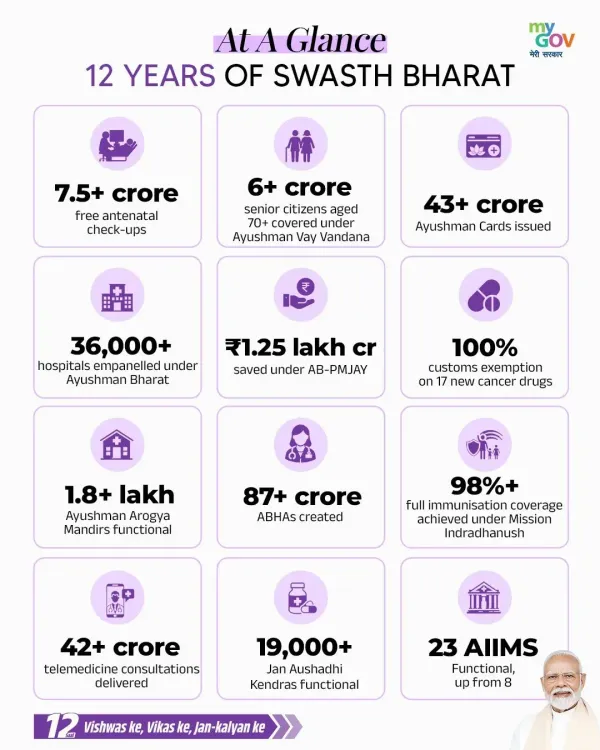
Synopsis
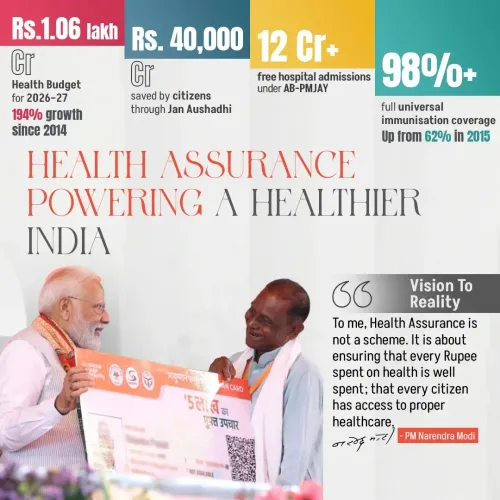
Finance Minister Nirmala Sitharaman marked twelve years of NDA governance on June 14, 2026, crediting PM Modi's government with expanding affordable healthcare access through flagship schemes including Ayushman Bharat and PM-JAY.
Key Takeaways
Finance Minister Nirmala Sitharaman posted on June 14, 2026 , marking 12 years of NDA governance with a focus on healthcare.
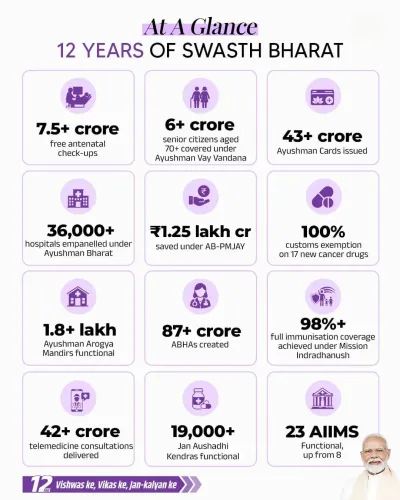
Ayushman Bharat , launched in 2018-19 , is the government's flagship health scheme combining PM-JAY insurance and Health and Wellness Centres .
PM-JAY provides up to ₹5 lakh annual hospitalisation cover to poor and vulnerable families.
The National Health Policy 2017 set targets to reduce out-of-pocket health expenditure for Indian households.
Mission Indradhanush has been expanded since 2014 to boost immunisation in high-risk districts.
Focus now shifts to Union Budget 2026-27 for potential expansion of PM-JAY beneficiary numbers and health allocations.
Union Finance Minister Nirmala Sitharaman on Sunday, June 14, 2026, marked twelve years of the NDA government led by Prime Minister Narendra Modi by highlighting the administration's record on expanding access to affordable healthcare across India.
Context
Sitharaman's post, tagged #12YearsOfSwasthBharat ('12 Years of Healthy India'), comes as the BJP-led NDA completes over a decade in office since May 2014. The post credits the Modi government with improving healthcare access for ordinary citizens, framing the anniversary as a milestone in the administration's social-sector record.
The hashtag reflects a coordinated communication push by the ruling coalition to mark twelve years in government, with senior ministers amplifying achievements across multiple policy domains simultaneously.
Policy Backdrop
The centrepiece of the NDA's health agenda has been Ayushman Bharat, announced in Budget 2018-19 and described at launch as the world's largest government-funded health insurance scheme. It has two pillars: the Pradhan Mantri Jan Arogya Yojana (PM-JAY), which provides up to ₹5 lakh annual hospitalisation cover to identified poor and vulnerable families, and a network of Health and Wellness Centres designed to strengthen primary care at the sub-centre and primary health centre level.
Before Ayushman Bharat, the National Health Policy 2017 replaced the 2002 policy and set explicit targets for reducing out-of-pocket expenditure — a persistent burden on low-income households. The government also expanded Mission Indradhanush from 2014 onwards to raise immunisation coverage in high-risk districts. Together, these measures represented a shift from supply-side infrastructure investment alone toward a mixed model combining insurance coverage with primary-care strengthening.
Successive Union Budgets have raised nominal health allocations, and states have been encouraged to expand beneficiary lists under PM-JAY. The National Digital Health Mission has since been layered onto the same framework to improve beneficiary targeting and reduce leakages in delivery.
Stakeholders and Impact
The primary beneficiaries of PM-JAY are poor and vulnerable households, particularly in rural India, who previously faced catastrophic out-of-pocket spending on hospitalisation. Health and Wellness Centres extend the reach of the scheme to preventive and primary care, reducing dependence on costly tertiary facilities.
State governments have played a co-implementing role, with several expanding coverage beyond the central beneficiary list using their own resources. The scheme's scale means that procurement, hospital empanelment, and claims settlement involve a wide network of public and private healthcare providers across the country.
What's Next
Attention will now turn to the Union Budget 2026-27, where the government's health outlay and any announced expansion of PM-JAY's beneficiary numbers or benefit packages will be closely watched. Sitharaman, as Finance Minister, is the key decision-maker on budget allocations, making her communication on healthcare politically and fiscally significant. Any upward revision to PM-JAY coverage or the Health and Wellness Centre rollout would be a direct extension of the twelve-year arc she is now publicly championing.
Point of View
Coordinated BJP communication blitz marking twelve years in power, with senior ministers simultaneously amplifying sectoral achievements. By anchoring the healthcare narrative to PM Modi personally, the Finance Minister reinforces the party's strategy of centralising credit for welfare delivery ahead of future electoral cycles. The invocation of 'affordable healthcare' is also self-referential for Sitharaman, who as Finance Minister controls health budgetary allocations — making her voice on this subject carry both political and fiscal weight. The timing ahead of Budget 2026-27 deliberations adds a policy signal dimension that goes beyond routine anniversary messaging.
NationPress
19 Sept 2026
Frequently Asked Questions
What is Ayushman Bharat and what does it offer?
Ayushman Bharat is the NDA government's flagship health scheme launched in 2018-19. It has two components: PM-JAY, which provides up to ₹5 lakh annual hospitalisation cover to poor and vulnerable families, and Health and Wellness Centres that strengthen primary care at the grassroots level.
What is PM-JAY and who is eligible?
PM-JAY, or Pradhan Mantri Jan Arogya Yojana, provides up to ₹5 lakh per year in hospitalisation cover to identified poor and vulnerable households across India. Eligibility is determined through socio-economic criteria, and states may expand coverage using their own resources.
What did Nirmala Sitharaman say about healthcare on June 14, 2026?
Sitharaman posted on X stating that over the past 12 years, India has improved access to affordable healthcare under PM Modi's NDA government, using the hashtag #12YearsOfSwasthBharat to mark the anniversary.
What is the National Health Policy 2017?
The National Health Policy 2017 replaced India's 2002 health policy and set explicit targets for increasing public health expenditure and reducing out-of-pocket spending by citizens, forming the policy foundation for subsequent schemes like Ayushman Bharat.
What healthcare announcements are expected in Budget 2026-27?
Observers are watching the Union Budget 2026-27 for potential increases in health allocations and any announced expansion of PM-JAY's beneficiary numbers or benefit packages, which would extend the NDA's twelve-year healthcare agenda.