Vaishnaw Marks 12 Years of Modi Govt's Health Reforms
Synopsis
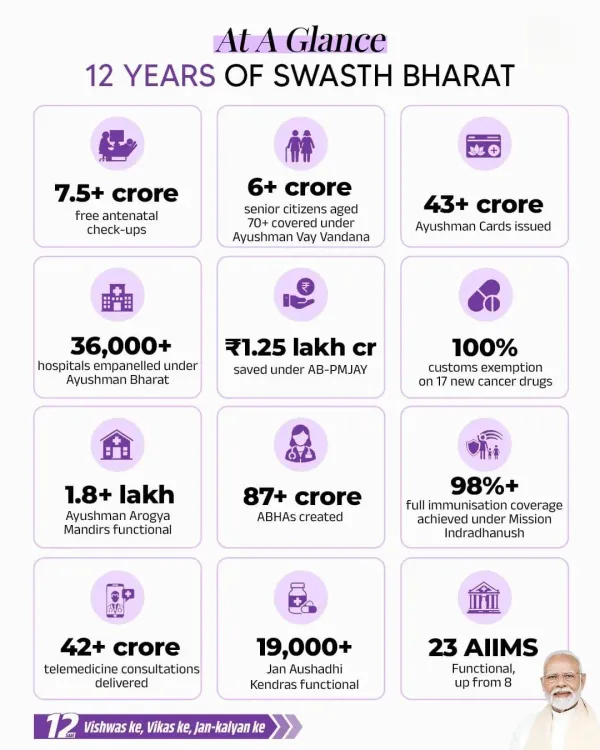
Union Minister Ashwini Vaishnaw marked 12 years of NDA governance on June 14, 2026, highlighting a decade-plus of healthcare reforms anchored by Ayushman Bharat, PM-JAY, Health and Wellness Centres, and the National Health Mission targeting low-income and rural populations.
Key Takeaways
Union Minister Ashwini Vaishnaw posted on June 14, 2026 , marking 12 years of the NDA government's health initiatives under the Swasth Bharat banner.
Ayushman Bharat , announced in 2018-19 , combines PM-JAY health insurance for poor families with a network of Health and Wellness Centres for primary care.
The National Health Policy 2017 set a target of raising public health spending to 2.5 percent of GDP and established the universal health coverage framework.
The Ayushman Bharat Digital Mission added interoperable digital health records to the programme's infrastructure layer.
Primary beneficiaries are low-income households and rural populations who faced high out-of-pocket health costs before these schemes.
Future Union Budget announcements on PM-JAY expansion and new Health and Wellness Centre phases will be the key policy markers to watch.
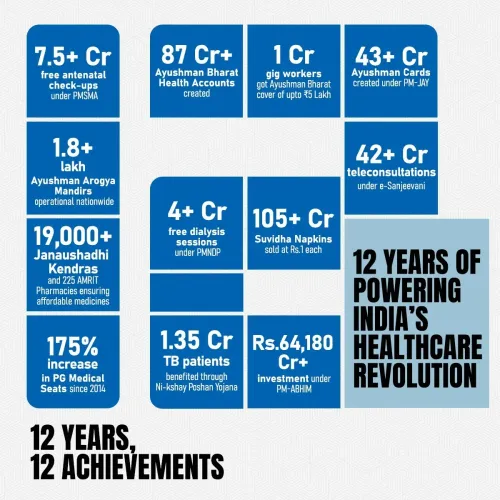
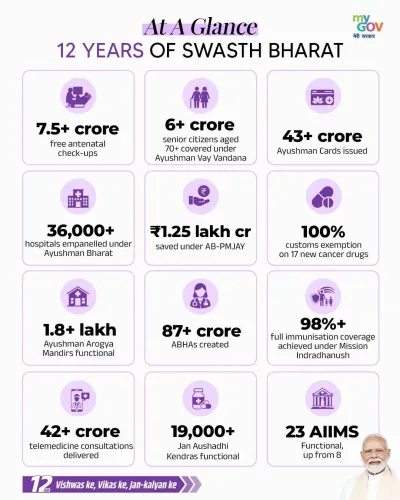
Union Minister Ashwini Vaishnaw on Sunday, June 14, 2026, marked twelve years of the NDA government's healthcare initiatives, celebrating what he called a decade-plus of 'strengthening healthcare, empowering lives, and building a Swasth Bharat.'
Context
The post arrives as the BJP-led NDA government completes 12 years in office, a milestone the party has been commemorating across policy domains. Vaishnaw's message, tagged #12YearsOfSwasthBharat, situates healthcare at the centre of the government's welfare narrative, alongside parallel anniversaries being observed for housing, sanitation, and nutrition programmes.
The phrase Swasth Bharat — meaning 'Healthy India' — has served as an umbrella theme linking multiple central health schemes since 2014, when Prime Minister Narendra Modi took office and reoriented federal health spending toward both demand-side insurance and supply-side primary care infrastructure.
Policy Backdrop
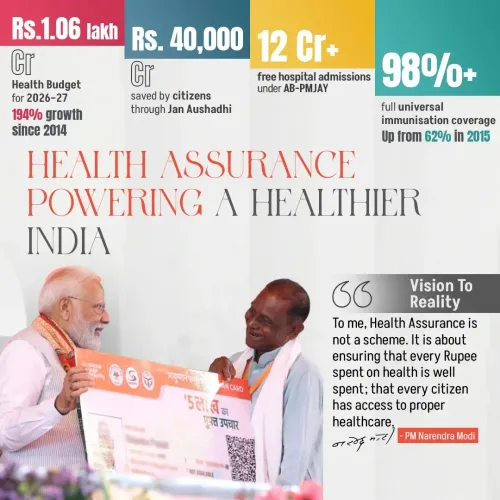
The government's flagship health architecture rests on Ayushman Bharat, announced in the Union Budget 2018-19 as the world's largest government-funded health insurance scheme. It combines the Pradhan Mantri Jan Arogya Yojana (PM-JAY) — which provides cashless hospitalisation cover to economically vulnerable families — with a network of Health and Wellness Centres that upgraded sub-centres into comprehensive primary care facilities.
The National Health Policy 2017 had set a target of raising public health expenditure to 2.5 percent of GDP and laid the framework for universal health coverage. Separately, the National Health Mission has channelled flexible central funding to states for reproductive, maternal, and child health services throughout this period. The Swachh Bharat Mission, launched in 2014, complemented these efforts by addressing sanitation-linked disease burden at the community level.
More recently, the Ayushman Bharat Digital Mission has added a technology layer, creating digital health IDs and interoperable health records to improve continuity of care across public and private facilities.
Stakeholders and Impact
The primary beneficiaries of this policy architecture are low-income households and rural populations, who historically faced catastrophic out-of-pocket health expenditure. PM-JAY's insurance model was designed to reduce this burden by covering secondary and tertiary hospitalisation costs without upfront payments.
Health and Wellness Centres have extended the reach of preventive and primary services — including screening for non-communicable diseases — to communities that previously relied solely on district hospitals. State governments have been co-implementers, with the centre providing matching funds and technical norms while states retain operational flexibility.
What's Next
Observers will watch the next Union Budget and forthcoming state health missions for signals on whether PM-JAY beneficiary limits will be expanded or new phases of Health and Wellness Centre upgrades announced. The government's twelve-year health record is likely to feature prominently in political communication ahead of state assembly cycles, with the Swasth Bharat frame serving as a ready shorthand for welfare delivery. Whether fresh commitments on public health spending as a share of GDP materialise will be the substantive test of the anniversary messaging.
Point of View
With each ministry amplifying its sectoral record. Healthcare is a particularly strategic choice given that Ayushman Bharat remains one of the government's most recognisable welfare brands among low-income voters. The framing of 'empowering lives' rather than citing specific coverage numbers suggests the messaging is deliberately broad, designed for emotional resonance over technical accountability. The anniversary cycle also sets up a political baseline against which any future opposition critique of public health underspending will be contested.
NationPress
24 Sept 2026
Frequently Asked Questions
What is Swasth Bharat and why is it being celebrated in 2026?
Swasth Bharat, meaning 'Healthy India,' is an umbrella theme for the NDA government's health programmes since 2014. The 2026 celebrations mark 12 years of the Modi government's tenure and its healthcare reforms including Ayushman Bharat and the National Health Mission.
What is Ayushman Bharat and who does it cover?
Ayushman Bharat is India's flagship government health programme launched in 2018-19. It includes PM-JAY, which provides cashless hospitalisation cover to economically vulnerable families, and Health and Wellness Centres that offer comprehensive primary care, especially in rural areas.
What is PM-JAY and how does it help poor families?
PM-JAY, or Pradhan Mantri Jan Arogya Yojana, is the insurance component of Ayushman Bharat. It covers secondary and tertiary hospitalisation costs for low-income households without requiring upfront payments, reducing catastrophic out-of-pocket health expenditure.
What are Health and Wellness Centres in India?
Health and Wellness Centres are upgraded sub-centres under Ayushman Bharat that provide comprehensive primary healthcare, preventive services, and non-communicable disease screening, particularly for rural and underserved communities.
What did Ashwini Vaishnaw say about India's healthcare progress?
Union Minister Ashwini Vaishnaw posted on June 14, 2026, that 12 years of NDA governance had focused on 'strengthening healthcare, empowering lives, and building a Swasth Bharat,' using the hashtag #12YearsOfSwasthBharat to mark the anniversary.