CM Samrat Choudhary shares Modi's 'Power to Empower' vision
Synopsis
Bihar CM Samrat Choudhary amplified PM Modi's assertion that 25 years of connected governance — from Gujarat to New Delhi — has lifted 50 crore Indians out of poverty, framing the arc as 'Power to Empower' and invoking the Bihar ideal of sushasan, or good governance.
Key Takeaways
Bihar Chief Minister Samrat Choudhary shared a statement attributed to PM Narendra Modi on November 3, 2026 .
The post claims 50 crore Indians have been lifted out of poverty through sustained governance since 2001.
Modi traces the effort back 25 years to his tenure as Gujarat Chief Minister , framing national and state policy as a single continuum.
Key Central schemes cited in the policy lineage include Jan Dhan Yojana , Ujjwala Yojana , and Swachh Bharat Mission .
The term sushasan (good governance) used in the post carries strong political resonance in Bihar's electoral history.
The NITI Aayog Multidimensional Poverty Index update will be the next major data checkpoint for the 50-crore claim.
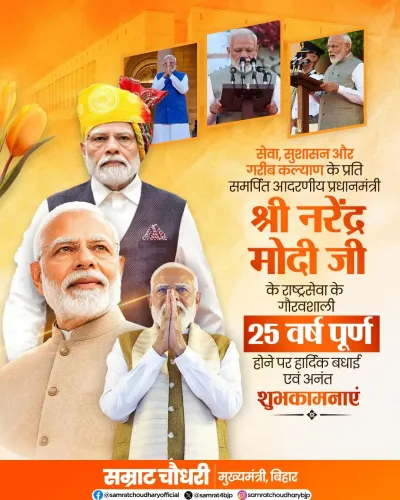
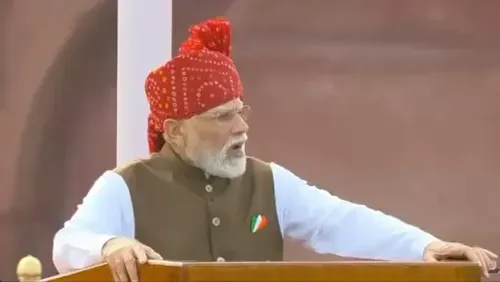
Twenty-five years of unbroken governance effort — that is the arc Bihar Chief Minister Samrat Choudhary drew on Tuesday, November 3, 2026, when he shared a pointed statement attributed to Prime Minister Narendra Modi, invoking a landmark claim: 50 crore Indians have been lifted out of poverty through years of deliberate, connected policymaking.
The post, shared from CM Choudhary's official handle, quotes the Prime Minister directly: 'जो काम मैंने 25 साल पहले शुरू किया था, वह आज भी अनवरत जारी है।' ('The work I began 25 years ago continues uninterrupted even today.') The Prime Minister frames this continuity under the phrase 'Power to Empower' — a formulation that ties his tenure as Gujarat Chief Minister from 2001 to his current national leadership, presenting the two chapters as a single unbroken mission.
From Gujarat to Raisina Hill: the 25-year governance thread
Modi's reference to work begun a quarter-century ago points squarely to his state-level experiments in Gujarat, where early iterations of direct service delivery and infrastructure-led empowerment were tested. When he moved to New Delhi in 2014, those state-scale models scaled up dramatically. Pradhan Mantri Jan Dhan Yojana brought banking access to previously unbanked households. Ujjwala Yojana put clean cooking gas in kitchens that had never had it. Swachh Bharat Mission attacked the sanitation deficit that traps the poorest in cycles of illness and indignity.
The statement's framing — 'one link at a time, one dream at a time' — reflects the logic of multidimensional poverty reduction: no single scheme breaks poverty, but an interlocking chain of financial inclusion, clean energy, sanitation, and direct benefit transfers can. That is the policy architecture the BJP has repeatedly cited as the engine behind poverty-reduction numbers.
Why Bihar's Chief Minister is making this argument now
For Samrat Choudhary, amplifying this message serves a dual purpose. Bihar has historically ranked among India's most economically challenged states, and connecting local governance to national outcomes is a recurring rhetorical and political strategy for BJP leaders in the state. The post signals alignment: what the Centre has built, Bihar is implementing. It is also a reminder to voters that the welfare architecture reaching their villages traces back to a leadership philosophy, not a random policy event.
The post quotes the Prime Minister using the word sushasan — good governance — a term that carries particular political weight in Bihar, where it was a central campaign promise for years and remains a yardstick by which administrations are judged.
The 50-crore figure and what rides on it
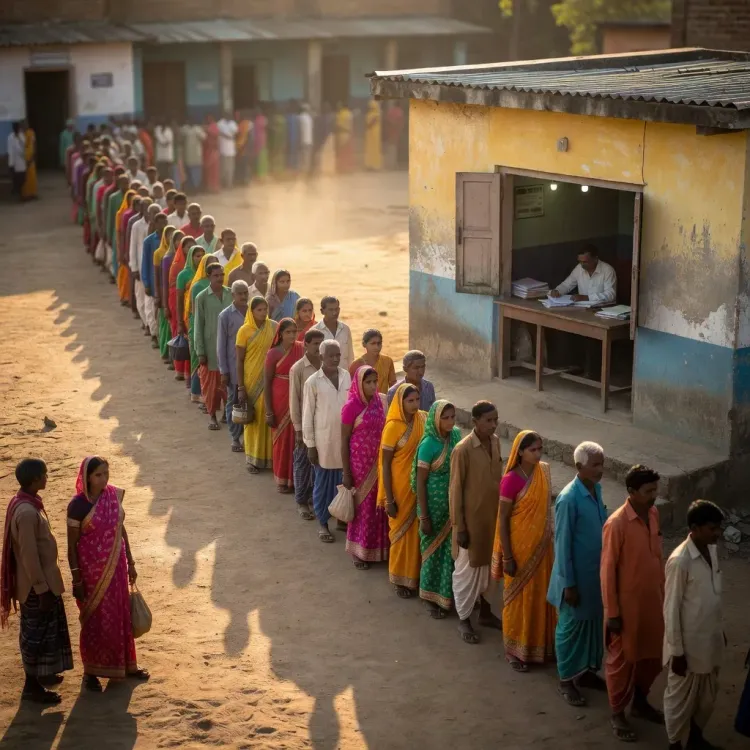
The most consequential number in the post is the claim that 50 crore Indians have exited poverty. That is roughly 40 percent of the country's population — a figure of historic proportions if verified. Government messaging has increasingly leaned on multidimensional poverty index data, which tracks deprivations across health, education, and living standards simultaneously, rather than income alone. The next authoritative update from NITI Aayog's Multidimensional Poverty Index will be the real test of this claim's durability.
If the numbers hold, India's poverty story becomes one of the most consequential development narratives of the early 21st century. If they are contested, the political stakes for that framing are equally high — and opposition parties have already begun probing the methodology behind such headline figures.
For now, the message from Patna is clear: the chain holds, the work continues — and Bihar intends to be counted among the links.
Point of View
Long-run outcome rather than a short-cycle policy win. The 50-crore figure, however, will face mounting scrutiny as opposition parties and independent researchers demand transparent, comparable data — making the next NITI Aayog report a potential political flashpoint. For Bihar specifically, the sushasan framing is a reminder that welfare delivery remains the state's defining electoral currency.
NationPress
3 Nov 2026
Frequently Asked Questions
What did Bihar CM Samrat Choudhary post about PM Modi?
CM Samrat Choudhary shared a statement attributed to PM Narendra Modi claiming that 50 crore Indians have been lifted out of poverty through 25 years of uninterrupted governance, describing the philosophy as 'Power to Empower' and equating it with sushasan, or good governance.
What does 'Power to Empower' mean in Modi's governance context?
'Power to Empower' is a phrase used by PM Modi to describe his governance approach — connecting individual citizens to state services through an interlocking chain of welfare schemes, tracing back to his early work as Gujarat Chief Minister in 2001.
Have 50 crore Indians really come out of poverty under Modi?
The claim of 50 crore Indians exiting poverty is part of official government messaging, with the BJP pointing to multidimensional poverty index data covering health, education, and living standards. The precise figure has not been independently verified and will be tested in the next NITI Aayog Multidimensional Poverty Index update.
Which central welfare schemes are linked to poverty reduction in India?
Key schemes in the government's poverty-reduction narrative include Pradhan Mantri Jan Dhan Yojana for financial inclusion, Ujjwala Yojana for clean cooking fuel access, and Swachh Bharat Mission for sanitation — all launched after 2014.
Why is sushasan an important term in Bihar politics?
Sushasan, meaning good governance, has been a central electoral promise in Bihar for decades and is the benchmark by which successive state administrations are judged by voters, making its invocation politically significant beyond routine rhetoric.