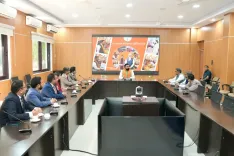
CM Samrat Choudhary shares Modi's 'Power to Empower' vision at NDTV World Summit
Synopsis
Bihar CM Samrat Choudhary amplified PM Modi's 'Power to Empower' address at the NDTV World Summit 2026, framing India's rise as a civilisation-backed guarantee of global stability and linking it to the Viksit Bharat@2047 national vision.
Key Takeaways
Bihar CM Samrat Choudhary shared PM Modi's address from the NDTV World Summit 2026 on October 22, 2026 .
PM Modi's core message: 'Power to Empower' — India's strength benefits all of humanity, not just itself.
The PM framed India's policies as guided by civilisational values and centuries of experience, positioning the country as a global stabiliser.
Viksit Bharat@2047 — the goal of a fully developed India by independence's centenary — was cited as an expression of this outward-facing philosophy.
The framing deliberately counters zero-sum narratives about India's rise, presenting it instead as a global public good.
Bihar Chief Minister Samrat Choudhary amplified a defining foreign-policy statement by Prime Minister Narendra Modi on Thursday, October 22, 2026 — quoting the PM's address at the NDTV World Summit 2026 to argue that a stronger India is, by its very nature, a gift to the world.
Sharing the PM's words verbatim, CM Choudhary posted: 'Bharat ka mool mantra hai Power to Empower!' — 'India's core principle is Power to Empower!' The full quote makes a sweeping claim: that India's policies and decisions are driven by centuries of civilisational experience, making the country 'a guarantee of stability and an assurance of continuity.'
The 'Power to Empower' doctrine explained
The phrase is more than a slogan. It reframes India's rise not as a challenge to the existing world order but as an asset to it — a deliberate contrast to the zero-sum framing that often dominates great-power discourse. Prime Minister Modi has consistently woven this thread through multilateral addresses, positioning India's civilisational continuity as a stabilising force in an era of geopolitical turbulence.
The argument rests on a specific logic: that India's foreign-policy instincts are not reactive or ideological but are rooted in values tested across millennia. Stability. Continuity. Shared benefit. It is the same framework the PM deployed in his 2022 Independence Day address from the Red Fort, when he first formally outlined the Viksit Bharat@2047 roadmap — the national vision to transform India into a fully developed economy by the centenary of its independence.
Viksit Bharat as a global promise, not just a domestic goal
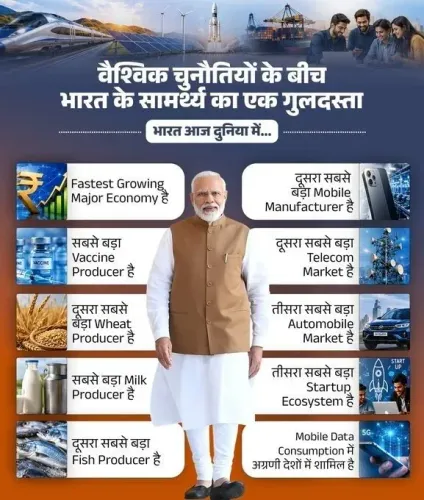
What is notable in this iteration of the vision is the outward-facing framing. Viksit Bharat — Developed India — is typically discussed in domestic terms: manufacturing capacity, infrastructure, per-capita income. Here, the PM presents it as a global commitment. The stronger India becomes, the quote argues, the more humanity benefits. It is a deliberate bid to cast India's development agenda as a public good for the international community, not merely a national project.
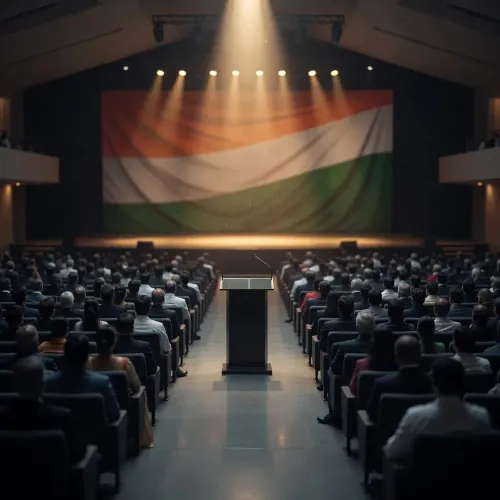
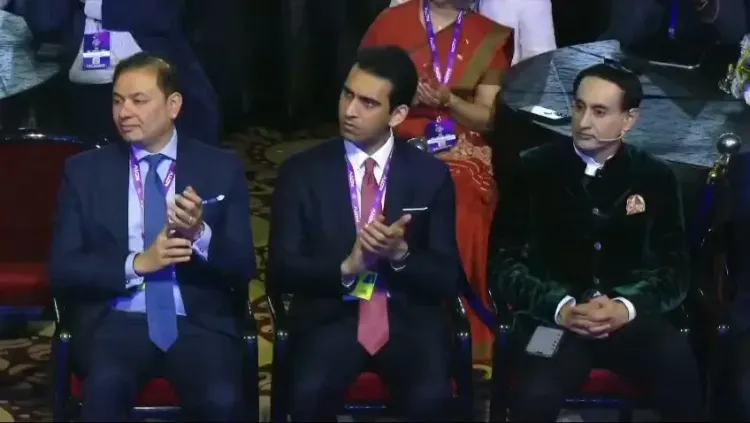
The NDTV World Summit, an annual forum that brings together global leaders and policymakers to debate India's role in world affairs, provides exactly the stage for such a message — an audience already primed to ask what an ascending India means for the rest of the world.
If India's 2047 ambition lands on schedule, the answer, this government insists, will be: a great deal of good.
Point of View
Usually pitched domestically, is here globalised — a signal that as India approaches greater economic and diplomatic weight, the government wants the world to read its rise as reassuring rather than disruptive. Bihar CM Samrat Choudhary amplifying the quote extends the message beyond the summit room and into the BJP's state-level communication apparatus, reinforcing party unity around the PM's foreign-policy brand ahead of a period of intensified global engagement.
NationPress
23 Oct 2026
Frequently Asked Questions
What does 'Power to Empower' mean in PM Modi's speech?
'Power to Empower' is PM Modi's articulation of India's core foreign-policy principle — that India's growing strength is intended to benefit humanity broadly, not serve narrow national interests. It frames India's civilisational values and policy decisions as a source of global stability.
What is the NDTV World Summit 2026?
The NDTV World Summit is an annual high-profile forum that convenes global leaders, policymakers, and thinkers to discuss India's place in world affairs and major international challenges. The 2026 edition featured an address by Prime Minister Narendra Modi.
What is Viksit Bharat and when was it announced?
Viksit Bharat — or Developed India — is a national vision to transform India into a fully developed economy by 2047, the centenary of its independence. PM Modi first formally outlined this goal in his Independence Day address from the Red Fort in 2022.
Why did Bihar CM Samrat Choudhary share PM Modi's NDTV Summit quote?
CM Samrat Choudhary, a senior BJP leader, shared the PM's quote to amplify the government's vision of India as a stabilising global force — extending the message from the summit stage to a wider political and public audience.
How does 'Viksit Bharat 2047' connect to India's foreign policy?
In PM Modi's framing at the NDTV World Summit, Viksit Bharat is presented not just as a domestic development target but as a global commitment — the argument being that a stronger, more developed India produces stability and benefit for the entire world.