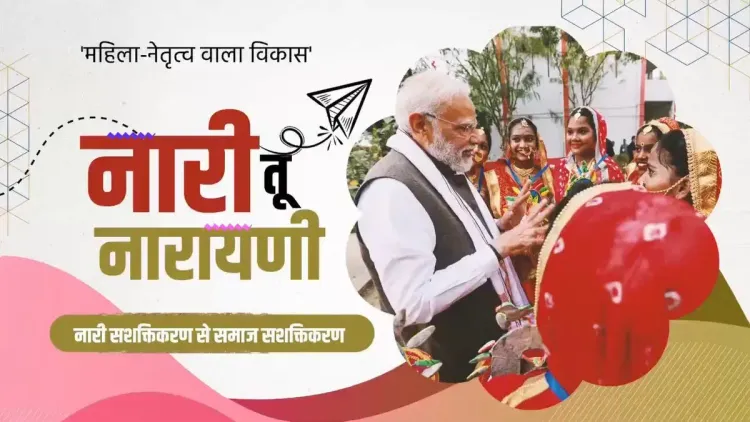
CM Samrat Choudhary Hails 12 Years of Modi's Nari Shakti Push
Synopsis
Bihar Chief Minister Samrat Choudhary marked twelve years of PM Modi's governance by highlighting transformative women-empowerment policies — from Beti Bachao Beti Padhao to the Women's Reservation Bill — framing gender progress as central to the Viksit Bharat vision.
Key Takeaways
Bihar CM Samrat Choudhary posted on 12 June 2026 under #12YearsOfNariShakti to mark a decade-plus of Modi government women's policies.
Beti Bachao Beti Padhao , launched January 2015 , was among the first flagship schemes addressing child sex ratio and girls' education.
Pradhan Mantri Ujjwala Yojana (2016) extended clean-cooking LPG access to women from below-poverty-line households.
The Women's Reservation Bill , passed September 2023 , reserves one-third of Lok Sabha and state assembly seats for women.
The post ties women's advancement explicitly to the Viksit Bharat goal of a developed India by 2047 .
State-level implementation of reservation provisions and Bihar budget allocations for female entrepreneurship remain key metrics to watch.
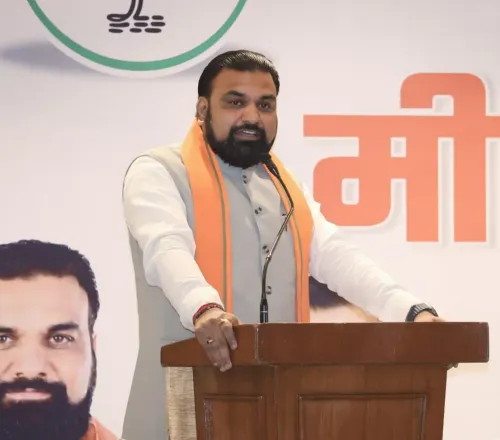
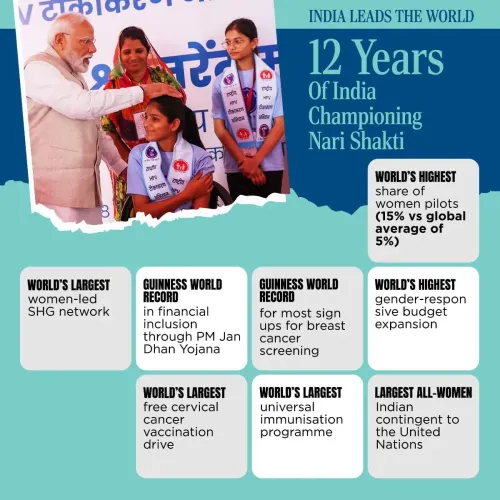
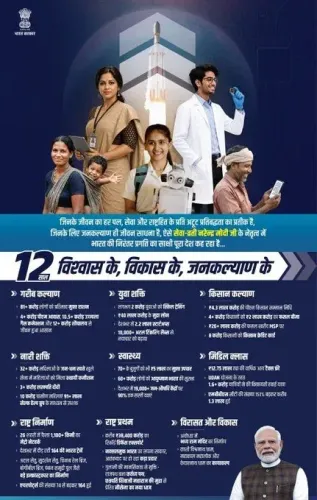
Bihar Chief Minister Samrat Choudhary on Friday, 12 June 2026, took to X to mark what he called twelve transformative years of Prime Minister Narendra Modi's commitment to women's honour, safety, and empowerment, saying the journey had brought unprecedented change to the lives of crores of women across India.
Opening with the Sanskrit verse yatra nāryastu pūjyante, ramante tatra devatāḥ ('Where women are revered, there the gods rejoice'), Choudhary framed his post under the hashtag #12YearsOfNariShakti, positioning the Modi government's record on gender policy as a civilisational as much as an administrative achievement.
Context
The post marks roughly twelve years since Narendra Modi first assumed office as Prime Minister in May 2014. During this period, the Union government rolled out a series of women-focused flagship schemes that together sought to address gaps in health, education, financial inclusion, and personal safety. Choudhary, a senior BJP leader who also serves as Bihar's Chief Minister, has consistently aligned state messaging with the Centre's development narrative.
The Sanskrit invocation in the post is drawn from the ancient text Manusmriti and has been frequently cited in Indian political discourse to underscore the cultural argument for women's dignity — lending the message a tone that blends classical tradition with contemporary policy advocacy.
Policy Backdrop
The central government's women-empowerment architecture since 2014 spans several landmark interventions. Beti Bachao Beti Padhao, launched in January 2015, targeted the declining child sex ratio and female literacy, and was later expanded from its original 100 pilot districts to a nationwide programme. Pradhan Mantri Ujjwala Yojana, started in 2016, provided clean-cooking LPG connections to women from below-poverty-line households, directly reducing indoor-pollution burdens on rural women.
A landmark legislative step came in September 2023, when Parliament passed the Women's Reservation Bill, reserving one-third of seats for women in the Lok Sabha and state legislative assemblies. Choudhary's reference to women moving 'from participation to leadership' appears to echo this legislative milestone. The post also invokes the Viksit Bharat vision — the government's roadmap for a developed India by 2047 — framing gender parity as integral to that goal.
Stakeholders and Impact
The primary beneficiaries of the schemes cited are women from rural and semi-urban households, female entrepreneurs accessing credit under self-help group frameworks, and first-generation girl students supported through scholarship and mid-day meal programmes. In a state like Bihar — which has historically recorded among the lower female literacy and workforce-participation rates nationally — the resonance of central schemes is particularly significant.
Female entrepreneurs and women in elected local bodies stand to gain most visibly from the convergence of financial-inclusion drives and the forthcoming implementation of reservation provisions. Civil-society groups tracking gender indices will watch whether state budget allocations in Bihar translate the Centre's framing into measurable outcomes on the ground.
What's Next
Attention will turn to state-level adoption of the Women's Reservation provisions ahead of the 2026-27 assembly election cycle, as well as any supplementary Bihar budget allocations directed at female entrepreneurship and skilling. The #12YearsOfNariShakti hashtag signals a coordinated BJP communications push around the anniversary of the Modi government, and further statements from state leaders amplifying the theme are expected in the coming days.
Whether the political messaging translates into fresh policy announcements — or remains an anniversary narrative — will determine how the broader 'Nari Shakti' framing feeds into the Viksit Bharat roadmap as India moves closer to the 2047 centenary target.
Point of View
Using the '12 years of Modi government' milestone to consolidate the party's identity as the principal architect of women's welfare in India. By anchoring the message in a Sanskrit verse and the Viksit Bharat lexicon, the BJP simultaneously appeals to cultural-nationalist sentiment and development-oriented voters. For Bihar specifically, where gender indicators have lagged national averages, the messaging carries electoral weight ahead of potential assembly polls. The real test, however, will be whether the rhetorical framing is backed by fresh state-level budget commitments or policy actions that move the needle on female workforce participation and safety.
NationPress
21 Sept 2026
Frequently Asked Questions
What is #12YearsOfNariShakti?
#12YearsOfNariShakti is a BJP social-media campaign marking twelve years of the Modi government's women-empowerment policies, covering schemes such as Beti Bachao Beti Padhao, Pradhan Mantri Ujjwala Yojana, and the Women's Reservation Bill.
What did Bihar CM Samrat Choudhary say about PM Modi and women's empowerment?
Choudhary credited PM Modi's commitment to women's honour, safety, and empowerment over the past twelve years with bringing unprecedented change to crores of women through education, health, financial inclusion, entrepreneurship, and leadership opportunities.
What is the Women's Reservation Bill passed in 2023?
The Women's Reservation Bill, passed by Parliament in September 2023, reserves one-third of seats in the Lok Sabha and state legislative assemblies for women, and is considered a landmark step in political representation for Indian women.
What is Beti Bachao Beti Padhao?
Beti Bachao Beti Padhao is a central government scheme launched in January 2015 to address the declining child sex ratio and promote girls' education; it was later expanded from 100 pilot districts to a nationwide programme.
How does Viksit Bharat relate to women's empowerment?
Viksit Bharat is the government's vision for a developed India by 2047, which explicitly includes gender parity targets; leaders like Choudhary frame women's progress in education, finance, and leadership as essential to achieving that goal.