US midterm outcome dims urgency of India-US trade deal: Emkay report
Synopsis
The US midterm result that broke Republican Congressional dominance has quietly shifted the India-US trade equation. With the feared 18% tariff never triggered, Indian goods now face just 10% Section 301 duty, and Washington's IEEPA leverage is gone. Emkay Global says this, combined with a 19% drop in Brent from October highs, gives India macro breathing room — though the RBI's $239 billion forward dollar liability caps how far the rupee can run.
Key Takeaways
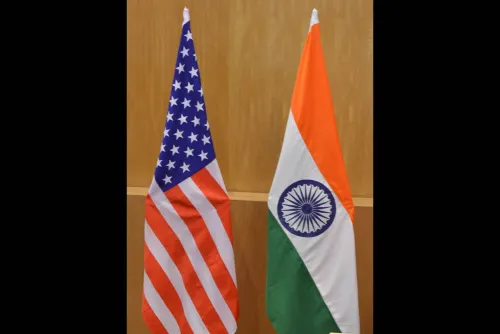
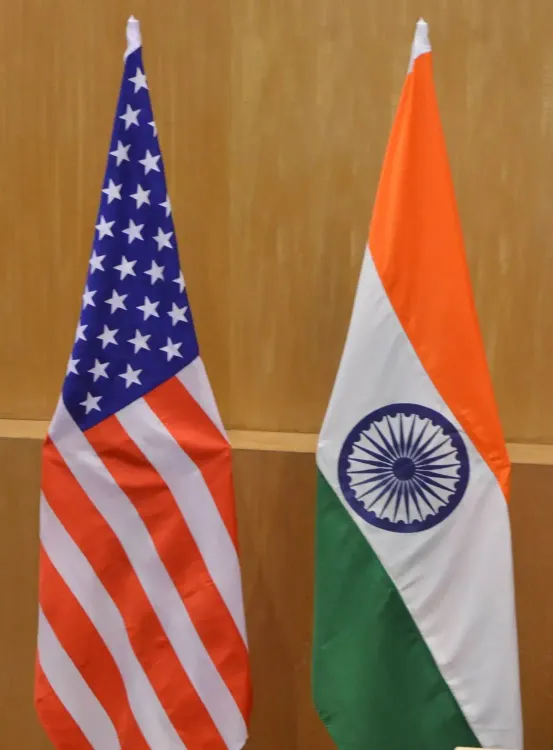
The US midterm election ended unified Republican control of Congress , reducing the urgency of an India-US trade deal , per Emkay Global Financial Services .
The feared 18% US tariff framework was never implemented; Indian goods now face a lower 10% Section 301 duty.
The US has lost its IEEPA leverage ; future tariff escalation must go through slower Section 301 and Section 232 processes.
Brent crude is down 19% from October 2026 highs to $95/barrel , a macro positive for India's oil-heavy import bill.
The RBI's relief is limited by $239 billion in forward dollar liabilities, capping INR upside by policy choice.
Key residual risks: Section 232 sector tariffs on pharma and electronics , and Russia/Iran diplomacy setbacks affecting India's oil imports.
The US midterm election outcome — which ended unified Republican control of Congress — has reduced the urgency of a bilateral trade deal between India and the United States, and that is a broadly positive development for New Delhi, according to a new report released on Thursday, 5 November 2026. The findings were published by Emkay Global Financial Services Ltd.
The Tariff Landscape Has Already Shifted
The report notes that the feared 18 per cent US tariff framework rate was never actually implemented. Indian goods currently face a lower 10 per cent 'Section 301' duty instead. Critically, the US has also lost its International Emergency Economic Powers Act (IEEPA) leverage, removing one of the more potent tools that had kept Indian exporters on edge.
According to the Emkay analysis, any future tariff escalation would have to go through slower, investigation-based Section 301 and Section 232 actions. That procedural constraint materially reduces the risk of sudden, surprise tariff shocks that had rattled Indian industry earlier in the year.
What Changes for the Trump Administration
'The midterms outcome probably will not change the tariff structure much, but it will change Trump's incentives: fewer new escalation tools, more pressure to deliver consumer affordability, and deals before 2028,' the report argued.
Notably, the report flags that trade remains one of the few policy levers the US President controls unilaterally, meaning headline volatility will persist even as the directional bias softens. The main residual risks flagged are Section 232 sector tariffs on pharmaceuticals and electronics, and any diplomatic setback involving Russia or Iran that could revive pressure on India over its crude oil import sourcing.
Rupee Stability and Export Outlook
The Emkay report argues that lower tariff volatility, combined with a softer dollar and easing crude prices, is supportive of Indian rupee stability and the broader export outlook. This dynamic, the report suggests, 'favours a gradual compression of India risk premia over a sharp re-rating.'
Brent crude has already declined 19 per cent from its recent October 2026 highs to $95 per barrel as the geopolitical risk premium unwinds — a clear macro positive for India, where the oil import bill is up 24 per cent in the financial year to date, with Brent averaging $97 per barrel.
RBI Gets Breathing Room — With Limits
The easing crude environment also offers some relief to the Reserve Bank of India (RBI), whose foreign exchange defence has become increasingly costly. However, the report cautions that this relief will be limited.
'Ongoing CAD funding needs and a hefty $239 billion forward dollar liability on the RBI's books mean it is likely to use any durable inflows to rebuild reserves and its FX buffers, capping INR upside by policy choice,' the report stated.
On the monetary policy front, sticky US inflation means US interest rates are likely to remain elevated rather than fall sharply, keeping the RBI vigilant on its own rate trajectory. All eyes will now be on how New Delhi calibrates its trade negotiating posture as the revised geopolitical and tariff calculus takes shape through 2027.
Point of View
But that India's negotiating position has quietly improved without any bilateral concession. Losing IEEPA leverage matters — it was the bluntest instrument in Washington's tariff toolkit. Yet the report is right to flag that headline risk persists, because trade is one of the few areas where executive unilateralism still operates. The deeper concern is the RBI's $239 billion forward liability — a figure that rarely features in India-US trade commentary but is the most consequential constraint on rupee policy regardless of where tariffs land. India's macro managers are navigating a narrower corridor than the softening tariff narrative suggests.
NationPress
5 Nov 2026
Frequently Asked Questions
How has the US midterm election outcome affected India-US trade negotiations?
The US midterm result ended unified Republican control of Congress, reducing the Trump administration's ability to deploy aggressive new tariff tools such as IEEPA, which in turn reduces the urgency for India to rush into a bilateral trade deal. According to the Emkay Global report, this is a net positive for India's negotiating position.
What tariff rate do Indian goods currently face in the US?
Indian goods currently face a 10% 'Section 301' duty. The higher 18% tariff framework rate that had been feared was never actually implemented, according to the Emkay Global report released on 5 November 2026.
What are the remaining trade risks for India from the US?
The Emkay report identifies two main residual risks: Section 232 sector tariffs targeting pharmaceuticals and electronics, and any diplomatic setback in US-Russia or US-Iran relations that could revive American pressure on India over its crude oil imports from those nations.
How does falling crude oil help India's economy?
Brent crude has fallen 19% from its October 2026 highs to $95 per barrel, which eases India's oil import bill — currently up 24% in the financial year to date with Brent averaging $97 per barrel. The Emkay report calls this a 'clear macro positive' that also gives the RBI more room on its forex defence.
Why is the RBI's relief limited despite the improving macro picture?
The RBI carries approximately $239 billion in forward dollar liabilities, meaning any durable capital inflows are likely to be used to rebuild forex reserves and FX buffers rather than allow the rupee to appreciate. This, combined with sticky US inflation keeping American interest rates elevated, means the central bank remains in a cautious stance.