Akhilesh targets BJP over Lucknow padayatra traffic chaos
Synopsis
Samajwadi Party chief Akhilesh Yadav on 5 November 2026 lashed out at a BJP padayatra in Lucknow, alleging it caused traffic anarchy that harassed residents and patients, declaring: 'BJP is anarchy itself.'
Key Takeaways
Samajwadi Party president Akhilesh Yadav posted on 5 November 2026 criticising a BJP padayatra in Lucknow for causing severe traffic disruption.
Yadav specifically alleged the chaos affected patients in addition to ordinary residents.
He declared 'भाजपा ही अराजकता है' — 'BJP is anarchy itself' — framing the incident as a governance failure.
The BJP has governed Uttar Pradesh since 2017 ; traffic disruptions from party events are a recurring opposition talking point against the state government.
No official response from Lucknow traffic police or BJP leaders on the padayatra's permissions or crowd management had emerged at the time of publication.
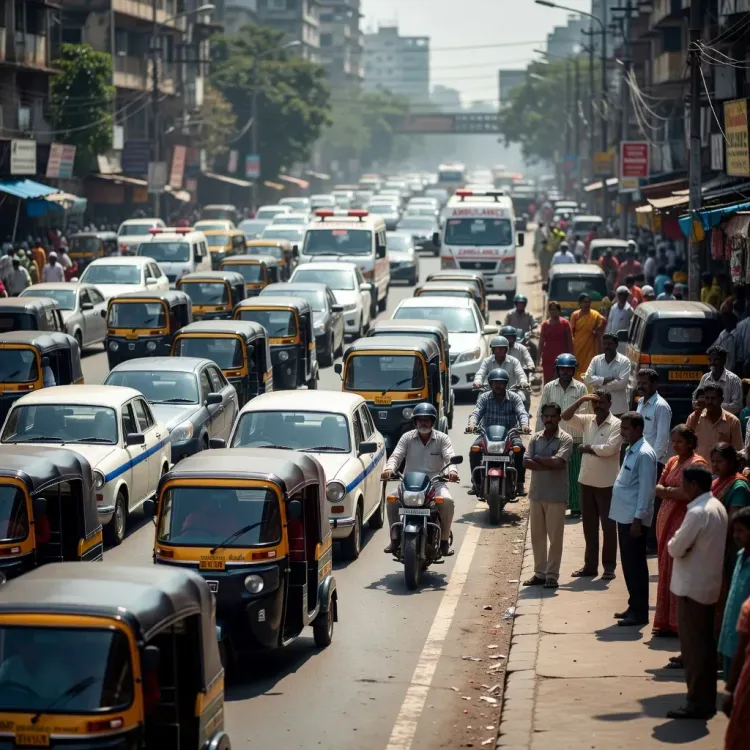
A BJP padayatra in Lucknow has sparked a sharp political salvo from Samajwadi Party president Akhilesh Yadav, who on Thursday, 5 November 2026, accused the ruling party of unleashing 'traffic anarchy' on the city's streets — and, more strikingly, on its hospital patients.
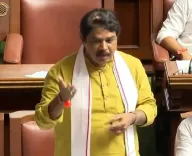
Posting on X, Yadav wrote: 'भाजपा की पदयात्रा ने लखनऊ में ट्रैफ़िक अराजकता फैलाकर आम लोगों के साथ-साथ मरीज़ों को भी जो तकलीफ़ पहुँचाई है, लखनऊवासी उससे बेहद ख़फ़ा हैं।' ('The BJP's padayatra has caused traffic chaos in Lucknow, harassing ordinary people as well as patients — and Lucknow residents are deeply angry about it.') He concluded with a pointed three-word verdict: 'भाजपा ही अराजकता है' — 'BJP is anarchy itself.'
Patients caught in the gridlock
The sharpest edge of Yadav's attack is the mention of patients — people seeking urgent medical care who found themselves stranded in traffic snarls caused, he alleges, by a ruling-party march. Lucknow, the state capital, hosts several major public hospitals and medical institutions that draw patients from across Uttar Pradesh. Any sustained traffic disruption on arterial routes can delay ambulances and outpatient appointments alike. The specific route, permissions, and measurable impact of the padayatra in question have not been officially detailed.
A recurring flashpoint in UP politics
The Samajwadi Party has built a consistent line of attack around civic disruption caused by BJP political events in Lucknow. Since the BJP returned to power in Uttar Pradesh in 2017, the opposition has repeatedly framed large-scale party marches and rallies as evidence of administrative priorities gone wrong — where political optics trump daily convenience. Traffic management during such events has been a pressure point that finds ready resonance with urban voters, particularly in the state capital.
The 'rulers turned anarchic' frame
Yadav's formulation — 'राज करनेवाले ही अराजक हो गए हैं' ('those who govern have themselves become anarchic') — is a deliberate rhetorical inversion: the party that claims a mandate for law and order is, he argues, the very source of disorder. It is the kind of line designed to travel beyond a single incident and stick to a broader governance narrative. With local body election cycles perpetually on the horizon in Uttar Pradesh, such framing over civic inconvenience can carry real electoral weight in urban wards.
Point of View
Any charge of self-caused chaos cuts directly at that credential. The timing, ahead of potential local body contests, suggests the SP is testing a civic-accountability message that could resonate with urban voters who have grown accustomed to disruption from large political events.
NationPress
5 Nov 2026
Frequently Asked Questions
What did Akhilesh Yadav say about the BJP padayatra in Lucknow?
Akhilesh Yadav said the BJP's padayatra caused 'traffic anarchy' in Lucknow that harassed both common residents and patients, adding 'BJP is anarchy itself.' He posted this criticism on X on 5 November 2026.
What is a padayatra and why did it cause controversy in Lucknow?
A padayatra is a political foot march organised by a party, typically to mobilise workers or build public outreach. The BJP's padayatra in Lucknow drew controversy after the Samajwadi Party alleged it caused major traffic gridlock, including delays for patients seeking medical care.
Why does traffic disruption from political events matter in Lucknow?
Lucknow, as the capital of Uttar Pradesh, hosts major public hospitals that serve patients from across the state. Traffic snarls on key routes can delay ambulances and medical appointments, making disruptions from large political marches a sensitive civic and health issue.
How does the Samajwadi Party use civic issues against the BJP in UP?
Since the BJP came to power in Uttar Pradesh in 2017, the Samajwadi Party has repeatedly targeted the ruling party over civic inconveniences caused by its political events, framing such disruptions as proof of poor governance and misplaced administrative priorities.
Has the BJP responded to Akhilesh Yadav's Lucknow traffic chaos allegations?
At the time of publication, no official response from the BJP leadership or Lucknow traffic police had been issued regarding the padayatra's permissions, its route, or the specific traffic impact Akhilesh Yadav described.