CM Samrat Choudhary Hails Nari Shakti as Pillar of Viksit Bharat
Synopsis
Bihar Chief Minister Samrat Choudhary on June 12, 2026 marked #12YearsOfNariShakti on X, calling women's leadership the foundation of a developed India and citing gains in skill development, digital literacy, and entrepreneurship for women over the past decade.
Key Takeaways
Bihar CM Samrat Choudhary posted on June 12, 2026 under #12YearsOfNariShakti , framing women's empowerment as the bedrock of Viksit Bharat .
He highlighted advances in skill development , digital literacy , self-employment , social security , and entrepreneurship for women over recent years.
The Beti Bachao Beti Padhao scheme (2015) and Pradhan Mantri Mudra Yojana (2015) are among the central programmes underpinning this decade-long push.
The Mahila Shakti Kendra scheme (2017) extended community-level support for women's skill training and social protection.
Key beneficiaries include women entrepreneurs , rural women , and self-help group members, constituencies of particular political and social significance in Bihar .
Future indicators include fresh policy announcements in the upcoming Union Budget and Bihar's state-level implementation record on women-centric schemes.
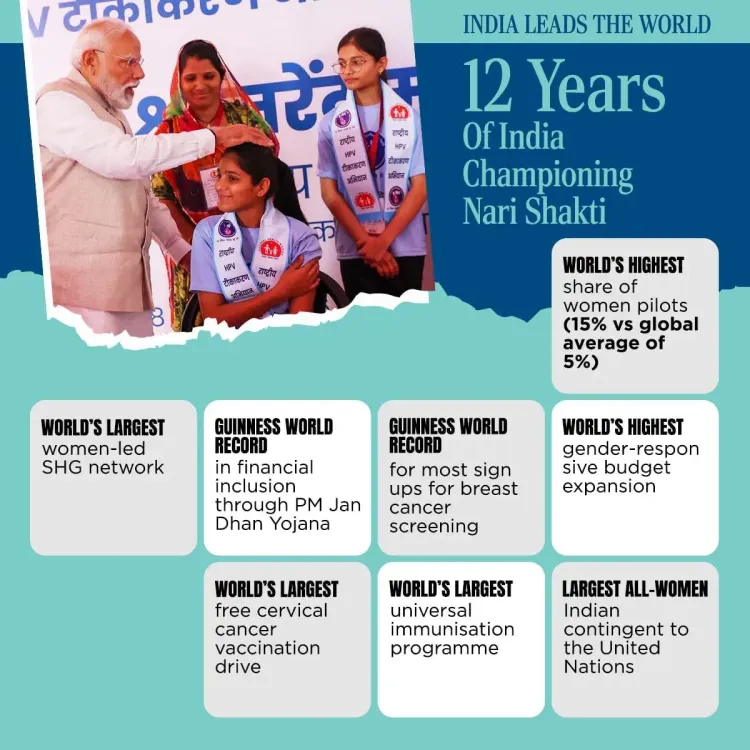
Bihar Chief Minister Samrat Choudhary on Friday, June 12, 2026 invoked the theme of women-led national development, asserting that female empowerment is the foundational force behind the vision of a developed India. Posting on X under the hashtag #12YearsOfNariShakti, the senior BJP leader highlighted gains in skill development, digital literacy, self-employment, and entrepreneurship for women over the past several years.
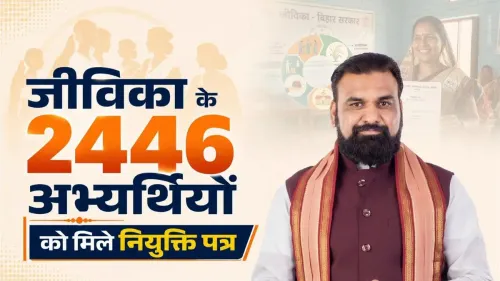
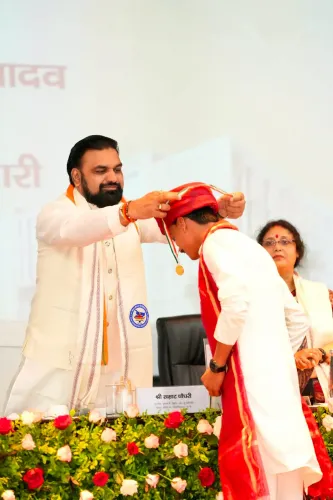
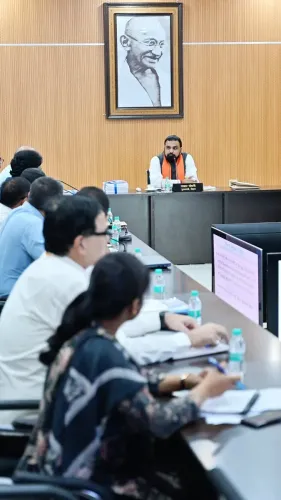
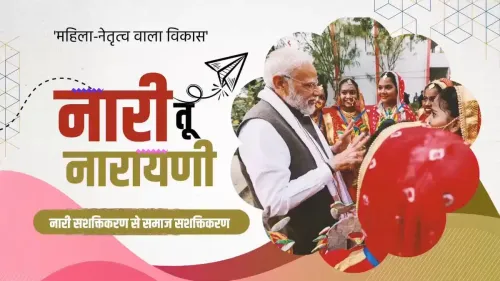
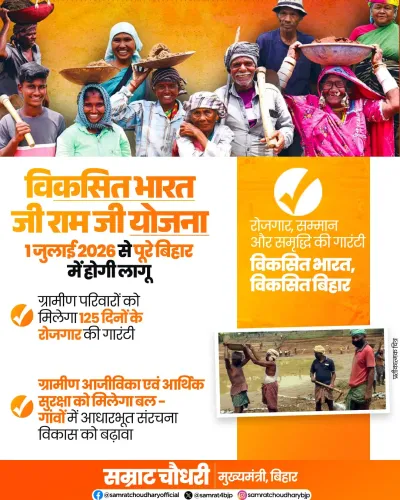
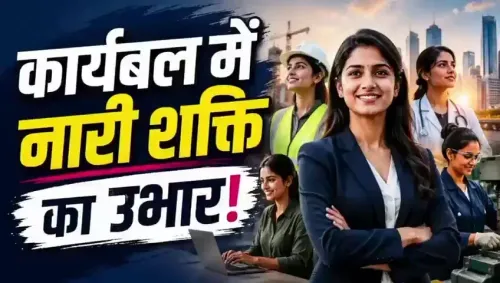
In his post, CM Choudhary wrote: 'नारी नेतृत्व से नए भारत का निर्माण' ['Building a new India through women's leadership'], adding that 'सशक्त नारी, सशक्त राष्ट्र' — 'an empowered woman, an empowered nation' — is the true identity of the new India. The post was accompanied by four images, underscoring the visual messaging around women's advancement.
Context
The post arrives under the banner of #12YearsOfNariShakti, a hashtag marking what appears to be a milestone in the central government's sustained push on gender-focused welfare and empowerment since 2014. CM Choudhary framed women's empowerment not as a standalone social objective but as an economic and civilisational necessity — the 'strong foundation' on which Viksit Bharat (Developed India) must be built. The statement aligns closely with the broader national narrative championed by Prime Minister Narendra Modi's government, which has consistently positioned Nari Shakti as central to India's development agenda through to 2047.
Policy Backdrop
Several flagship central schemes form the scaffolding behind this rhetoric. The Beti Bachao Beti Padhao scheme, launched in 2015, was designed to improve the child sex ratio and expand girls' access to education. In the same year, the Pradhan Mantri Mudra Yojana began offering collateral-free micro-loans, with women borrowers accounting for a significant share of beneficiaries — enabling self-employment and small-enterprise creation at the grassroots level.
The Mahila Shakti Kendra scheme, announced in 2017, extended this push to community-level support, providing rural women with access to skill training and social protection networks. Across these programmes, multiple central ministries have reported rising female participation in credit access, clean-fuel connections under Ujjwala, and vocational training. The cumulative policy posture treats gender-focused welfare as an economic multiplier, not merely a social obligation.
Stakeholders and Impact
The primary beneficiaries of this decade-long policy arc are women entrepreneurs, rural women, and members of self-help groups — constituencies that have seen measurable improvements in financial inclusion and digital access. In Bihar, a state with historically lower female labour-force participation and literacy rates, the resonance of such messaging carries particular weight. State-level implementation of centrally-sponsored women's schemes has been a recurring focus for the Choudhary administration.
For the BJP, amplifying the Nari Shakti narrative at the state level through senior leaders like CM Choudhary reinforces the party's positioning on women's welfare ahead of any upcoming electoral or budgetary cycles. Women voters and self-help group networks have been identified as decisive blocs in Bihar's political landscape.
What's Next
Attention will now turn to whether the #12YearsOfNariShakti campaign translates into fresh policy announcements — particularly expanded entrepreneurship credit lines or enhanced leadership quotas — in the upcoming Union Budget or in parliamentary sessions. At the state level, Bihar's implementation record on women-centric schemes, including Mudra loan disbursals and Mahila Shakti Kendra coverage, will be a key indicator of how this political commitment converts into ground-level change. The degree to which CM Choudhary anchors his governance agenda to women's empowerment metrics will signal the state's alignment with the Viksit Bharat 2047 framework.
Point of View
Reinforcing BJP's consistent messaging that women's welfare and national development are inseparable. By invoking 'Viksit Bharat' alongside women's empowerment, he connects state-level governance to a pan-India electoral and ideological framework that has proven electorally potent in Bihar. The timing under #12YearsOfNariShakti suggests a coordinated party-wide communication exercise, using senior state leaders to amplify a milestone the BJP is keen to own publicly. The real test, however, lies in Bihar's implementation data on Mudra disbursals, Mahila Shakti Kendra reach, and female labour-force participation — metrics that will determine whether the rhetoric translates into measurable ground-level change.
NationPress
26 Oct 2026
Frequently Asked Questions
What did Bihar CM Samrat Choudhary say about women's empowerment?
Bihar CM Samrat Choudhary posted on X on June 12, 2026 that women's empowerment is the 'strong foundation' of Viksit Bharat, citing gains in skill development, digital literacy, self-employment, and entrepreneurship for women under the hashtag #12YearsOfNariShakti.
What is #12YearsOfNariShakti?
#12YearsOfNariShakti is a hashtag marking approximately twelve years of the central government's focused push on women's empowerment and Nari Shakti policies since 2014, used by BJP leaders including Bihar CM Samrat Choudhary to highlight progress on gender-focused welfare schemes.
What schemes has the Indian government launched for women's empowerment?
Key central schemes include Beti Bachao Beti Padhao (2015) for girl-child education and survival, Pradhan Mantri Mudra Yojana (2015) for collateral-free micro-loans to women entrepreneurs, and Mahila Shakti Kendra (2017) for community-level skill training and social support.
What is Viksit Bharat and how does it relate to women's empowerment?
Viksit Bharat (Developed India) is the central government's long-term vision for India's development by 2047. The BJP-led government has positioned women's financial inclusion, digital literacy, and entrepreneurship as core economic multipliers within this framework, not merely social goals.
Who is Samrat Choudhary?
Samrat Choudhary is the Chief Minister of Bihar and a senior leader of the Bharatiya Janata Party (BJP), known for aligning Bihar's governance agenda with national development themes including Nari Shakti and Viksit Bharat.