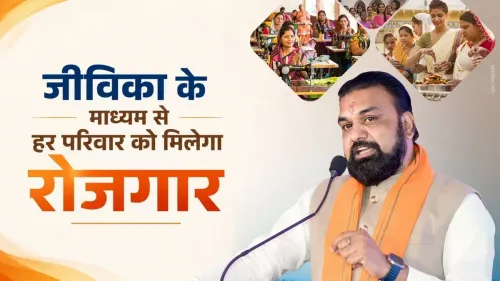
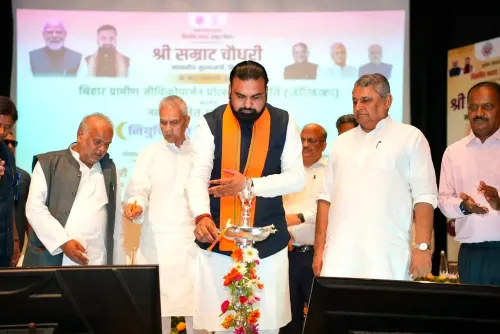
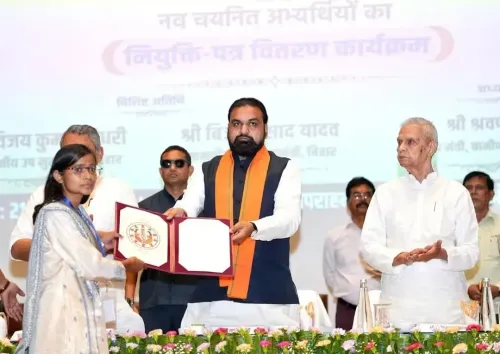
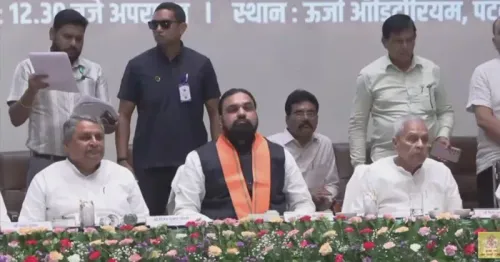
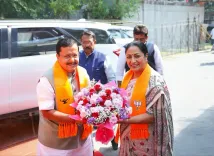
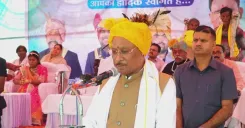
CM Samrat Choudhary distributes JEEViKA appointment letters in Bihar
Synopsis
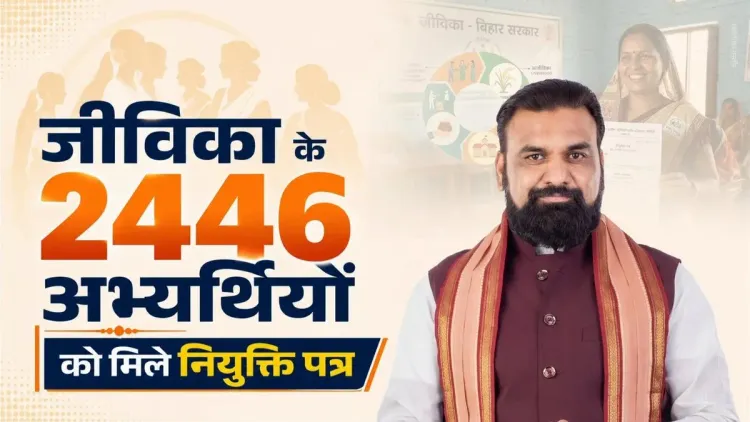
Bihar Chief Minister Samrat Choudhary presided over the distribution of thousands of JEEViKA appointment letters on 21 July 2026, framing the event as a step toward 'Viksit Bharat' and 'Samridh Bihar' through women's economic empowerment and rural self-help group expansion.
Key Takeaways
Bihar Chief Minister Samrat Choudhary distributed thousands of appointment letters for posts under JEEViKA (Bihar Rural Livelihoods Promotion Society) on 21 July 2026 .
JEEViKA was established in 2007 with World Bank support and scaled under the National Rural Livelihoods Mission framework after 2011 .
The CM linked the appointments to the twin goals of 'Viksit Bharat' (Developed India) and 'Samridh Bihar' (Prosperous Bihar).
Lakhs of women enrolled in JEEViKA's SHG network are central to the state's rural poverty-alleviation and financial-inclusion strategy.
The programme aligns with Deendayal Antyodaya Yojana-NRLM (DAY-NRLM) guidelines linking state SHG bodies to national livelihood markets.
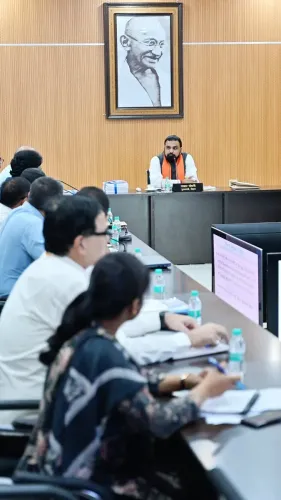
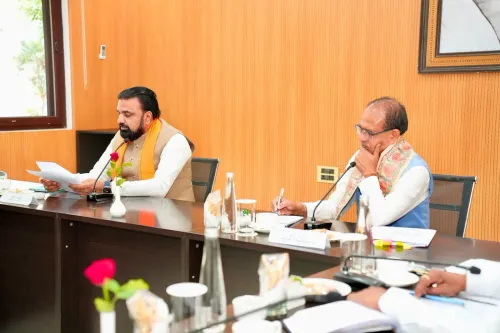
Bihar Chief Minister Samrat Choudhary on Tuesday, 21 July 2026, marked the distribution of thousands of appointment letters for various posts under the Bihar Rural Livelihoods Promotion Society (JEEViKA), calling the occasion a moment when the dreams of many families found 'new wings.' The Chief Minister framed the appointments as a milestone on the path toward 'Viksit Bharat' (Developed India) and 'Samridh Bihar' (Prosperous Bihar).
Context
Posting on X, Chief Minister Choudhary wrote that the road to a developed India and a prosperous Bihar 'passes through the empowerment of villages, the poor, and women.' He added that 'lakhs of sisters associated with JEEViKA have today become the greatest strength of a self-reliant Bihar,' and cited women's contribution to economic activities as proof of the 'capability of women's power.' The post was accompanied by a video documenting the appointment letter distribution ceremony.
The appointment letters were issued for various positions within JEEViKA, the state's flagship rural livelihoods body. While the exact number of appointments has not been independently confirmed, the Chief Minister described the scale as involving 'thousands' of letters distributed in a single event.
Policy Backdrop
JEEViKA — formally the Bihar Rural Livelihoods Promotion Society — was launched in 2007 as a pilot project with World Bank support, designed to form and strengthen women's self-help groups (SHGs) across rural Bihar. After 2011, the programme was scaled under the National Rural Livelihoods Mission (NRLM) framework, extending its reach to districts across the state.
The model channels credit, skills training, and enterprise support to rural households through women's collectives. Over nearly two decades, the SHG network has become one of the largest institutional structures for women's economic participation in eastern India, with documented gains in household savings, borrowing capacity, and enterprise formation. The programme aligns with the Centre's Deendayal Antyodaya Yojana-NRLM (DAY-NRLM) guidelines, which link state-level SHG bodies to national livelihood markets.
Stakeholders and Impact
The primary beneficiaries of the JEEViKA ecosystem are rural women from economically marginalised households across Bihar's districts. Appointment letters for JEEViKA staff positions directly create formal employment, while the broader SHG network provides indirect livelihood support to the lakhs of women enrolled as members.
Bihar governments across administrations have consistently used the JEEViKA network to channel state and central welfare spending into rural households. The emphasis on women's economic roles in official messaging reflects a policy consensus that women-led SHGs are among the most effective vehicles for last-mile delivery of financial and skill-development services in the state.
What's Next
Observers will watch the Bihar state budget allocations for the next fiscal cycle to gauge the scale of planned JEEViKA staffing and programme expansion. Any formal integration announcements linking JEEViKA more tightly with updated DAY-NRLM guidelines — particularly around market linkages and digital financial inclusion — will signal the programme's next phase of growth.
The Chief Minister's public emphasis on women's empowerment as the foundation of Bihar's development trajectory suggests that JEEViKA will remain a centrepiece of the state government's social and economic messaging in the months ahead.
Point of View
Demonstrating tangible state-delivered employment ahead of the next electoral cycle. The framing of women's SHG participation as the bedrock of 'Viksit Bharat' mirrors the BJP's national narrative, deliberately tying a long-running World Bank-backed programme to the ruling party's brand. Bihar's consistent cross-administration investment in JEEViKA suggests institutional durability, but the scale and pace of new appointments will determine whether this event marks genuine programme expansion or is primarily ceremonial. Watchers should track whether the staffing surge is matched by corresponding budget outlays and DAY-NRLM integration in the next fiscal cycle.
NationPress
21 Oct 2026
Frequently Asked Questions
What is JEEViKA in Bihar?
JEEViKA is the Bihar Rural Livelihoods Promotion Society, a government body established in 2007 with World Bank support to form and strengthen women's self-help groups (SHGs) across rural Bihar, providing credit, skills training, and enterprise support to marginalised households.
What did Bihar CM Samrat Choudhary announce on 21 July 2026?
Bihar Chief Minister Samrat Choudhary presided over the distribution of thousands of appointment letters for various posts under JEEViKA, describing the event as fulfilling the dreams of many families and advancing the goals of 'Viksit Bharat' and 'Samridh Bihar'.
How many women are part of JEEViKA's self-help group network?
Chief Minister Choudhary referred to 'lakhs of sisters' associated with JEEViKA, reflecting the programme's large-scale enrolment of rural women across Bihar's districts since its launch in 2007.
Is JEEViKA linked to any central government scheme?
Yes, JEEViKA operates within the framework of the National Rural Livelihoods Mission (NRLM) and aligns with Deendayal Antyodaya Yojana-NRLM (DAY-NRLM) guidelines, which connect state-level SHG bodies to national livelihood markets and financial inclusion programmes.
What is the significance of JEEViKA appointments for rural Bihar?
Appointments under JEEViKA create formal employment for individuals while strengthening the institutional capacity of the SHG network, which delivers credit, skills, and enterprise support to lakhs of rural women across Bihar.