CM Samrat Choudhary hails Jeevika's reach across Bihar
Synopsis
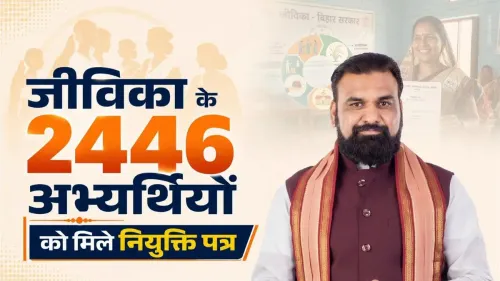
Bihar CM Samrat Choudhary highlighted Jeevika's reach of 1.81 crore women across 10.49 lakh SHGs and announced 2,446 new staff appointments to extend last-mile delivery of rural livelihoods support across the state.
Key Takeaways
Bihar CM Samrat Choudhary praised the Jeevika programme on 21 July 2026 for advancing women's self-reliance in rural Bihar.
More than 1.81 crore women are now enrolled across 10.49 lakh Self Help Groups under Jeevika.
2,446 new personnel have been appointed to extend Jeevika's reach to every village and needy household.
Jeevika was launched in 2007 as a World Bank-supported pilot and later aligned with the national NRLM framework.
The programme focuses on savings, micro-credit, and livelihood support for rural women at the grassroots level.
The new appointments signal Bihar's intent to strengthen last-mile delivery of rural welfare and livelihood schemes.
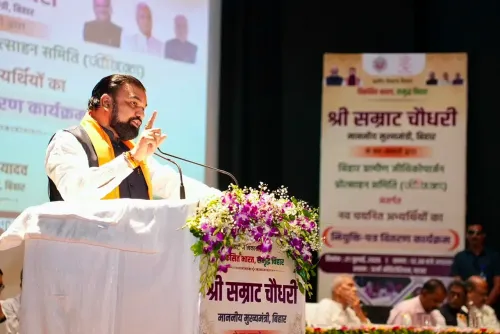
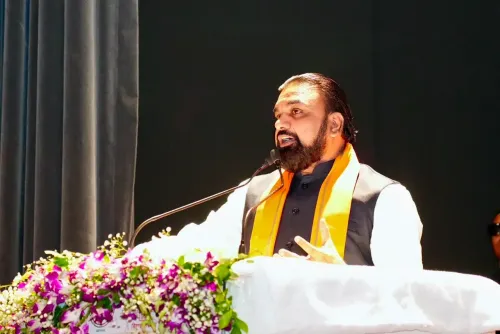
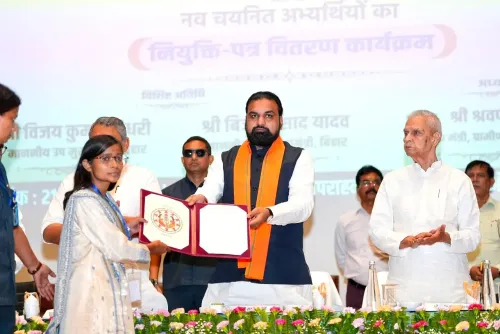
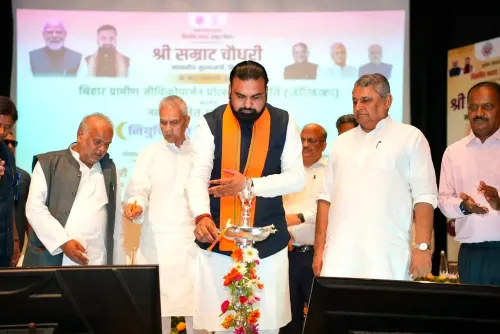
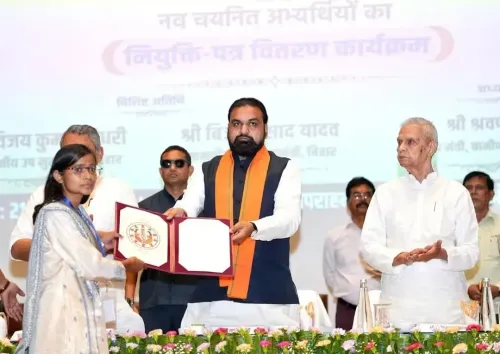
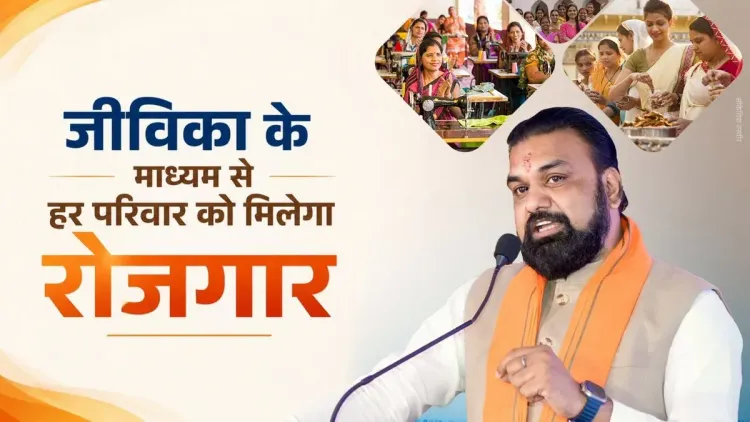
Bihar Chief Minister Samrat Choudhary on Tuesday, 21 July 2026, highlighted the transformative scale of the Jeevika programme, crediting it with giving millions of women across the state a new path to self-reliance. He also announced the induction of 2,446 new personnel into the initiative, tasked with extending its benefits to every village and every household in need.
Posting on X, the Chief Minister wrote: 'Jeevika ne Bihar ki lakhon bahnon ke sapnon ko aatmanirbharta ki nayi udaan di hai' — 'Jeevika has given the dreams of lakhs of sisters in Bihar a new flight towards self-reliance.' He noted that more than 1.81 crore women linked to 10.49 lakh Self Help Groups (SHGs) have become a strong foundation of the rural economy.
Context
Jeevika, formally known as the Bihar Rural Livelihoods Project, was launched in 2007 as a World Bank-supported pilot. It later aligned with the National Rural Livelihoods Mission (NRLM), which the central government rolled out nationally in 2011. The programme organises rural women into community-based collectives that support savings, credit access, and livelihood activities at the grassroots level.
Bihar has consistently positioned Jeevika as a flagship rural development intervention, periodically expanding its staffing and geographic coverage. The Chief Minister's post underscores the state's intent to treat women-led SHGs as the backbone of its rural economy strategy.
Policy Backdrop
Jeevika operates within India's broader NRLM framework, which seeks to scale women's SHGs for financial inclusion and livelihood promotion across states. The emphasis on recruiting 2,446 new field personnel reflects a deliberate push to strengthen last-mile delivery — ensuring that central and state livelihood schemes actually reach marginal and vulnerable households rather than stopping at the block or district level.
CM Choudhary framed the new appointments as the vehicle for carrying this 'journey of transformation' — 'parivartan yatra' — to every village, with the explicit goal that the benefits of employment, self-sufficiency, and prosperity reach 'antim pankti tak', meaning 'to the last row', a phrase that echoes the government's stated priority of inclusive development.
Stakeholders and Impact
The primary beneficiaries are the 1.81 crore-plus women already enrolled in Jeevika's SHG network, along with households in rural Bihar that have not yet been covered. SHG members gain access to savings mechanisms, micro-credit, and skill-linked livelihood support — tools that can reduce dependence on informal moneylenders and seasonal agricultural income.
The 2,446 newly appointed workers will themselves represent a direct employment outcome, while their deployment is expected to accelerate outreach to families at the economic margins. For the broader rural economy, a denser network of trained community mobilisers typically improves uptake of government welfare and credit-linkage schemes.
What's Next
Attention will now turn to how swiftly the new personnel are deployed across Bihar's districts and whether the state follows up with enhanced credit-linkage targets or enterprise-support allocations for SHG members in the next budget cycle. Analysts watching Bihar's rural economy will also track whether the expanded Jeevika workforce translates into measurable gains in women's income levels and household financial resilience across the state's most underserved blocks.
Point of View
Timed around a tangible staffing milestone that gives the announcement concrete policy weight. By foregrounding the 1.81 crore women figure and the 'last row' rhetoric, the Chief Minister is aligning Bihar's state narrative with the BJP's national emphasis on women-led development and Atmanirbhar Bharat. The appointment of 2,446 workers also signals that the government is investing in institutional capacity rather than only headline numbers, which is a meaningful operational signal. How quickly these recruits are deployed and whether credit-linkage outcomes improve will be the real test of whether this expansion translates into ground-level change.
NationPress
21 Oct 2026
Frequently Asked Questions
What is Jeevika in Bihar?
Jeevika, formally the Bihar Rural Livelihoods Project, is a flagship state programme launched in 2007 that organises rural women into Self Help Groups to promote savings, micro-credit access, and livelihood activities. It operates under the national NRLM framework.
How many women are part of Jeevika SHGs in Bihar?
According to Bihar CM Samrat Choudhary's post on 21 July 2026, more than 1.81 crore women are linked to 10.49 lakh Self Help Groups under the Jeevika programme.
Why did Bihar appoint 2,446 new Jeevika workers?
The 2,446 new Jeevika personnel have been appointed to strengthen last-mile delivery of the programme, ensuring that the benefits of employment, self-sufficiency, and rural welfare schemes reach the most marginalised households in every village.
What is the connection between Jeevika and NRLM?
Jeevika began as a World Bank-supported pilot in 2007 and was later aligned with the National Rural Livelihoods Mission, which the central government rolled out across India in 2011. Bihar's programme now operates within that national framework.
What did Bihar CM Samrat Choudhary say about Jeevika?
CM Samrat Choudhary said Jeevika has given the dreams of lakhs of sisters in Bihar a new flight towards self-reliance, and that the newly appointed staff will carry this transformation to every village and every family in need.