CM Bihar: Jeevika Is a Mass Movement, Not Just a Scheme
Synopsis
Bihar Chief Minister Nitish Kumar has described Jeevika, the state's 20-year-old rural livelihoods programme, as a mass movement for women's empowerment and social transformation — not merely a government scheme — marking two decades of SHG-led inclusive development in the state.
Key Takeaways
The Chief Minister's Office of Bihar quoted CM Nitish Kumar on 21 July 2026 calling Jeevika a mass movement, not just a scheme.
Jeevika (BRLP) was launched in 2006 with World Bank support to organise rural women into self-help groups.
The programme has operated across Bihar's 38 districts for 20 years , focusing on women's empowerment, rural economy, and social transformation.
Jeevika is a state-level model that influenced national SHG policy under DAY-NRLM .
The CM's framing of Jeevika as a janaandolan (mass movement) signals a community-ownership narrative beyond top-down delivery.
The 20th anniversary acknowledgement is expected to precede expanded outreach and possible programme expansion into urban and digital domains.
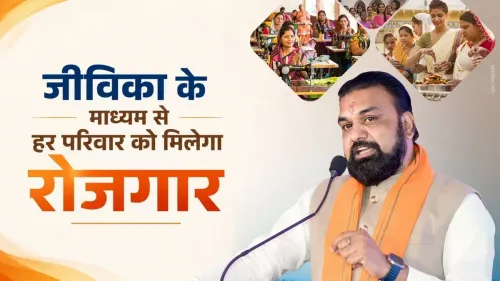
The Chief Minister's Office of Bihar on Tuesday, 21 July 2026 quoted Chief Minister Nitish Kumar describing Jeevika — the state's flagship rural livelihoods programme — as far more than a government scheme, calling it a mass movement for women's empowerment, rural economic strengthening, and social transformation over its 20-year journey.
The post, shared from the official @officecmbihar handle, quoted the Chief Minister as saying: 'Jeevika kewal ek yojana nahin, balki mahila sashaktikaran, gramin arthvyavastha ko sudridh banane aur samajik parivartan ka janaandolan hai' — ('Jeevika is not merely a scheme, but a mass movement for women's empowerment, strengthening the rural economy, and social transformation.')
Context
Jeevika, formally known as the Bihar Rural Livelihoods Project (BRLP), was launched in 2006 with support from the World Bank to organise rural women into self-help groups (SHGs) and connect them to credit, livelihoods, and social entitlements. Over two decades, it has grown into one of India's largest SHG-based programmes. The Chief Minister's remarks mark what appears to be a 20th anniversary milestone acknowledgement of the programme.
The programme operates under the Bihar Rural Livelihoods Promotion Society (JEEViKA) and has been cited as a model for inclusive rural development. It has expanded beyond income generation to cover nutrition, health, financial literacy, and women's participation in local governance.
Policy Backdrop
Jeevika is Bihar's counterpart to national SHG initiatives such as the Deendayal Antyodaya Yojana – National Rural Livelihoods Mission (DAY-NRLM), which the Government of India scaled up from state-level models including Bihar's. The Bihar programme is frequently referenced in policy circles as evidence that SHG-led models can deliver measurable poverty reduction in low-income, agrarian states.
Over 20 years, Jeevika has reportedly mobilised millions of women across Bihar's districts into SHGs, village organisations, and cluster-level federations. The programme's emphasis on samajik parivartan (social transformation) reflects its stated goal of shifting gender norms alongside economic outcomes — a dual mandate that distinguishes it from purely credit-linked schemes.
Stakeholders and Impact
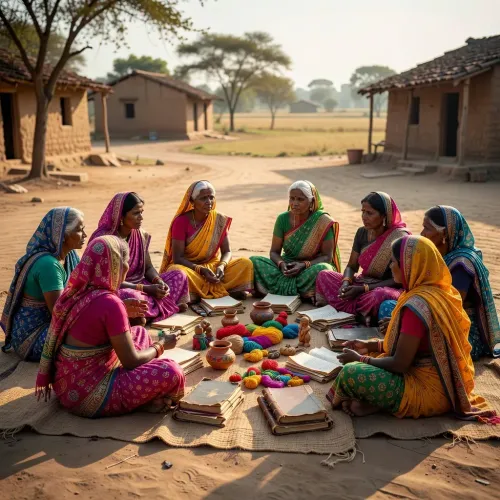
The primary beneficiaries are rural women from economically marginalised households across Bihar's 38 districts. Through Jeevika, SHG members have accessed micro-credit, vocational training, and linkages to government welfare schemes. The programme has also been credited with increasing women's participation in panchayati raj institutions.
For the state government, Jeevika represents a long-term investment in human capital and rural demand creation. The Chief Minister's framing of it as a janaandolan (mass movement) signals an intent to position the programme not as a top-down delivery mechanism but as a community-owned transformation — a distinction with implications for how its outcomes are measured and communicated politically.
What's Next
With the 20-year milestone now publicly acknowledged at the Chief Minister's level, the Bihar government is likely to intensify outreach around Jeevika's achievements in the months ahead. Expansion of the programme's scope — particularly into urban livelihoods and digital financial inclusion — will be closely watched as indicators of its next phase.
The Chief Minister's remarks reinforce Bihar's positioning of Jeevika as a replicable governance success story, one that may feature prominently in the state's development narrative ahead of future electoral cycles.
Point of View
The CM aligns Jeevika with India's tradition of grassroots social movements, lending it moral weight beyond administrative achievement. This framing also serves a forward-looking purpose: as Bihar approaches future electoral contests, Jeevika's rural women beneficiaries represent a significant and organised constituency. The 20-year milestone gives the government a credible, long-arc success story in a state where development narratives are fiercely contested.
NationPress
20 Oct 2026
Frequently Asked Questions
What is Jeevika in Bihar?
Jeevika, formally the Bihar Rural Livelihoods Project (BRLP), is a government programme launched in 2006 to organise rural women into self-help groups (SHGs) and connect them to credit, livelihoods, and social entitlements. It is managed by the Bihar Rural Livelihoods Promotion Society and is one of India's largest SHG-based programmes.
What did Bihar CM Nitish Kumar say about Jeevika in 2026?
On 21 July 2026, CM Nitish Kumar said Jeevika is 'not merely a scheme, but a mass movement for women's empowerment, strengthening the rural economy, and social transformation,' marking the programme's 20-year milestone.
How old is the Jeevika programme in Bihar?
Jeevika completed 20 years in 2026, having been launched in 2006 with World Bank support under the Bihar Rural Livelihoods Project.
How has Jeevika impacted women in Bihar?
Jeevika has mobilised millions of rural women across Bihar's 38 districts into SHGs, village organisations, and cluster federations, providing access to micro-credit, vocational training, government welfare schemes, and increased participation in panchayati raj institutions.
Is Jeevika connected to the national rural livelihoods mission?
Yes. Jeevika is Bihar's state-level counterpart to the national Deendayal Antyodaya Yojana – National Rural Livelihoods Mission (DAY-NRLM), and the Bihar model is frequently cited as having influenced the design of the national programme.