Bihar CM: Jeevika Women Contribute ₹1.36 Lakh Crore to State Economy
Synopsis
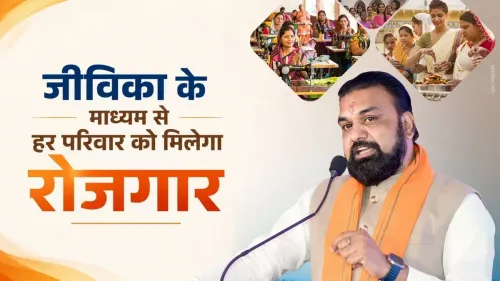
Bihar Chief Minister Nitish Kumar has stated that women's contribution to the state economy through the Jeevika rural livelihoods programme has reached approximately ₹1.36 lakh crore, highlighting the programme's role in advancing women's economic self-reliance across the state.
Key Takeaways
Bihar CM Nitish Kumar announced that women have contributed approximately ₹1.36 lakh crore to Bihar's economy through the Jeevika programme.
Jeevika (Bihar Rural Livelihoods Project) was launched in 2007 with World Bank support to organise rural women into self-help groups.
The programme is one of the largest self-help group (SHG) networks in India, aligned with the national NRLM framework.
The Chief Minister's Office described the figure as a 'powerful example of women's economic self-reliance and the state's overall development.' Updated figures are expected from future state economic surveys and Jeevika annual reports.
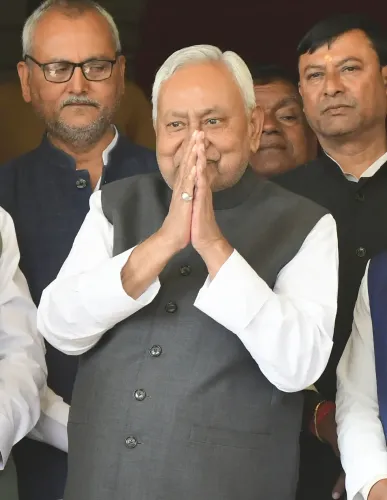
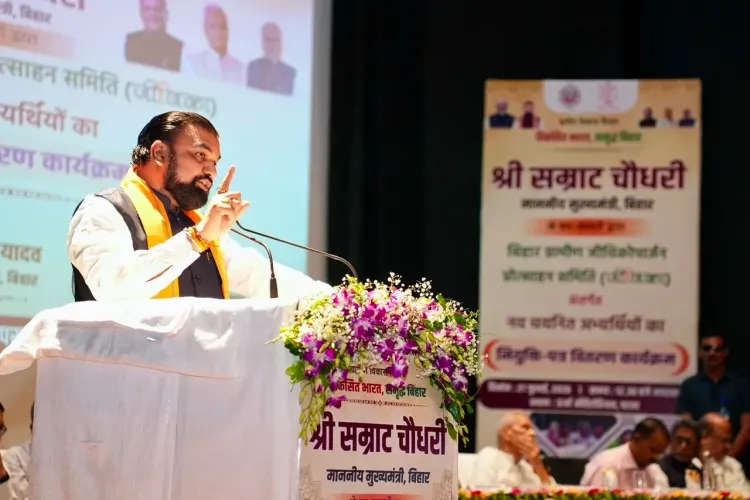
The Chief Minister's Office of Bihar on Tuesday, 21 July 2026 shared that Chief Minister Nitish Kumar has stated that women's contribution to Bihar's economy through the Jeevika programme has reached approximately ₹1.36 lakh crore, marking a significant milestone in the state's rural livelihoods mission.
Context
The post, shared from the official handle of the Chief Minister's Office, quoted CM Nitish Kumar as saying: 'Jeevika ke madhyam se Bihar ki arthvyavastha mein mahilaon ka yogdan lagbhag ₹1.36 lakh crore tak pahunch chuka hai' — ('Women's contribution to Bihar's economy through Jeevika has reached approximately ₹1.36 lakh crore'). The statement describes this figure as a 'powerful example of women's economic self-reliance and the state's overall development.'
The announcement underscores the scale at which Jeevika — formally the Bihar Rural Livelihoods Project — has woven women's self-help groups into the productive fabric of one of India's most populous states.
Policy Backdrop
Jeevika was launched in 2007 with World Bank support, with the explicit goal of mobilising rural women into self-help groups (SHGs) for savings, credit access, and enterprise activities. Over nearly two decades, the programme has grown into one of the largest SHG networks in the country.
Bihar's approach mirrors the national model under the National Rural Livelihoods Mission (NRLM), which has encouraged states to use women's collectives as vehicles for grassroots economic participation. States such as Andhra Pradesh and Tamil Nadu operate comparable programmes, but Bihar's Jeevika is frequently cited as a flagship example of the SHG model at scale.
CM Nitish Kumar, who has served multiple terms at the helm of the state, has consistently positioned women's empowerment and rural livelihoods as central planks of his administration's development agenda.
Stakeholders and Impact
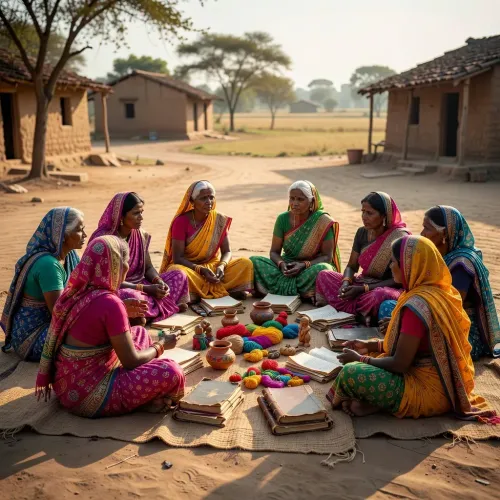
The primary beneficiaries of Jeevika are rural women across Bihar's districts, organised into self-help groups that provide a structured pathway to savings, micro-credit, and market linkages. A cumulative economic contribution of ₹1.36 lakh crore — if borne out by official state surveys — would represent a transformative shift in the economic agency of women in a state historically marked by low female labour-force participation.
Beyond individual households, the ripple effects extend to village economies, local supply chains, and the state's overall consumption base, making Jeevika a significant lever in Bihar's broader development calculus.
What's Next
Subsequent state economic surveys and Jeevika's annual programme reports are expected to provide updated and audited figures on women's economic contribution, offering a fuller picture of the programme's trajectory. Observers will also watch for potential announcements on further scaling of Jeevika or its integration with complementary livelihood and skilling schemes at both the state and central levels.
The figure cited by CM Nitish Kumar is likely to feature prominently in Bihar's policy communications ahead of any legislative or budgetary exercises, reinforcing the state's positioning of women-led growth as a core development narrative.
Point of View
As cited by CM Nitish Kumar, is a politically significant data point that frames Jeevika not merely as a welfare scheme but as a macroeconomic contributor — a framing that elevates women's SHGs from social policy to economic strategy. This fits a broader national arc in which state governments increasingly quantify the GDP-adjacent impact of livelihoods programmes to justify continued and expanded investment. For Bihar, a state that has long battled perceptions of economic backwardness, anchoring development claims to women's economic output serves a dual purpose: it signals governance effectiveness and reinforces a voter-friendly narrative of inclusive growth. The figure will need independent verification through official surveys to carry full analytical weight.
NationPress
20 Oct 2026
Frequently Asked Questions
What is Jeevika in Bihar?
Jeevika is Bihar's rural livelihoods programme, launched in 2007 with World Bank support, that organises rural women into self-help groups for savings, credit, and enterprise activities. It is one of the largest SHG networks in India.
How much have women contributed to Bihar's economy through Jeevika?
According to a statement by Chief Minister Nitish Kumar shared by the Chief Minister's Office of Bihar on 21 July 2026, women's contribution to Bihar's economy through Jeevika has reached approximately ₹1.36 lakh crore.
Who launched Jeevika and when?
Jeevika — formally the Bihar Rural Livelihoods Project — was launched in 2007 under the Bihar government with financial and technical support from the World Bank.
How does Jeevika help rural women in Bihar?
Jeevika organises rural women into self-help groups that provide access to savings mechanisms, micro-credit, and market linkages, enabling them to start or expand small enterprises and improve household incomes.
What is the National Rural Livelihoods Mission and how does Jeevika relate to it?
The National Rural Livelihoods Mission (NRLM) is a central government scheme that promotes women's self-help groups across India for economic empowerment. Bihar's Jeevika operates along the same model and is considered one of the flagship state-level implementations of this approach.