Ramaswamy Vows to End Sanctuary Cities in Ohio
Synopsis
Entrepreneur Vivek Ramaswamy has vowed to end sanctuary city policies in Ohio, declaring his state will become a 'sanctuary for sanity.' The pledge echoes a broader Republican push for state-level preemption of local non-cooperation policies with federal immigration enforcement.
Key Takeaways
Entrepreneur Vivek Ramaswamy posted on X on 20 October 2026 vowing to end sanctuary cities in Ohio .
He framed Ohio as a future 'sanctuary for sanity,' signalling a political or policy campaign in his home state.
Sanctuary cities are local jurisdictions that limit cooperation with federal immigration enforcement agencies such as ICE .
The Trump administration's 2017 Executive Order 13768 previously threatened to withhold federal grants from sanctuary jurisdictions.
Multiple Republican-led states have passed statutes restricting sanctuary practices since 2017 , providing a legislative template.
Ramaswamy holds no current elected office in Ohio; his path to influence runs through the Ohio General Assembly and public mobilisation.
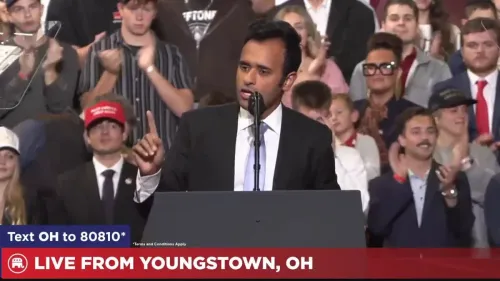
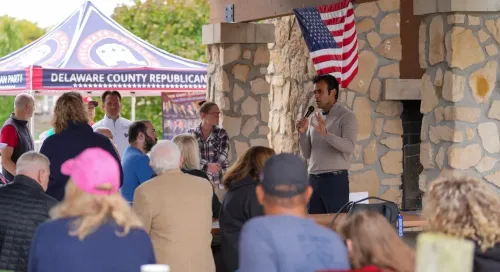
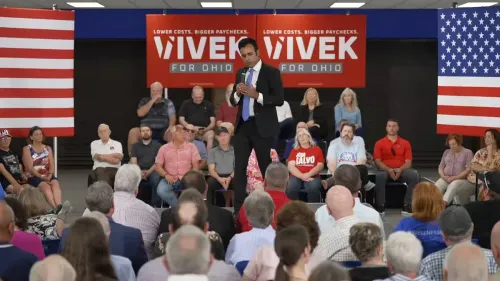
A sharp political declaration from Ohio — entrepreneur Vivek Ramaswamy has publicly vowed to dismantle sanctuary city policies across his home state, framing the fight as a battle for 'sanity' itself in a post on X on Tuesday, 20 October 2026.
Ramaswamy posted: 'I refuse to accept this as our future. We'll end sanctuary cities in Ohio and make our state a sanctuary for sanity.' The declaration is brief, combative, and deliberate — a candidate-style rallying cry aimed squarely at Ohio's political landscape.
What sanctuary cities actually do — and why Ohio is a battleground
Sanctuary cities are local jurisdictions that restrict cooperation with federal immigration enforcement agencies such as ICE (Immigration and Customs Enforcement). In practice, they limit how much local police and jails share information with federal authorities about undocumented individuals in custody. Supporters argue this builds community trust with immigrant populations; opponents argue it creates gaps in law-enforcement accountability.
Ohio has been a recurring site of this tension. Several of the state's major urban centres have adopted policies that limit local cooperation with federal immigration enforcement, drawing periodic pushback from Republican state legislators. The state's political geography — a large, diverse urban-rural divide — makes it a natural flashpoint for this debate.
The Republican playbook Ramaswamy is reaching for
Ramaswamy's language fits squarely within a broader Republican strategy that accelerated after 2017, when the Trump administration's Executive Order 13768 directed federal agencies to withhold grants from sanctuary jurisdictions. Since then, multiple Republican-led states have passed statutes restricting or outright banning sanctuary practices — citing public-safety and rule-of-law arguments.
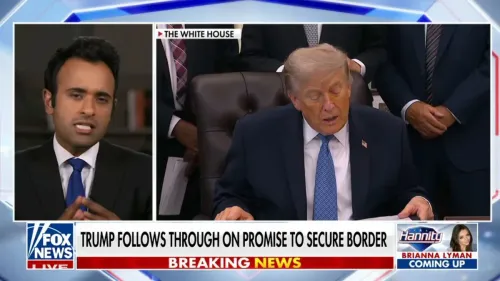
For Ramaswamy, the optics are layered. Born and raised in Ohio, he leveraged the state's identity heavily during his 2024 Republican presidential primary campaign. His subsequent role as co-lead of the Department of Government Efficiency (DOGE) advisory effort under the Trump administration further sharpened his profile as a disruptor willing to challenge entrenched institutional arrangements. A move against sanctuary cities would be consistent with that arc — state-level enforcement preemption as a logical extension of federal efficiency arguments.
What comes next in the Ohio General Assembly
The watch now is on the Ohio General Assembly. Any bill targeting local sanctuary ordinances would need to clear both chambers — and Ramaswamy, who holds no current elected office, would need either a formal political role or a powerful lobbying posture to drive such legislation. His influence would likely operate through public pressure, donor networks, and the sheer attention his national profile commands in Columbus.
The stakes extend beyond Ohio. If Ramaswamy successfully uses a state as a laboratory for a hard-line anti-sanctuary framework, it hands Republicans a replicable model for other contested states heading into the next election cycle. Ohio could become the proof of concept — or the cautionary tale.
Point of View
Where the legal and political terrain is more tractable than in Congress. The 'sanctuary for sanity' framing is rhetorically disciplined: it inverts the sanctuary concept, making his opponents defend a label he has now weaponised. For a figure who built national visibility through DOGE and a presidential run, Ohio is both a natural base and a proving ground — the state could hand him a replicable model that travels nationally, or it could test whether his influence without elected office can actually move legislation.
NationPress
20 Oct 2026
Frequently Asked Questions
What are sanctuary cities and why does Ramaswamy oppose them?
Sanctuary cities are local jurisdictions that limit how much local police and jails cooperate with federal immigration enforcement agencies like ICE. Ramaswamy, in line with mainstream Republican positions, argues such policies undermine public safety and the rule of law.
Does Vivek Ramaswamy hold any political office in Ohio?
As of this post, Ramaswamy holds no elected office in Ohio. He is the founder and executive chairman of Strive Asset Management and a former co-lead of the DOGE advisory effort under the Trump administration.
Which Ohio cities have sanctuary policies?
Several of Ohio's major urban centres have adopted policies limiting local cooperation with federal immigration enforcement, though the specific scope varies by city. State-level legislation to preempt these policies has been debated periodically in the Ohio General Assembly.
What did Trump's 2017 executive order say about sanctuary cities?
Executive Order 13768, signed in 2017, directed federal agencies to withhold grants from jurisdictions deemed to be sanctuary cities, an attempt to use federal funding as leverage to enforce immigration cooperation.
Is Vivek Ramaswamy running for political office in Ohio in 2026?
Ramaswamy has not formally announced a candidacy for any Ohio office as of this post. His declaration, however, is widely read as a signal of active political ambition within the state.