Ramaswamy Vows to Clean Up Crime in Cincinnati, Ohio
Synopsis
Entrepreneur Vivek Ramaswamy has pledged to clean up street crime in his hometown of Cincinnati and other major Ohio cities, posting on X after personally walking the city's streets in June 2026. The statement marks a pivot from national to state-level public-safety advocacy.
Key Takeaways
Entrepreneur Vivek Ramaswamy posted on June 21, 2026 , vowing to address street crime in Cincinnati, Ohio , his hometown.
Ramaswamy stated the effort would extend to 'other great cities' across Ohio , signalling a statewide public-safety agenda.
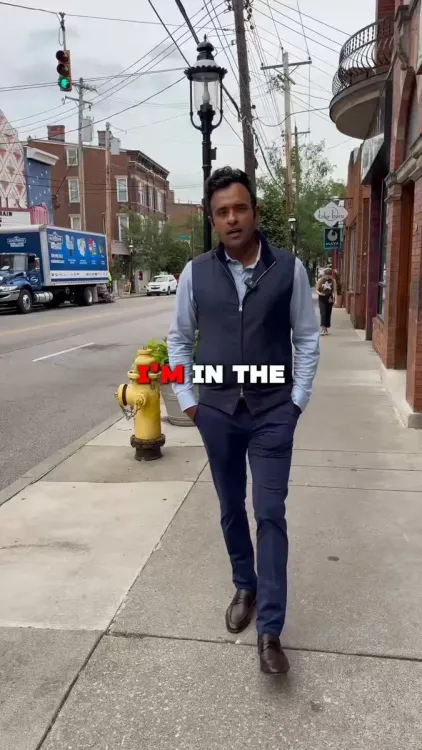
He confirmed he personally walked Cincinnati's streets earlier in the week as part of his assessment.
The pledge is consistent with law-and-order positions Ramaswamy championed during his 2024 Republican presidential campaign .
Specific policy proposals, local partnerships, or pilot programmes have not yet been announced.
The move reflects a broader pattern of former national Republican candidates refocusing on state and local governance.
Entrepreneur Vivek Ramaswamy on Sunday, June 21, 2026, pledged to tackle street crime in Cincinnati, Ohio — his hometown — declaring that similar action would extend to other major cities across the state, after personally walking the streets of the city earlier in the week.
Context
In the post, Ramaswamy wrote: 'Time to clean up crime on the streets in my hometown of Cincinnati. And we'll do it in the other great cities across our state too. Walked the streets this week.' The statement signals a deliberate shift in focus from the national stage — where Ramaswamy served as co-lead of the Department of Government Efficiency (DOGE) advisory effort — toward state and local governance in Ohio.
Cincinnati is Ohio's third-largest city and has faced documented challenges with urban crime rates in recent years. Ramaswamy's personal street walk underscores a ground-level approach to understanding the city's public-safety landscape.
Policy Backdrop
Ramaswamy's public-safety messaging is consistent with positions he championed during his 2024 Republican presidential campaign, when he repeatedly called for renewed law-and-order policies to address rising urban crime. His current framing — focused on Ohio's cities broadly — suggests an ambition that extends beyond Cincinnati alone.
The statement fits a wider post-2020 pattern in which Republican figures have prioritised street-level crime reduction in major urban centres, following documented increases in homicide and violent crime rates across many American cities. Comparable public-safety messaging has emerged from Republican governors and mayors in states facing similar challenges.
Stakeholders and Impact
Cincinnati residents and local law-enforcement agencies are the most immediate stakeholders. A credible commitment from a figure of Ramaswamy's national profile could translate into political pressure on city administrations and police departments across Ohio to accelerate crime-reduction measures.
The broader Ohio electorate, particularly in urban centres such as Columbus and Cleveland, will watch whether Ramaswamy's pledge materialises into concrete policy proposals or partnerships with local authorities. City residents who have raised concerns about public safety stand to be the most directly affected by any resulting initiatives.
What's Next
Observers will look for follow-up announcements of specific Ohio policy proposals, local government partnerships, or pilot programmes targeting Cincinnati and other cities in the state. Whether Ramaswamy formalises his role in Ohio's political landscape — through a gubernatorial bid, an advisory capacity, or independent civic action — remains the central question his statement raises.
His trajectory mirrors that of several former national candidates who have redirected energy toward state and local issues after high-profile federal runs, making Ohio a potential testing ground for the law-and-order policy agenda he articulated on the national stage.
Point of View
Now aimed at Ohio's urban electorate. By physically walking the streets before making the announcement, he is projecting a ground-level credibility that distinguishes the statement from routine political rhetoric. The extension of the promise to 'other great cities' in Ohio hints at a statewide political strategy, possibly laying groundwork for a future executive or legislative role. Whether the pledge translates into durable policy or remains aspirational messaging will define its long-term significance.
NationPress
20 Sept 2026
Frequently Asked Questions
What did Vivek Ramaswamy say about Cincinnati crime?
Ramaswamy posted on X on June 21, 2026, pledging to 'clean up crime on the streets' in Cincinnati, his hometown, and said the effort would extend to other major cities across Ohio.
Is Vivek Ramaswamy running for governor of Ohio?
Ramaswamy has not announced a gubernatorial bid as of this report, but his focus on Ohio cities and public safety has fuelled speculation about a future state-level political role.
What is Cincinnati's crime situation in 2026?
Cincinnati, Ohio's third-largest city, has faced documented challenges with urban crime rates in recent years, a trend Ramaswamy cited as motivation for his public-safety pledge.
What is Vivek Ramaswamy's background in government?
Ramaswamy is an entrepreneur and founder of Strive Asset Management who ran for the Republican presidential nomination in 2024 and later served as co-lead of the Department of Government Efficiency advisory effort.
Which Ohio cities did Ramaswamy mention in his crime pledge?
Ramaswamy specifically named Cincinnati but stated the effort would cover 'other great cities across our state,' implying a broader Ohio-wide public-safety agenda without naming additional cities.