CM Yogi Eyes No. 1 Rank for Lucknow in Swachh Survey
Synopsis
Chief Minister Yogi Adityanath has declared Lucknow Nagar Nigam's third-place national cleanliness ranking a significant achievement and set the top spot as the state's next target, framing it as a collective responsibility of citizens, elected representatives, and sanitation workers alike.
Key Takeaways
Lucknow Nagar Nigam has ranked third nationally in the Swachh Survekshan cleanliness survey, according to CM Yogi Adityanath .
CM Yogi has publicly set first place in the national ranking as the next target for the city.
The Chief Minister emphasised that achieving the goal is the shared responsibility of citizens , not just the mayor, councillors, or sanitation workers.
Swachh Survekshan is an annual survey by the Ministry of Housing and Urban Affairs under Swachh Bharat Mission-Urban , running since 2016 .
Uttar Pradesh has shown incremental improvement in the survey rankings across major cities in recent cycles.
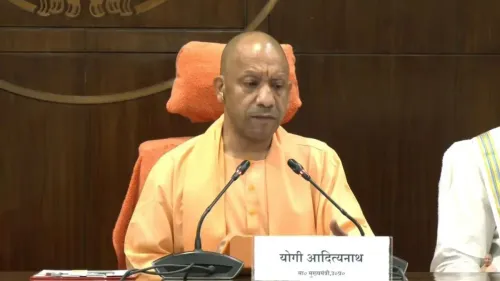
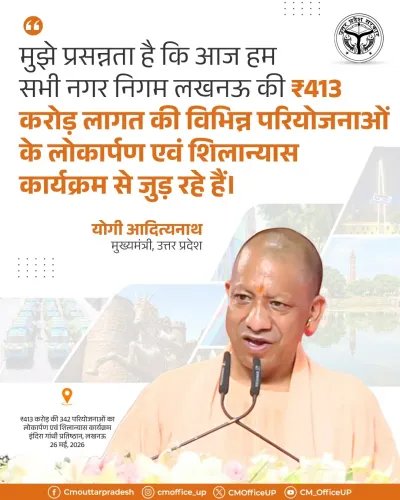
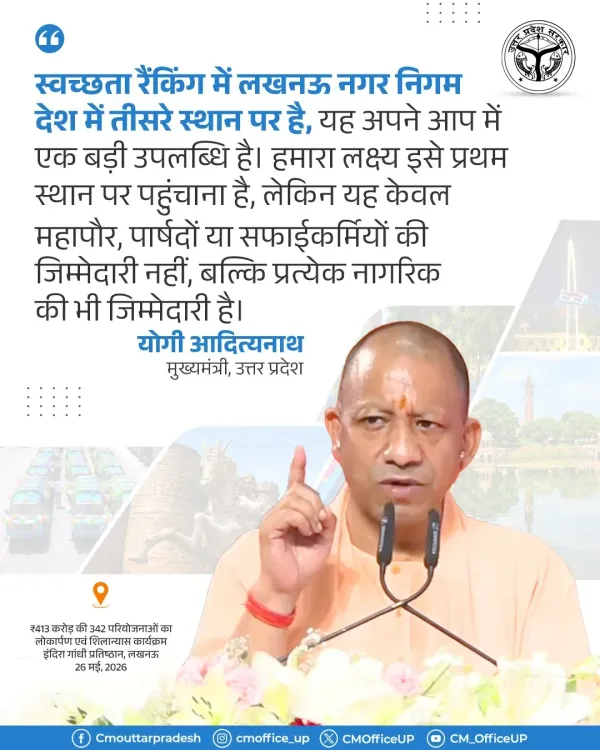
The Chief Minister's Office of Uttar Pradesh shared remarks by Chief Minister Yogi Adityanath on Tuesday, 26 May 2026, highlighting that Lucknow Nagar Nigam has secured the third position in the national cleanliness ranking and setting a public goal of reaching the top spot.
Context
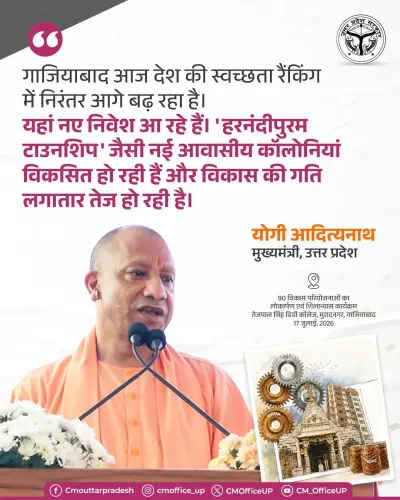
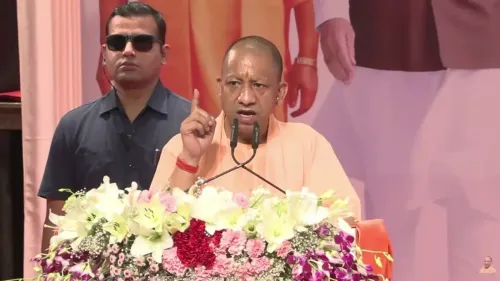
Addressing the achievement, CM Yogi Adityanath said: 'Swachhata ranking mein Lucknow Nagar Nigam desh mein teesre sthan par hai' ('Lucknow Municipal Corporation stands third in the country in the cleanliness ranking — this is in itself a major achievement'). He framed the push for the first rank not merely as an administrative target but as a shared civic obligation, stating that the responsibility does not rest solely with the mayor, councillors, or sanitation workers, but with every citizen.
The remarks were attributed directly to the Chief Minister and posted by the official CMOfficeUP account, signalling that the state government is treating the ranking as a high-visibility governance metric heading into the next survey cycle.
Policy Backdrop
The cleanliness rankings cited by the Chief Minister are part of Swachh Survekshan, an annual benchmarking exercise conducted by the Ministry of Housing and Urban Affairs under the Swachh Bharat Mission-Urban, which was launched in October 2014. The survey, which began in 2016, evaluates cities on parameters including solid waste management, open defecation, and citizen feedback.
Uttar Pradesh has reported incremental gains for its major cities in successive survey cycles, with state-level implementation tied to central scheme funding and public-awareness drives. Lucknow, as the state capital, has been a focal point of these efforts, with Lucknow Nagar Nigam expanding waste-processing infrastructure and citizen-engagement programmes in recent years.
Stakeholders and Impact
The statement directly involves Lucknow's roughly 35 lakh residents, the elected body of Lucknow Nagar Nigam including the mayor and ward councillors, and the city's sanitation workforce. By explicitly naming citizens as co-responsible, the Chief Minister's framing shifts the public discourse from a top-down administrative exercise to a participatory civic campaign.
For sanitation workers and municipal staff, the third-place ranking represents a measurable outcome of sustained field operations. For residents, the call to action implies that behavioural change — proper waste segregation, timely disposal, and community cleanliness — will be central to any bid for the top rank.
What's Next
The immediate focus will be on whether Lucknow Nagar Nigam announces fresh citizen-awareness or waste-management programmes in response to the Chief Minister's public target. The next Swachh Survekshan cycle will serve as the definitive scorecard for the city's ambition to move from third to first place nationally.
State-level political attention at this level typically accelerates local-body action on pending infrastructure gaps and drives higher citizen-feedback participation — both of which are weighted components of the survey methodology.
Point of View
Leveraging a central government survey to drive local-body performance in the run-up to the next Swachh Survekshan cycle. By distributing responsibility to individual citizens rather than confining accountability to elected officials and sanitation workers, the framing insulates the administration from sole blame if the city falls short while simultaneously mobilising a broader base of civic participation. This approach mirrors a well-established pattern in UP governance under Yogi, where national scheme metrics are converted into state-level political messaging. The statement also signals to municipal functionaries that the Chief Minister's office is watching ranking outcomes closely, which historically accelerates on-ground action.
NationPress
10 Oct 2026
Frequently Asked Questions
What rank did Lucknow Nagar Nigam get in Swachh Survekshan?
According to Chief Minister Yogi Adityanath, Lucknow Nagar Nigam has secured the third position nationally in the Swachh Survekshan cleanliness ranking. The Chief Minister described this as a major achievement and set first place as the next goal.
What is Swachh Survekshan and who conducts it?
Swachh Survekshan is an annual national cleanliness ranking survey conducted by the Ministry of Housing and Urban Affairs under the Swachh Bharat Mission-Urban . It has been benchmarking Indian cities on sanitation and waste management parameters since 2016 .
What did CM Yogi say about Lucknow's cleanliness ranking?
CM Yogi Adityanath said that reaching the top national rank is not only the responsibility of the mayor, councillors, or sanitation workers, but of every citizen. He called the third-place ranking a big achievement and urged collective civic action to reach first place.
How has Uttar Pradesh performed in Swachh Survekshan in recent years?
Uttar Pradesh has reported incremental gains for its major cities in successive Swachh Survekshan cycles, with state-level implementation tied to Swachh Bharat Mission-Urban funding and public-awareness campaigns. Lucknow has been a particular focus of these efforts.
What happens next for Lucknow's cleanliness ranking?
The next Swachh Survekshan cycle will be the key test of whether Lucknow Nagar Nigam can move from third to first place. Fresh citizen-awareness and waste-management initiatives from the municipal corporation are expected in response to the Chief Minister's public target.