CM Samrat Choudhary Holds Agri Meet With Union Min Chouhan
Synopsis
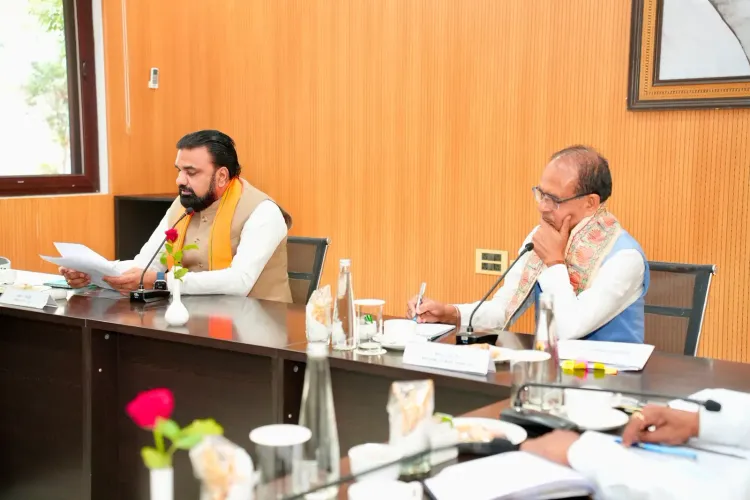
Bihar Chief Minister Samrat Choudhary and Union Agriculture Minister Shivraj Singh Chouhan met at Loksevak Awas in Patna on June 17, 2026, to deliberate on farm income growth, integrated farming, rural development, and economic empowerment of Jeevika Didis, with several key decisions taken.
Key Takeaways
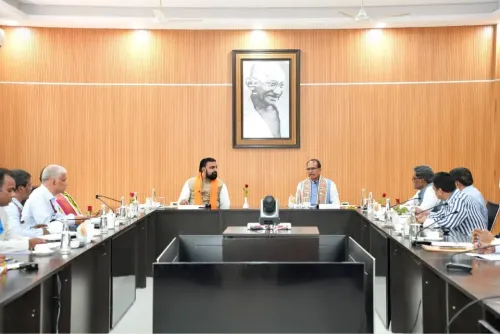
Bihar Chief Minister Samrat Choudhary and Union Agriculture Minister Shivraj Singh Chouhan held a joint meeting at Loksevak Awas, Patna on June 17, 2026 .
The meeting covered rural development, agricultural innovation, farmers' income growth, and women's empowerment.
Key decisions were taken to give 'new momentum' to agriculture and rural development in Bihar and to ensure farmers receive better prices for their produce.
Promotion of integrated farming was identified as a priority to diversify and increase rural household incomes.
Economic empowerment of Jeevika Didis — women in JEEViKA self-help groups — was a specific agenda item, reflecting the programme's central role in Bihar's rural livelihoods strategy.
The meeting reflects continued centre-state coordination under BJP governments on agricultural modernisation and SHG-based women empowerment.
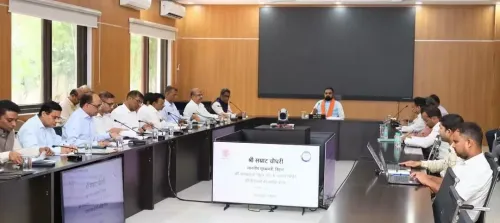
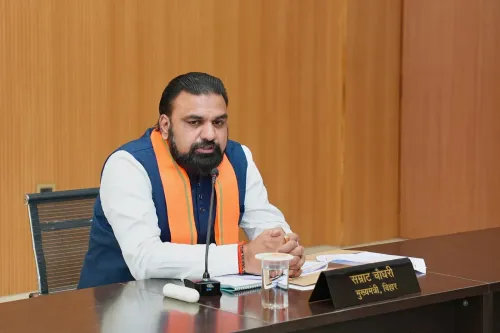
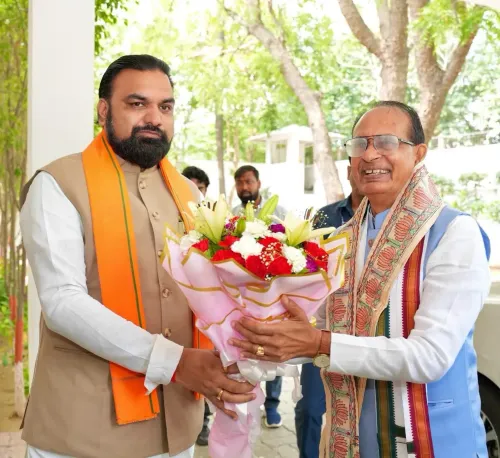
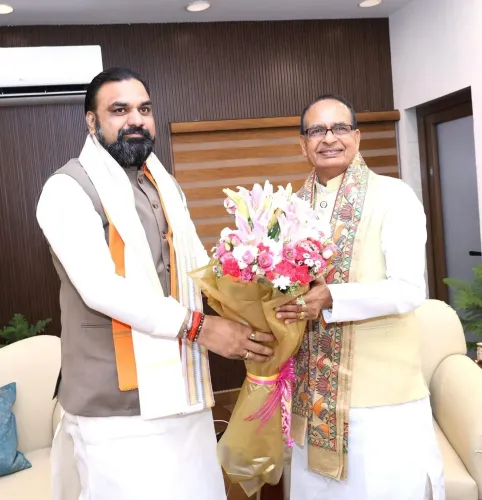
Bihar Chief Minister Samrat Choudhary on Wednesday, June 17, 2026, chaired a high-level meeting at Loksevak Awas, Patna, in the presence of Union Minister of Agriculture and Farmers Welfare Shivraj Singh Chouhan, focusing on rural development, agricultural innovation, farmers' income growth, and women's economic empowerment.
Context
The meeting brought together state and central leadership to deliberate on accelerating Bihar's agricultural and rural development agenda. Discussions spanned a wide range of subjects — from boosting farm incomes and promoting integrated farming models to strengthening the economic position of Jeevika Didis, the women members of self-help groups under Bihar's flagship JEEViKA rural livelihoods programme.
Chief Minister Choudhary posted about the meeting on X, stating that 'kisan ki aay vriddhi tatha mahila sashaktikaran' (farmers' income growth and women's empowerment) were central to the deliberations, with several key decisions taken at the session.
Policy Backdrop
The JEEViKA programme, launched in 2007 with World Bank support, has been a cornerstone of Bihar's rural poverty-reduction strategy, organising women across the state into self-help groups to build sustainable livelihoods. Wednesday's meeting signals continued political will at both state and central levels to deepen and expand its reach.
Bihar has pursued agricultural diversification through successive Agriculture Road Map phases since 2008, emphasising irrigation, value addition, and crop diversification. The Union government's long-standing goal of improving farmers' income through market linkages and integrated farming systems aligns closely with these state-level priorities.
Shivraj Singh Chouhan, who served as Madhya Pradesh Chief Minister for over a decade and built a reputation for farmer-centric governance, brings considerable credibility and experience to the central agriculture portfolio. His presence at the Patna meeting underscores the importance the BJP-led government at the Centre places on Bihar's farm sector.
Stakeholders and Impact
Bihar's farming community and the women enrolled in JEEViKA self-help groups stand as the primary beneficiaries of any decisions emerging from the meeting. The state is home to millions of smallholder farmers who depend on better market access and price realisation for their produce.
The emphasis on integrated farming — combining crop cultivation with horticulture, animal husbandry, and fisheries — is seen as a pathway to diversify income sources for rural households and reduce dependence on single-crop revenues. Decisions around ensuring farmers receive 'better value for their produce', as stated in the post, could translate into strengthened market linkage schemes and value-chain interventions across Bihar's districts.
For Jeevika Didis, enhanced economic empowerment measures could mean expanded credit access, better market connections for SHG products, and increased participation in agri-value chains, reinforcing both income and social standing at the grassroots level.
What's Next
The specific decisions taken at the meeting are expected to be translated into actionable schemes and budget allocations under both state and central programmes. Observers will watch for follow-up announcements on market infrastructure, integrated farming pilots, and SHG-linked agricultural initiatives across Bihar's districts.
The centre-state coordination demonstrated at this meeting is consistent with a broader national pattern of leveraging BJP-governed states as implementation partners for agricultural modernisation. How quickly the decisions move from the meeting room to the field will be the key indicator of the session's real impact for Bihar's farmers and rural women.
Point of View
A combination that has shown measurable results in other states. The broader arc here is one of competitive federalism in BJP-governed states, where agricultural outcomes increasingly double as electoral narratives.
NationPress
18 Sept 2026
Frequently Asked Questions
What was discussed at the Samrat Choudhary and Shivraj Singh Chouhan meeting in Patna?
The meeting at Loksevak Awas, Patna on June 17, 2026 covered rural development, agricultural innovation, increasing farmers' income, promotion of integrated farming, and economic empowerment of Jeevika Didis under Bihar's JEEViKA self-help group programme.
Who are Jeevika Didis and why are they important in Bihar?
Jeevika Didis are women members of self-help groups under Bihar's JEEViKA rural livelihoods programme, launched in 2007 with World Bank support. The programme organises rural women to build sustainable livelihoods and reduce poverty, making them a key target group for economic empowerment initiatives.
What is integrated farming and why is Bihar promoting it?
Integrated farming combines crop cultivation with horticulture, animal husbandry, and fisheries to diversify income sources for rural households. Bihar is promoting it to reduce dependence on single-crop revenues and improve overall farmer incomes, in line with national agricultural policy goals.
What is Shivraj Singh Chouhan's role in Indian agriculture?
Shivraj Singh Chouhan is the Union Minister of Agriculture and Farmers Welfare. He previously served as Chief Minister of Madhya Pradesh for over a decade and is known for farmer welfare schemes, bringing significant experience to the central agriculture portfolio.
What is Bihar's Agriculture Road Map?
Bihar's Agriculture Road Map is a series of state policy frameworks launched since 2008 that emphasise crop diversification, irrigation expansion, and value addition to modernise the state's farm sector and improve rural incomes.