CM Samrat Choudhary targets 1 crore self-reliant women in Bihar
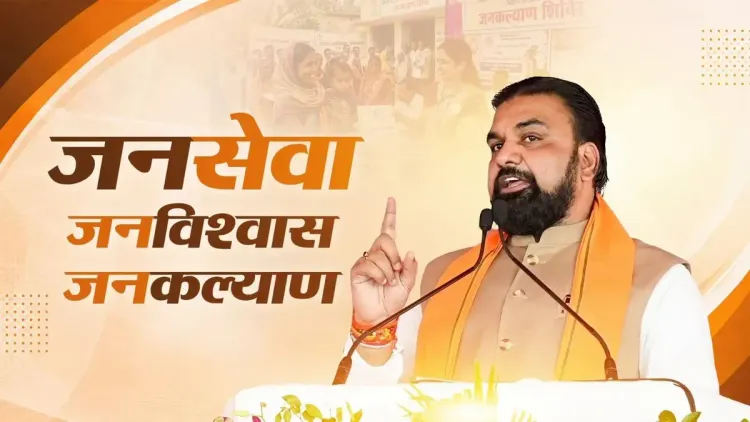
Synopsis
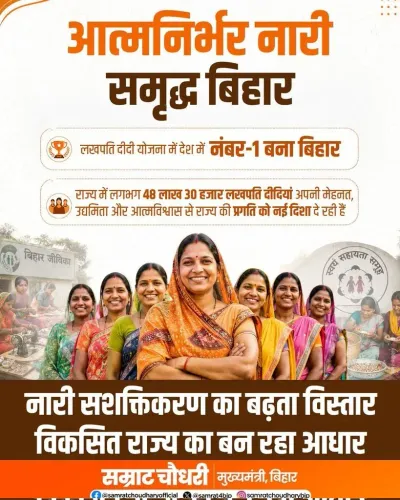
Bihar Chief Minister Samrat Choudhary has announced a target to make 1 crore women financially self-reliant within two years, building on 48 lakh Lakhpati Didis already enrolled under the state's DAY-NRLM-linked livelihood programme.
Key Takeaways
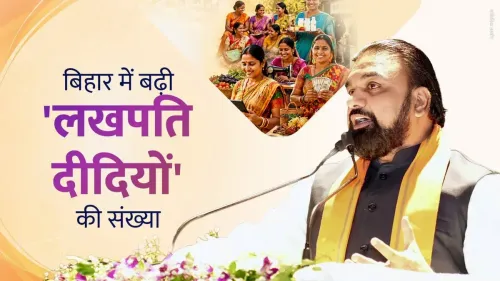
48 lakh women in Bihar have already been enrolled as Lakhpati Didis — earning at least Rs 1 lakh annually through self-help group-linked livelihoods.
CM Samrat Choudhary has set a target of reaching 1 crore self-reliant women within the next two years .
The Lakhpati Didi concept was scaled nationally in the 2023-24 Union Budget under the DAY-NRLM framework.
Achieving the target requires enrolling an additional 52 lakh women through expanded SHG mobilisation, skill training, and credit access.
The programme is framed under the #ViksitBihar vision, positioning women's economic inclusion as central to the state's development agenda.
Progress on this target is expected to be a key political benchmark heading into Bihar's 2027 electoral cycle .
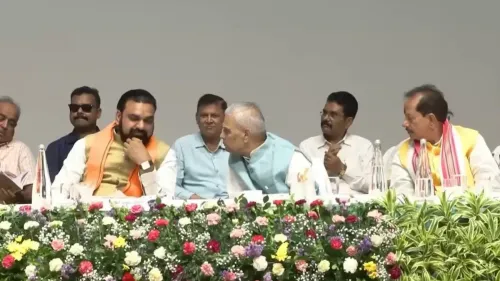
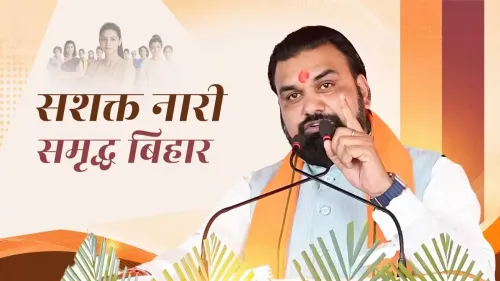
Bihar Chief Minister Samrat Choudhary on Wednesday, June 17, 2026, declared that a new chapter in women's empowerment is being written in Bihar, citing 48 lakh Lakhpati Didis already enrolled under the state's flagship livelihood programme. He set an ambitious target of making 1 crore women financially self-reliant within the next two years.
Posting on X, Choudhary wrote: '48 lakh Lakhpati Didigon ke saath Bihar mein mahila sashaktikaran ka naya adhyaya likha ja raha hai' — 'A new chapter of women's empowerment is being written in Bihar with 48 lakh Lakhpati Didis.' He added that the goal is to make 1 crore sisters self-reliant in the next two years, so that every woman, economically strengthened, can become a participant in the progress of her family and society.
Context
The Lakhpati Didi initiative is rooted in the Deendayal Antyodaya Yojana – National Rural Livelihoods Mission (DAY-NRLM), which was restructured in 2011 to focus on graduating women in self-help groups (SHGs) to higher income brackets. The concept of a 'Lakhpati Didi' — a woman earning at least Rs 1 lakh annually through sustainable livelihood activities — was formally scaled at the national level in the 2023-24 Union Budget, with a target of creating one crore such women across Indian states.
Bihar, with one of India's largest rural female populations, has been an active participant in this national push. The state's current NDA dispensation under CM Choudhary has set its own numeric milestones, building on the SHG infrastructure laid by successive governments over two decades.
Policy Backdrop
Indian states have used self-help group platforms since the early 2000s to channel credit, skills training, and market linkages to rural women. Bihar has followed this template while layering state-specific income thresholds and beneficiary targets atop the national framework. The #ViksitBihar hashtag used by the Chief Minister signals that women's economic inclusion is being positioned as a pillar of the state's broader development vision.
The two-year timeline announced by Choudhary implies scaling from the current 48 lakh enrolled women to 1 crore — an addition of roughly 52 lakh beneficiaries — through expanded SHG mobilisation, skill-building, and access to institutional credit.
Stakeholders and Impact
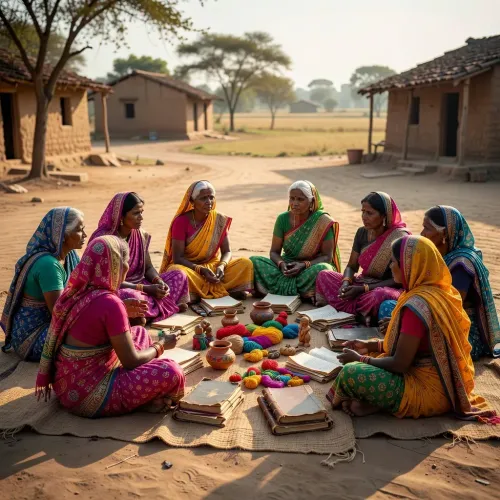
The primary beneficiaries are rural women in Bihar organised into self-help groups, particularly those in economically marginalised households. For these women, achieving the Rs 1 lakh annual income threshold means access to better nutrition, education for children, and reduced dependence on informal moneylenders.
The programme also has downstream effects on local rural economies, as SHG-linked enterprises — spanning handicrafts, food processing, and agri-services — generate demand and supply chains within villages. Financial institutions partnered with DAY-NRLM stand to expand their rural credit portfolios as more women graduate to the Lakhpati tier.
What's Next
The two-year deadline set by CM Choudhary will make the Lakhpati Didi programme a key performance indicator heading into Bihar's 2027 state electoral cycle. Progress reports and any mid-term review are expected to feature prominently in the state's 2026-27 budget session. Independent assessments of actual income levels among enrolled women — beyond enrolment numbers — will be critical to evaluating whether the programme delivers substantive economic change or remains largely a headline figure.
Point of View
Using verifiable enrolment numbers to signal governance momentum. The two-year timeline is politically calibrated — it lands squarely before Bihar's next assembly election, making the 1 crore target a de facto campaign promise. The broader pattern reflects a shift in Indian welfare politics where women's SHG networks have become both a delivery mechanism and an electoral constituency. The real test will be whether 'Lakhpati' status translates into sustained income above Rs 1 lakh or merely marks a point-in-time enrolment figure.
NationPress
19 Sept 2026
Frequently Asked Questions
What is the Lakhpati Didi scheme in Bihar?
The Lakhpati Didi scheme in Bihar is a programme under the Deendayal Antyodaya Yojana – National Rural Livelihoods Mission (DAY-NRLM) that helps women in self-help groups earn at least Rs 1 lakh annually through sustainable livelihood activities such as handicrafts, food processing, and agri-services.
How many Lakhpati Didis are there in Bihar in 2026?
Bihar Chief Minister Samrat Choudhary stated on June 17, 2026, that 48 lakh women have been enrolled as Lakhpati Didis in the state, with a target to reach 1 crore within two years.
What is Bihar CM Samrat Choudhary's target for women empowerment?
CM Samrat Choudhary has announced a target of making 1 crore women in Bihar financially self-reliant within the next two years under the Lakhpati Didi programme.
What is the ViksitBihar initiative?
'ViksitBihar' is the overarching development vision promoted by the Bihar government under CM Samrat Choudhary, under which women's economic empowerment through schemes like Lakhpati Didi is positioned as a core pillar.
How does the Lakhpati Didi scheme work?
Women organised in self-help groups receive skill training, access to institutional credit, and market linkages under DAY-NRLM. Those who achieve an annual household income of at least Rs 1 lakh through these livelihood activities are classified as Lakhpati Didis.