CM Samrat Choudhary Highlights 30 Lakh Lakhpati Didis in Bihar
Synopsis
Bihar Chief Minister Samrat Choudhary says over 30 lakh women have become Lakhpati Didis through JEEViKA self-help groups, crediting the Mukhyamantri Mahila Udyami Evam Rozgar Yojana with delivering financial support and self-employment to rural women across the state.
Key Takeaways
Bihar CM Samrat Choudhary announced that more than 30 lakh women in Bihar have attained 'Lakhpati Didi' status, earning at least Rs 1 lakh annually.
JEEViKA , launched in 2007 as the Bihar Rural Livelihoods Project, underpins the state's women's self-help group network and rural livelihoods ecosystem.
The Mukhyamantri Mahila Udyami Evam Rozgar Yojana has been cited as a key vehicle for delivering financial assistance and credit linkage to women for self-employment.
Bihar's SHG programme is aligned with the national Lakhpati Didi mission, which targets two crore women across India reaching the Rs 1 lakh income threshold.
JEEViKA groups are active across villages statewide, driving rural financial inclusion and micro-enterprise development.
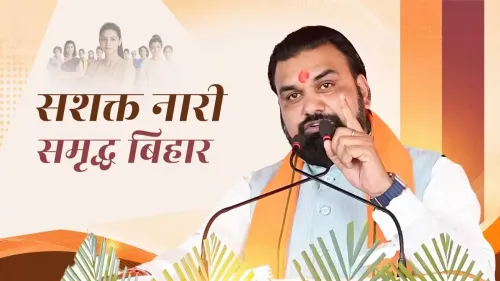
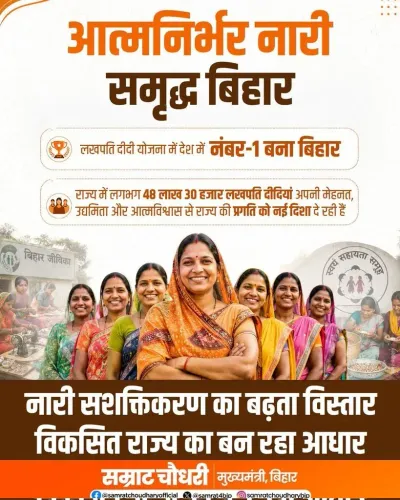
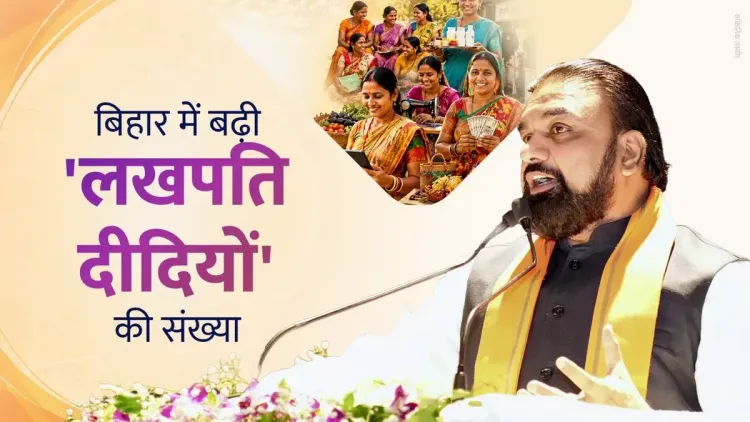
Bihar Chief Minister Samrat Choudhary on Tuesday, 21 July 2026, highlighted the expanding reach of the state's JEEViKA programme, stating that more than 30 lakh women in Bihar have now attained the status of 'Lakhpati Didis' — a benchmark denoting an annual household income of at least Rs 1 lakh — as rural self-help groups continue to drive women's economic empowerment across the state.
Context
Posting in Hindi, Chief Minister Choudhary described JEEViKA Didis as 'samridh Bihar ki sabse badi takat' (the greatest strength of a prosperous Bihar). He credited the Mukhyamantri Mahila Udyami Evam Rozgar Yojana with channelling financial assistance directly to women, connecting them to self-employment and economic self-reliance. The post, accompanied by a video, was shared under the hashtag #JEEViKA.
The Chief Minister noted that JEEViKA groups are now writing new stories of development, employment, and prosperity in villages across the state, framing the programme as central to Bihar's rural transformation.
Policy Backdrop
JEEViKA — formally the Bihar Rural Livelihoods Project — was launched in 2007 to federate women into self-help groups (SHGs) for savings, credit access, and livelihood support. It was later aligned with the National Rural Livelihoods Mission (NRLM), which scaled the SHG model nationally from 2011, with Bihar emerging as one of its largest implementation states.
The Lakhpati Didi initiative — targeting women in SHGs to cross the Rs 1 lakh annual income threshold — was announced at the national level in 2023, with a goal of enabling two crore women across India to achieve this benchmark. Bihar's state-level schemes, including the Mukhyamantri Mahila Udyami Evam Rozgar Yojana, have been positioned as complementary instruments providing credit linkage and enterprise support to accelerate this outcome.
Stakeholders and Impact
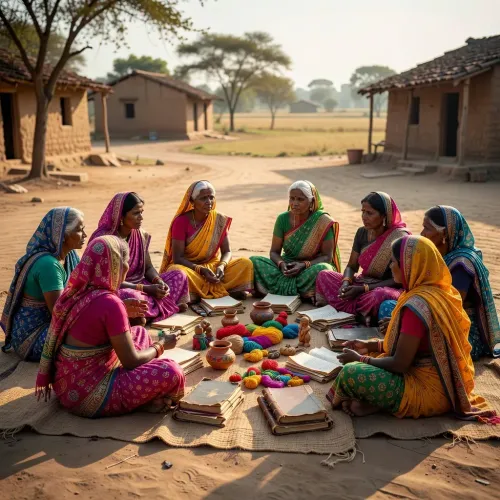
The primary beneficiaries are rural women across Bihar's villages who are members of JEEViKA SHGs. These groups function as the foundational unit for savings mobilisation, micro-credit, and skill-based livelihood activities. The programme's reach into remote gram panchayats has been cited as a driver of rural financial inclusion in one of India's most populous states.
Bihar's emphasis on quantifiable income outcomes for SHG women reflects a broader national shift — moving beyond mere group formation to measuring tangible economic gains at the household level. The state's messaging positions its welfare architecture as a contributor to women's economic agency within India's federal development framework.
What's Next
Analysts and policymakers will watch for updated JEEViKA progress data and Bihar budget allocations for women's enterprise schemes in the next fiscal cycle, which will indicate whether the state sustains or accelerates investment in this model. The convergence of state and central schemes under the NRLM umbrella also means that national policy decisions on SHG credit and skill funding will directly shape outcomes for Bihar's Lakhpati Didis.
Point of View
The messaging attempts to blend state-level governance performance with a central government flagship, a common BJP strategy to reinforce double-engine government optics. The emphasis on quantifiable income outcomes rather than mere group formation signals a maturing of SHG politics in India, where beneficiary numbers alone no longer suffice. Sustained scrutiny will fall on whether independent data corroborates the 30 lakh figure and whether income gains are durable beyond the SHG credit cycle.
NationPress
20 Oct 2026
Frequently Asked Questions
What is the Lakhpati Didi scheme in Bihar?
The Lakhpati Didi initiative targets women in self-help groups to achieve an annual household income of at least Rs 1 lakh through enterprise support, skill training, and credit linkage. In Bihar, it is implemented through the JEEViKA programme and complementary state schemes.
What is JEEViKA in Bihar?
JEEViKA is Bihar's rural livelihoods programme, launched in 2007 as the Bihar Rural Livelihoods Project, that organises rural women into self-help groups for savings, credit, and livelihood activities. It is aligned with the national National Rural Livelihoods Mission.
How many Lakhpati Didis are there in Bihar in 2026?
Bihar Chief Minister Samrat Choudhary stated on 21 July 2026 that more than 30 lakh women in Bihar have attained Lakhpati Didi status through JEEViKA and state women's enterprise schemes.
What is the Mukhyamantri Mahila Udyami Evam Rozgar Yojana?
It is a Bihar government scheme that provides financial assistance and credit linkage to women for self-employment and entrepreneurship, working in conjunction with JEEViKA self-help groups to promote economic self-reliance among rural women.
Who is Samrat Choudhary?
Samrat Choudhary is the Chief Minister of Bihar and a senior BJP leader who has been highlighting the state's welfare and women's empowerment programmes, including JEEViKA and the Lakhpati Didi mission.