Rajasthan CM Office Highlights Lakhpati Didi Push for Women
Synopsis
The Chief Minister's Office of Rajasthan on 6 June 2026 highlighted the Lakhpati Didi Yojana, stating the scheme is economically empowering women through self-help groups. The initiative targets a minimum annual income of Rs 1 lakh per SHG member and forms part of Rajasthan's implementation of the national DAY-NRLM framework under CM Bhajanlal Sharma.
Key Takeaways
The Chief Minister's Office of Rajasthan posted on 6 June 2026 highlighting the Lakhpati Didi Yojana .
The scheme targets women in self-help groups (SHGs) to achieve annual incomes of at least Rs 1 lakh .
The initiative is Rajasthan's state-level execution of the national DAY-NRLM framework.
The central government's national target is to enable two crore SHG women to cross the Rs 1 lakh annual income threshold.
CM Bhajanlal Sharma , in office since December 2023 , has prioritised women-centric economic programmes as a core welfare focus.
Forthcoming quarterly reviews and budget disclosures will reveal the number of women who have crossed the income milestone in Rajasthan .
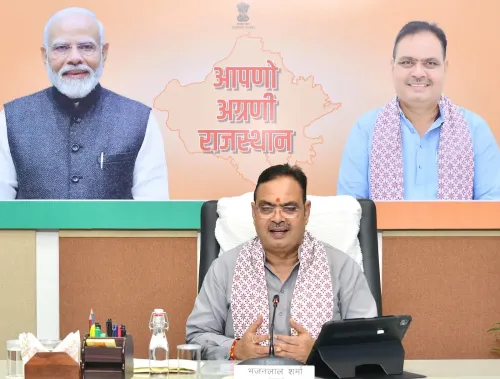
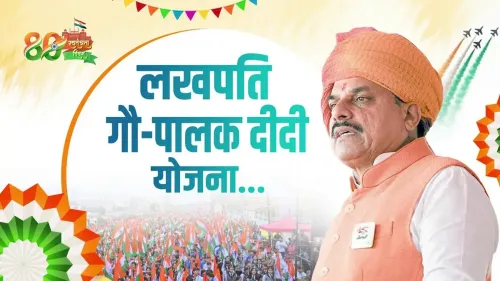
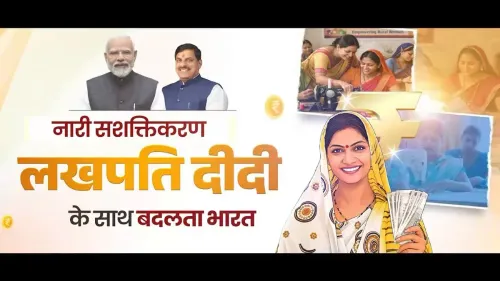
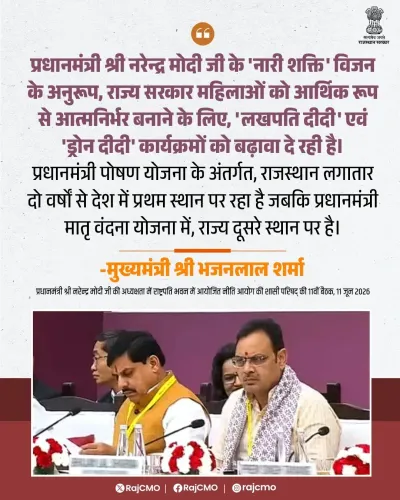
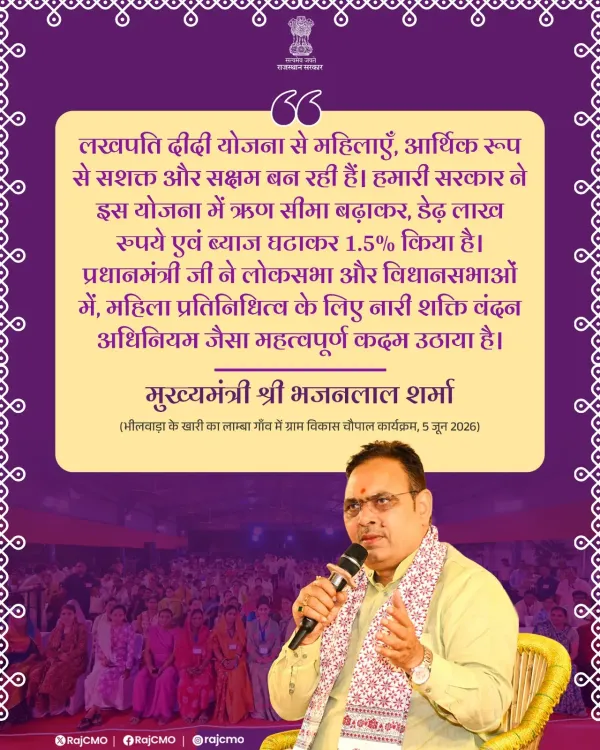
The Chief Minister's Office of Rajasthan on Saturday, 6 June 2026 spotlighted the Lakhpati Didi Yojana, stating that the scheme is enabling women to become economically empowered and self-reliant. The post, attributed to Chief Minister Bhajanlal Sharma, was shared under the hashtag #आपणो_अग्रणी_राजस्थान ('Our Pioneering Rajasthan'), signalling the state government's intent to position the initiative as a flagship women's welfare achievement.
Context
The CMO's post reads: 'लखपति दीदी योजना से महिलाएँ, आर्थिक रूप से सशक्त और सक्षम बन रही हैं' — 'Through the Lakhpati Didi Yojana, women are becoming economically empowered and capable.' The statement is a direct endorsement of the scheme's on-ground impact, coming from the official account of Rajasthan's top executive office. The hashtag and the tagging of @BhajanlalBjp place the communication squarely within the ruling BJP government's public outreach on women's economic welfare.
Policy Backdrop
The Lakhpati Didi Yojana is a state-level initiative designed to support women organised in self-help groups (SHGs) to achieve annual incomes of at least Rs 1 lakh through structured livelihood activities. It draws from the national architecture of the Deendayal Antyodaya Yojana – National Rural Livelihoods Mission (DAY-NRLM), under which the central government set a target to enable two crore SHG women across India to cross the Rs 1 lakh annual income threshold. Rajasthan's programme represents the state-level execution of that broader national framework, channelling resources into skilling, credit linkage, and market access for rural women.
Chief Minister Bhajanlal Sharma, who took office in December 2023, has continued the BJP-led government's focus on women-centric economic interventions as a core plank of Rajasthan's welfare agenda. The approach mirrors similar implementations in other BJP-governed states, where SHG capacity building and financial inclusion are emphasised alongside central missions.
Stakeholders and Impact
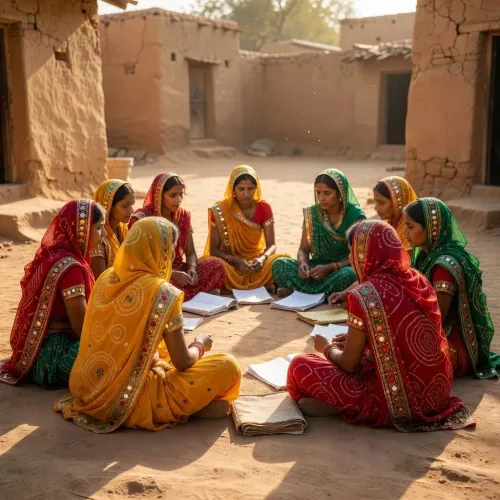
The primary beneficiaries of the scheme are rural women in Rajasthan who are members of self-help groups. By targeting a minimum annual income of Rs 1 lakh, the programme aims to lift women out of subsistence-level earnings and into a bracket that affords household financial stability. SHGs serve as the organisational backbone, providing collective bargaining, peer accountability, and access to microfinance that individual women may not secure on their own.
The broader implication extends to rural households and local economies: women with independent incomes tend to reinvest in children's education, healthcare, and nutrition, amplifying the scheme's social returns beyond direct income gains.
What's Next
Observers and policy trackers will watch Rajasthan's forthcoming quarterly reviews and budget allocations to assess how many women have crossed the Rs 1 lakh annual income mark under the scheme. The state government's continued public communication around Lakhpati Didi suggests it will remain a prominent feature of the BJP's welfare narrative ahead of future electoral cycles. Concrete beneficiary numbers and fund-utilisation data, once officially released, will be the clearest measure of the programme's reach and effectiveness.
Point of View
Tying the BJP state government's identity to women's economic uplift ahead of future electoral cycles. By invoking the hashtag 'Our Pioneering Rajasthan' and tagging CM Bhajanlal Sharma directly, the communication frames the scheme as a personal leadership achievement rather than a routine central-mission rollout. This mirrors a broader BJP pattern of projecting SHG-linked income programmes as transformative welfare — a narrative that has proven electorally potent in rural constituencies. The real test, however, will come when verifiable beneficiary data and budget utilisation figures are placed in the public domain.
NationPress
21 Oct 2026
Frequently Asked Questions
What is the Lakhpati Didi Yojana in Rajasthan?
The Lakhpati Didi Yojana in Rajasthan is a scheme that supports women in self-help groups to earn at least Rs 1 lakh annually through livelihood and skilling activities. It is part of Rajasthan's implementation of the national DAY-NRLM framework.
Who is CM Bhajanlal Sharma?
Bhajanlal Sharma is the BJP Chief Minister of Rajasthan, in office since December 2023. He has made women-centric economic welfare programmes a priority of his government.
What is the national target for Lakhpati Didi?
The central government set a national target under DAY-NRLM to enable two crore women in self-help groups across India to achieve annual incomes of at least Rs 1 lakh.
Who benefits from the Lakhpati Didi Yojana?
Rural women in Rajasthan who are members of self-help groups are the primary beneficiaries, gaining access to livelihood support, microfinance, and skill development to increase their incomes.
What does 'Aapno Agrani Rajasthan' mean?
'Aapno Agrani Rajasthan' is a Hindi phrase meaning 'Our Pioneering Rajasthan.' It is a hashtag used by the Rajasthan government to promote the state's development and welfare initiatives.