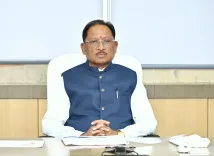
CM Mohan Yadav Backs Lakhpati Gau-Palak Didi Yojana on I-Day
Synopsis
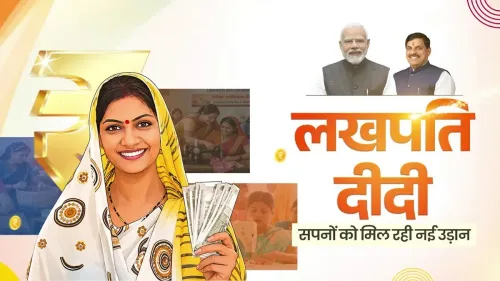
MP Chief Minister Dr. Mohan Yadav on Independence Day 2026 highlighted the Lakhpati Gau-Palak Didi Yojana — a state scheme helping rural women earn over Rs 1 lakh annually through cattle rearing — framing it as an extension of PM Modi's national women's empowerment mission.
Key Takeaways
Mohan Yadav promoted the Lakhpati Gau-Palak Didi Yojana on Independence Day, August 15, 2026 .
The scheme targets rural women in livestock and dairy households, aiming to help them earn at least Rs 1 lakh annually .
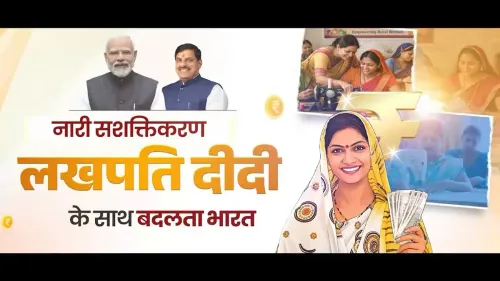
It is a state-level variant of the central Lakhpati Didi initiative under DAY-NRLM , scaled nationally from 2023 .
CM Yadav framed the push as inspired by PM Narendra Modi's resolve on women's economic empowerment.
Specific beneficiary numbers and launch date for the Madhya Pradesh variant remain unconfirmed.
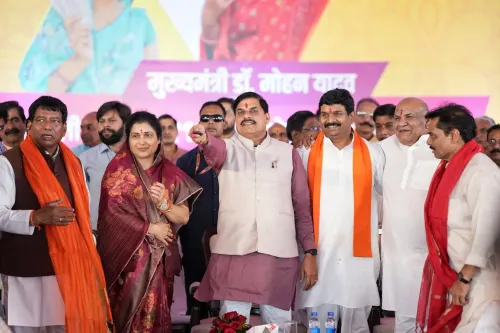
On Independence Day, August 15, 2026, Madhya Pradesh Chief Minister Dr. Mohan Yadav used the national occasion to spotlight a state-level scheme aimed at turning rural women into lakh-earners through cattle rearing — signalling that women's economic empowerment sits at the centre of the BJP government's agenda in Bhopal.
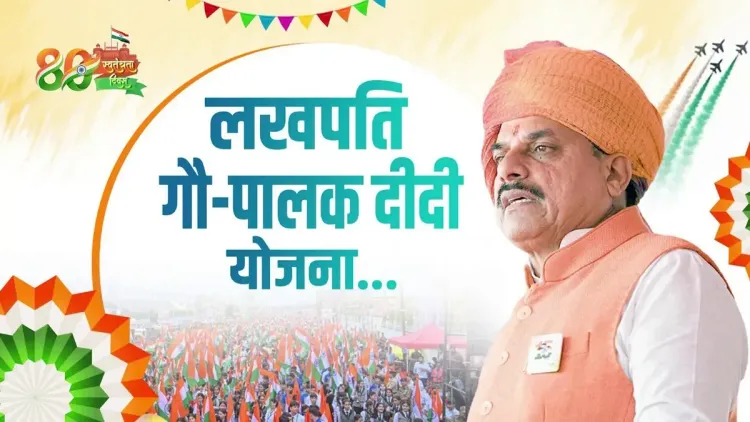
In a post on X, CM Dr. Yadav wrote: 'Lakhpati Gau-Palak Didi Yojana ko protsahit kar rahe hain' — 'we are encouraging the Lakhpati Gau-Palak Didi scheme' — framing the push as directly inspired by Prime Minister Narendra Modi's resolve on women's empowerment. The Independence Day timing is deliberate: BJP-ruled states have made a pattern of using national days to amplify alignment with New Delhi's flagship welfare agenda.
What the Lakhpati Didi Idea Actually Means for Rural Women
The parent framework — Lakhpati Didi — is a central initiative under the Deendayal Antyodaya Yojana-National Rural Livelihoods Mission (DAY-NRLM), scaled up from 2023 onwards with the goal of enabling women in self-help groups (SHGs) to earn at least Rs 1 lakh annually through sustainable livelihood activities. Madhya Pradesh's variant, the Lakhpati Gau-Palak Didi Yojana, grafts that income target onto cattle rearing and dairy — sectors where rural women already do much of the unrecognised labour.
The beneficiaries are rural women in livestock and dairy households, many of them already embedded in SHG networks. The idea is to convert that unpaid labour into a formalised, income-generating enterprise — and to give those women the institutional support, training, and market linkages to cross the one-lakh threshold.
Independence Day as a Policy Megaphone
The choice of August 15 to amplify this scheme is not incidental. Across BJP-governed states, Independence Day has become a preferred platform to announce or re-emphasise women-centric livelihood schemes — tying state delivery to the Prime Minister's national vision and maximising political visibility. For Dr. Yadav, invoking PM Modi's 'sankalp' (resolve) on women's empowerment is also a signal of ideological continuity between Bhopal and New Delhi.
The district-level rollout metrics for the scheme — how many women are enrolled, what income gains have been recorded, and how it integrates with existing animal husbandry budgets — will be the real test of whether the announcement translates into measurable change on the ground.
A scheme named for cattle and lakh-earners, launched on the day India marks its freedom — the symbolism is pointed. Whether the numbers match the moment is the question rural Madhya Pradesh will answer.
Point of View
Expanded under DAY-NRLM from 2023, has become a versatile template that state governments can adapt to local livelihood sectors, in this case dairy and cattle, without departing from the central scheme's optics. The real political risk lies in the execution gap: if district-level metrics on enrolment and income gains lag behind the announcements, the scheme risks becoming a recurring headline without a verifiable outcome. Watch for integration with Madhya Pradesh's animal husbandry budget as the clearest indicator of genuine institutional commitment.
NationPress
30 Sept 2026
Frequently Asked Questions
What is the Lakhpati Gau-Palak Didi Yojana in Madhya Pradesh?
It is a Madhya Pradesh state scheme that encourages rural women engaged in cattle rearing and dairy to earn at least Rs 1 lakh annually, modelled on the central Lakhpati Didi initiative under DAY-NRLM.
What is the central Lakhpati Didi scheme?
Lakhpati Didi is a central government initiative under the Deendayal Antyodaya Yojana-National Rural Livelihoods Mission (DAY-NRLM), scaled up from 2023, aimed at enabling women in self-help groups to earn over Rs 1 lakh per year through sustainable livelihood activities.
Why did CM Mohan Yadav announce this scheme on Independence Day?
CM Dr. Mohan Yadav used Independence Day 2026 to highlight the scheme, framing it as aligned with PM Modi's national women's empowerment agenda — a common BJP practice of amplifying welfare schemes on high-visibility national occasions.
Who benefits from the Lakhpati Gau-Palak Didi Yojana?
The primary beneficiaries are rural women in Madhya Pradesh who are part of self-help groups and are involved in livestock rearing and dairy activities.
How does Madhya Pradesh's scheme differ from the central Lakhpati Didi?
The Madhya Pradesh variant specifically focuses on cattle rearing and dairy — the 'Gau-Palak' (cattle keeper) component — as the livelihood pathway to crossing the Rs 1 lakh annual income threshold, adapting the central framework to the state's rural economy.