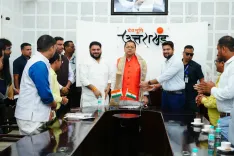
Rajasthan CM: Lakhpati Didi coverage jumps to 19 lakh women
Synopsis
Rajasthan's Chief Minister's Office reports that coverage under the Lakhpati Didi Yojana has jumped from roughly 11 lakh to 19 lakh women, marking a significant expansion of the Central SHG-based livelihood scheme in the state under CM Bhajanlal Sharma.
Key Takeaways
The Chief Minister's Office of Rajasthan announced on 29 September 2026 that Lakhpati Didi Yojana beneficiaries in the state have grown from approximately 11 lakh to 19 lakh women .
The scheme operates under the DAY-NRLM (Deendayal Antyodaya Yojana – National Rural Livelihoods Mission) , launched nationally in 2011 , targeting women in self-help groups to earn at least Rs 1 lakh annually .
The announcement was attributed to Chief Minister Bhajanlal Sharma , who has led the BJP government in Rajasthan since December 2023 .
The programme covers sustainable livelihood activities including agriculture, animal husbandry, and micro-enterprise through women-led SHGs.
The scale-up of roughly 8 lakh additional beneficiaries raises questions about income sustainability and matching state budget support going forward.
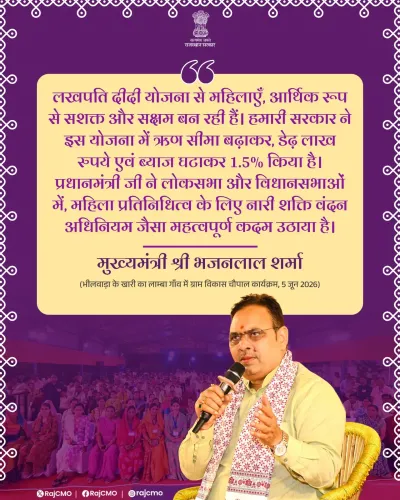
A women's livelihood scheme is quietly rewriting economic possibilities in rural Rajasthan — and the numbers are now hard to ignore. The Chief Minister's Office of Rajasthan announced on Tuesday, 29 September 2026 that beneficiaries under the Lakhpati Didi Yojana have surged from approximately 11 lakh to 19 lakh women across the state, citing the push under Chief Minister Bhajanlal Sharma's administration.
The post, shared under the hashtag #आपणो_अग्रणी_राजस्थान ('Our Leading Rajasthan'), reads: 'लखपति दीदी योजना के तहत लाभान्वित महिलाओं की संख्या लगभग 11 लाख से बढ़कर 19 लाख हो गई है' — 'The number of women benefiting under the Lakhpati Didi Yojana has grown from approximately 11 lakh to 19 lakh.'What Lakhpati Didi actually does for rural women
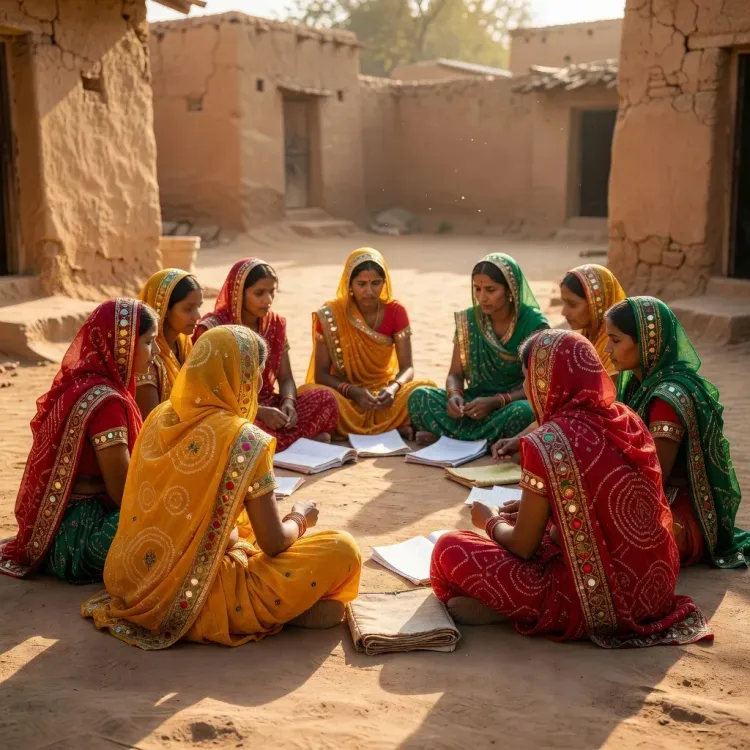
The Lakhpati Didi Yojana is a Central government initiative operating under the Deendayal Antyodaya Yojana – National Rural Livelihoods Mission (DAY-NRLM), first launched in 2011. Its core promise is straightforward: equip women organised into self-help groups (SHGs) with skills, credit access, and livelihood support so that each household earns at least Rs 1 lakh annually through sustainable activities. The scheme spans agriculture, animal husbandry, micro-enterprise, and handicrafts — essentially any income stream that can be anchored within a woman-led SHG.
Rajasthan, a state with vast rural belts and historically low female workforce participation, sits at a critical intersection for schemes like this. The state government's role is implementation and outreach — identifying eligible SHG members, facilitating training, and connecting women to financial institutions — while the Central framework provides the policy architecture and partial funding.
Eight lakh more women — what that scale means
Growing a programme's reach by roughly 8 lakh beneficiaries is not an administrative footnote. Each additional woman enrolled represents a household targeted for income enhancement — potentially shifting spending patterns on health, education, and nutrition at the family level. At the SHG level, larger membership also deepens the collective credit pool, making micro-loans more accessible and reducing dependence on informal moneylenders.
The announcement comes as the BJP government under CM Bhajanlal Sharma, which took office in December 2023, continues to align its state-level welfare communication with Central flagship programmes. Updates like this serve a dual purpose: signalling administrative delivery to the electorate and maintaining momentum within the national NRLM reporting framework.
The real test, watchers say, lies beyond enrollment figures — in whether the women crossing the Rs 1 lakh annual income threshold are sustaining those earnings, and whether state budget allocations scale in step with the beneficiary count. Those answers will define whether Rajasthan's Lakhpati Didi story is a milestone or merely a headline.
Point of View
A state the BJP wrested back in late 2023, publishing beneficiary milestones serves as proof-of-governance for a relatively new administration. However, the announcement stops at enrollment figures; analysts focused on women's economic empowerment will watch whether income outcomes and state fiscal backing keep pace with the headline numbers, since SHG coverage and sustained Rs 1 lakh annual earnings are meaningfully different achievements.
NationPress
29 Sept 2026
Frequently Asked Questions
What is the Lakhpati Didi Yojana?
The Lakhpati Didi Yojana is a Central government scheme under DAY-NRLM that aims to help women in self-help groups earn at least Rs 1 lakh annually through skill development and sustainable livelihood activities such as farming, animal husbandry, and micro-enterprise.
How many women are covered under Lakhpati Didi in Rajasthan?
As of September 2026, the Rajasthan government reports that approximately 19 lakh women are benefiting under the Lakhpati Didi Yojana in the state, up from around 11 lakh earlier.
Who is the Chief Minister of Rajasthan in 2026?
Bhajanlal Sharma of the BJP has been serving as the Chief Minister of Rajasthan since December 2023.
What is DAY-NRLM and how does it relate to Lakhpati Didi?
The Deendayal Antyodaya Yojana – National Rural Livelihoods Mission (DAY-NRLM) was launched in 2011 to promote self-help groups among rural poor households. The Lakhpati Didi Yojana functions within this framework, specifically targeting income enhancement for women SHG members.
What does the hashtag Aapno Agrani Rajasthan mean?
आपणो अग्रणी राजस्थान translates to 'Our Leading Rajasthan' — a branding hashtag used by the Rajasthan state government to highlight developmental and welfare milestones.