CM Samrat Choudhary: Bihar tops nation in Lakhpati Didi scheme
Synopsis
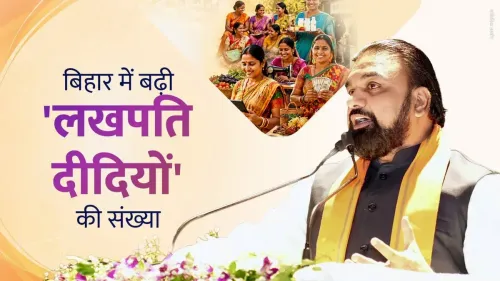
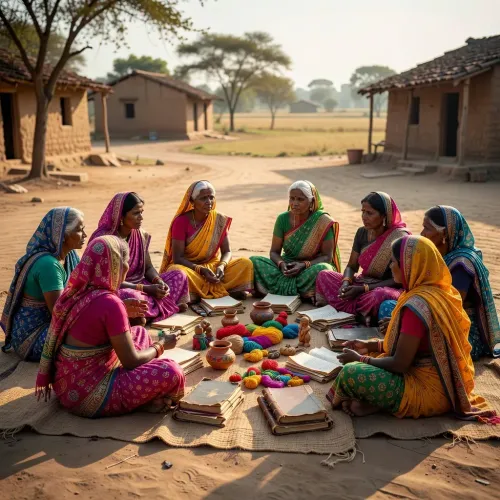
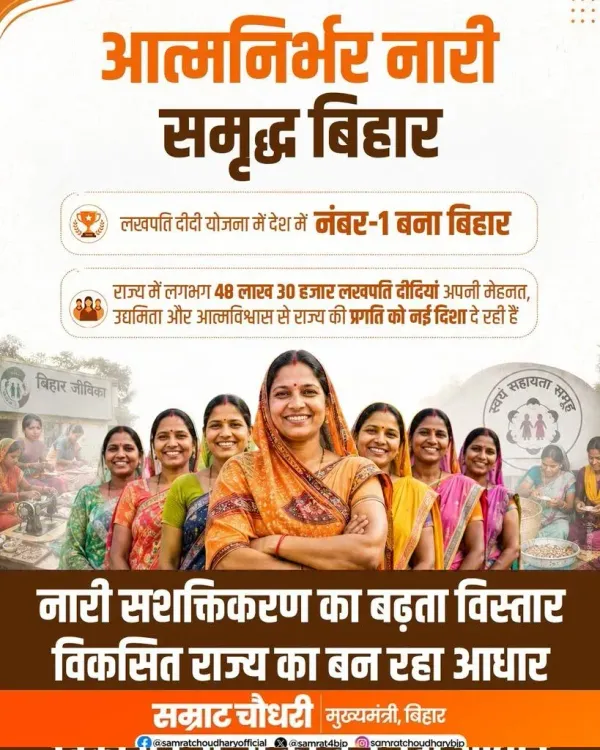
Bihar Chief Minister Samrat Choudhary announced on 12 June 2026 that Bihar has topped the country under the central Lakhpati Didi Yojana, with nearly 48.3 lakh women from self-help groups crossing the ₹1 lakh annual income mark — the highest count of any Indian state.
Key Takeaways
Bihar Chief Minister Samrat Choudhary announced on 12 June 2026 that Bihar has ranked first nationally under the Lakhpati Didi Yojana .
Approximately 48 lakh 30 thousand women SHG members in Bihar have achieved lakhpati status, meaning annual household income of at least ₹1 lakh .
The scheme operates under DAY-NRLM , the central government's flagship rural livelihoods mission launched in 2011 .
The Union government set a national target of two crore lakhpati didis in 2023 , with states competing to scale up SHG enterprise support.
Bihar's Jeevika programme — one of India's largest rural women's SHG networks — underpins the state's performance under the scheme.
Verification of Bihar's claimed first-place ranking and the exact figure of 48.3 lakh awaits official data from the Ministry of Rural Development .
Bihar Chief Minister Samrat Choudhary on Friday, 12 June 2026, announced that Bihar has ranked first in the country under the central government's Lakhpati Didi Yojana, with approximately 48 lakh 30 thousand women from self-help groups achieving lakhpati status in the state.
Posting on X, the Chief Minister wrote: 'आत्मनिर्भर भारत और स्वदेशी के संकल्प को साकार करने में स्वयं सहायता समूहों से जुड़ी हमारी माताएं-बहनें आज परिवर्तन की सबसे मजबूत स्तंभ बन चुकी हैं' — 'Our mothers and sisters associated with self-help groups have today become the strongest pillars of change in realising the resolve of Atmanirbhar Bharat and Swadeshi.'
Context
The Lakhpati Didi Yojana is a central government initiative under the Deendayal Antyodaya Yojana–National Rural Livelihoods Mission (DAY-NRLM), designed to help women in self-help groups achieve an annual household income of at least ₹1 lakh through sustainable economic activities including micro-enterprises, agri-processing, and skill-linked livelihoods. The scheme gained renewed momentum after the Union government set a national target of creating two crore lakhpati didis in 2023.
Bihar's performance under this scheme is closely tied to the state's Jeevika programme — one of India's largest rural women's livelihood networks — which has spent over a decade building SHG infrastructure across the state's rural districts.
Policy Backdrop
The DAY-NRLM, launched in 2011, scaled women's self-help groups across rural India by providing access to savings, credit, and market linkages. Post-2020, SHG credit limits and enterprise support were expanded as part of the broader Atmanirbhar Bharat push, which explicitly linked women's entrepreneurship and local value chains to national economic self-reliance goals.
Several states have reported rising lakhpati didi numbers as the Ministry of Rural Development increased capitalisation support for SHG enterprises. Bihar's claim of the top national rank reflects both the scale of its SHG network and the state government's focus on aligning with centrally sponsored scheme targets.
Stakeholders and Impact
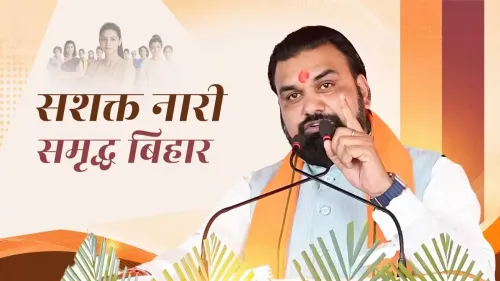
The direct beneficiaries are rural women SHG members across Bihar's districts, who now report annual incomes exceeding ₹1 lakh per household — a threshold that signals a shift from subsistence to economic participation. Chief Minister Choudhary described the achievement as 'not merely a statistic, but a symbol of the hard work, self-confidence, and growing economic independence of Bihar's women power.'
State rural development departments, SHG federations, and community resource persons form the delivery architecture behind the numbers. The achievement also carries political weight for the ruling BJP-led alliance in Bihar, positioning women's economic empowerment as a governance deliverable ahead of future electoral cycles.
What's Next
Attention will now turn to updated national and state-wise lakhpati didi figures expected from the Ministry of Rural Development, which will either confirm or contextualise Bihar's claimed first-place ranking. Analysts and opposition groups are likely to scrutinise the methodology used to count lakhpati didis — specifically whether income thresholds are measured annually or on a cumulative basis.
Any new budgetary allocations for SHG capitalisation in the next Union Budget will be a key indicator of whether the Centre intends to deepen the programme further. For Bihar, sustaining the rank will require continued enterprise support, market linkages, and financial inclusion for the women already enrolled — the harder work that follows the headline number.
Point of View
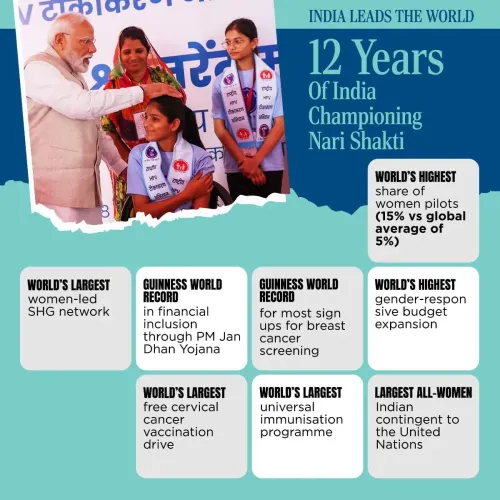
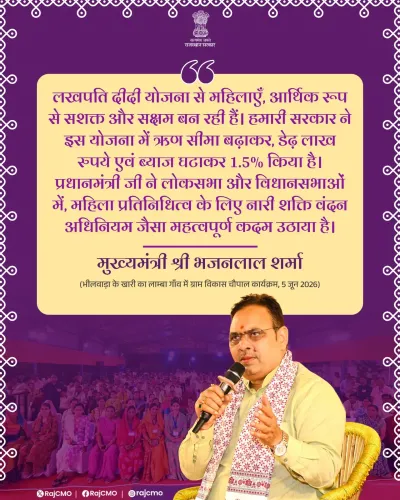
Framing a welfare scheme outcome as evidence of Bihar's transformation under the current dispensation. By invoking 'Atmanirbhar Bharat' and 'Swadeshi,' the announcement ties state-level delivery to the Centre's ideological framework — a pattern common among BJP chief ministers seeking to reinforce alignment with the national leadership. The Lakhpati Didi Yojana has become a high-visibility metric in the Modi government's women-empowerment narrative, making Bihar's claimed top rank politically significant well beyond its welfare dimension. Whether the numbers withstand independent scrutiny will determine how durable this achievement is as a political asset.
NationPress
13 Sept 2026
Frequently Asked Questions
What is the Lakhpati Didi Yojana?
The Lakhpati Didi Yojana is a central government scheme under DAY-NRLM that helps women in rural self-help groups achieve an annual household income of at least ₹1 lakh through micro-enterprises, skill training, and market linkages.
How many lakhpati didis does Bihar have in 2026?
Bihar Chief Minister Samrat Choudhary announced approximately 48 lakh 30 thousand lakhpati didis in the state, claiming the highest count among all Indian states under the scheme.
Why has Bihar ranked first in the Lakhpati Didi scheme?
Bihar's large SHG network, anchored by the state's Jeevika programme, and active alignment with DAY-NRLM targets are cited as reasons for the state's high lakhpati didi count.
What is the national target for Lakhpati Didi Yojana?
The Union government set a national target of creating two crore lakhpati didis in 2023, with increased capitalisation and enterprise support for SHGs across states.
What does lakhpati didi mean?
'Lakhpati didi' refers to a woman from a rural self-help group whose household has achieved an annual income of at least ₹1 lakh, marking a move from subsistence to sustainable economic participation.