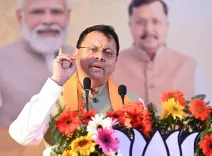
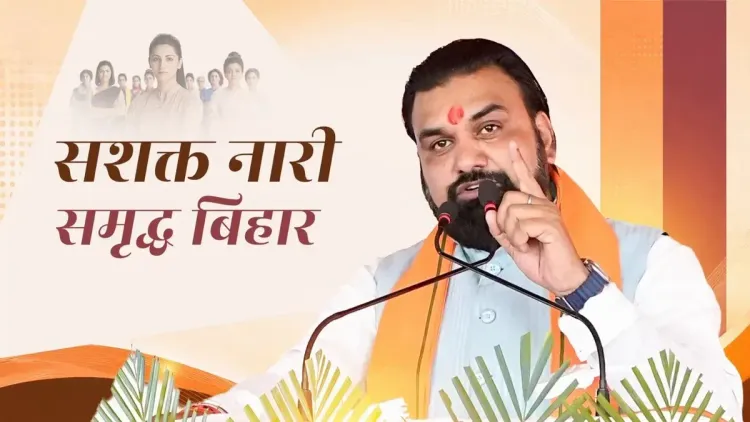
CM Samrat Choudhary sets 1-crore Lakhpati Didi target for Bihar
Synopsis
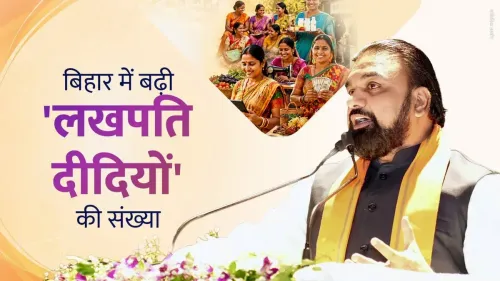
Bihar Chief Minister Samrat Choudhary has set a target of making one crore women financially self-reliant within two years, building on 48 lakh existing Lakhpati Didis under the JEEViKA-led DAY-NRLM programme. The announcement aligns with the Viksit Bihar and Viksit Bharat 2047 frameworks.
Key Takeaways
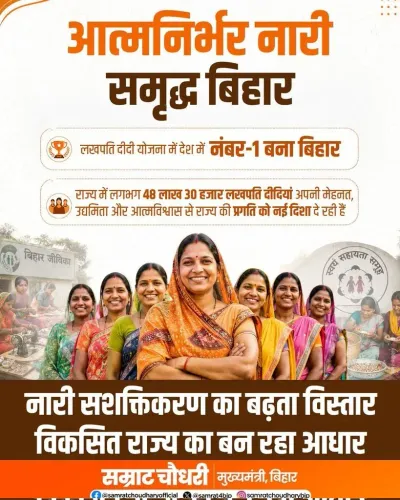
48 lakh women in Bihar have already been recognised as Lakhpati Didis under the DAY-NRLM framework as of the Chief Minister's statement on 17 June 2026 .
Bihar CM Samrat Choudhary has set a target to enrol one crore women in the Lakhpati Didi programme within the next two years .
The Lakhpati Didi scheme aims to ensure each enrolled woman earns at least Rs 1 lakh annually through self-help group activities.
JEEViKA , Bihar's rural livelihoods mission active since 2007 , is the primary implementation vehicle for the state's SHG and Lakhpati Didi targets.
The national DAY-NRLM programme set a target of three crore Lakhpati Didis across India when it launched the initiative in 2023 .
The announcement is framed under the #ViksitBihar campaign, linking state-level women's economic goals to the Viksit Bharat 2047 national vision.
Bihar Chief Minister Samrat Choudhary on Wednesday, 17 June 2026 announced that the state aims to make one crore women financially self-reliant within the next two years, building on a base of 48 lakh Lakhpati Didis already enrolled under the programme. The declaration, made via a post on X, frames the push as a 'new chapter in women's empowerment' under the Viksit Bihar (Developed Bihar) vision.
Context
In his post, Choudhary wrote: '48 lakh Lakhpati Didiyon ke saath Bihar mein mahila sashaktikaran ka naya adhyay likha ja raha hai' — 'A new chapter of women's empowerment is being written in Bihar with 48 lakh Lakhpati Didis.' He added that the government's goal is to make one crore sisters self-reliant so that every woman can become financially strong and participate in the progress of her family and society. The post was tagged #ViksitBihar, the ruling dispensation's development narrative for the state.
Policy Backdrop
The Lakhpati Didi initiative is a central scheme under the Deendayal Antyodaya Yojana – National Rural Livelihoods Mission (DAY-NRLM), designed to help women in self-help groups (SHGs) earn at least Rs 1 lakh in annual household income through sustainable livelihood activities. At the national level, the Government of India set a target of three crore Lakhpati Didis when it launched the drive in 2023.
In Bihar, the primary vehicle for this effort is JEEViKA — the state's flagship rural livelihoods mission, operational since 2007 — which mobilises rural women into SHGs and provides them with credit access, skill training, and market linkages. Bihar's programme is among the largest state-level implementations of the NRLM model in the country, covering hundreds of districts and blocks across the state.
Stakeholders and Impact
The primary beneficiaries are rural women enrolled in Bihar's SHG network, many of whom belong to economically marginalised households. Reaching the one crore milestone would represent a significant expansion from the current 48 lakh figure cited by the Chief Minister, roughly doubling the programme's reach within a two-year window. Families of SHG members and rural local bodies are secondary stakeholders, as higher household incomes tend to improve nutrition, education spending, and community participation.
The announcement also carries political weight ahead of future assembly cycles in Bihar. Women's economic empowerment has become a central plank of the BJP-led government's outreach in the state, and the #ViksitBihar framing ties local targets to the broader national Viksit Bharat 2047 framework, which treats women's economic participation as integral to inclusive growth.
What's Next
Analysts and civil society groups will watch the Bihar Rural Development Department's quarterly progress reports to track whether SHG income levels are rising at the pace required to meet the one-crore target. Any supplementary budget allocations or new convergence schemes announced in the next Bihar Legislative Assembly session will signal how the government intends to resource the ambition. The pace of JEEViKA expansion — in terms of new SHG formations, credit disbursals, and market linkages — will be the clearest operational indicator of whether the two-year timeline is achievable.
Point of View
The government is attempting to shift the conversation from welfare optics to measurable economic outcomes. This aligns with the Centre's Viksit Bharat 2047 blueprint, which positions SHG-based livelihoods as a structural, not merely symbolic, pillar of rural growth. The credibility of the target will ultimately rest on JEEViKA's capacity to scale credit disbursals and market linkages at a pace that converts SHG membership into genuine income gains.
NationPress
16 Sept 2026
Frequently Asked Questions
What is the Lakhpati Didi scheme in Bihar?
The Lakhpati Didi scheme, implemented in Bihar through the JEEViKA mission under DAY-NRLM, helps women in self-help groups earn at least Rs 1 lakh in annual household income through skill training, credit access, and market linkages.
How many Lakhpati Didis are there in Bihar?
Bihar Chief Minister Samrat Choudhary stated on 17 June 2026 that Bihar currently has 48 lakh Lakhpati Didis, with a target to expand this to one crore within two years.
What is JEEViKA and how does it relate to Lakhpati Didi?
JEEViKA is Bihar's flagship rural livelihoods mission, launched in 2007, that organises rural women into self-help groups. It serves as the primary vehicle for implementing the Lakhpati Didi programme in the state.
What is the national Lakhpati Didi target?
The Government of India set a national target of three crore Lakhpati Didis under DAY-NRLM when it launched the initiative in 2023. Bihar's one-crore target forms a significant part of this national goal.
What is Viksit Bihar and how does it connect to women's empowerment?
Viksit Bihar is the Bihar government's development framework aimed at accelerating the state's economic progress. Women's financial self-reliance, as reflected in the Lakhpati Didi programme, is a central pillar of this vision, aligned with the national Viksit Bharat 2047 agenda.