Shivraj hails Bihar's 43 lakh Lakhpati Didis milestone
Synopsis
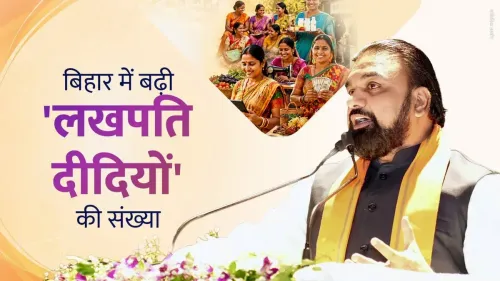
Union Agriculture Minister Shivraj Singh Chouhan praised Bihar's self-help group campaign, noting that over 43 lakh 27 thousand women have achieved 'Lakhpati Didi' status — earning at least Rs 1 lakh annually — under the DAY-NRLM mission's JEEViKA programme.
Key Takeaways
43 lakh 27 thousand women in Bihar have been designated 'Lakhpati Didis', meaning they earn at least Rs 1 lakh per year .
Union Agriculture Minister Shivraj Singh Chouhan called Bihar's SHG campaign 'remarkable' in a post on 20 August 2026 .
The Lakhpati Didi target is part of DAY-NRLM , which set a national goal of two crore such women during the 2023-24 Budget .
Bihar's JEEViKA programme, running since 2007 with World Bank support, underpins the state's high mobilisation numbers.
The milestone positions Bihar as a leading state in the central government's rural women's economic empowerment drive.
More than 43 lakh women in Bihar have crossed the threshold of earning at least Rs 1 lakh a year — and Union Agriculture Minister Shivraj Singh Chouhan wants the country to sit up and take notice. On Thursday, 20 August 2026, Chouhan took to X to call the state's self-help group movement nothing short of extraordinary.
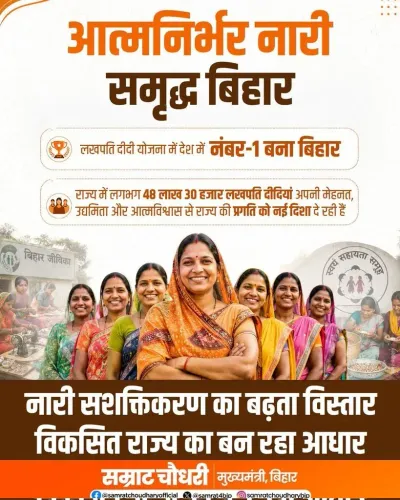
Posting in Hindi, Chouhan wrote: 'बिहार में स्वयं सहायता समूह का जो अभियान चल रहा है, वह अद्भुत है।' ('The self-help group campaign running in Bihar is remarkable.') He added that 43 lakh 27 thousand 'Lakhpati Didis' have now been created in the state — a figure that puts Bihar among the frontrunners in the national women's economic empowerment drive.
What 'Lakhpati Didi' actually means on the ground
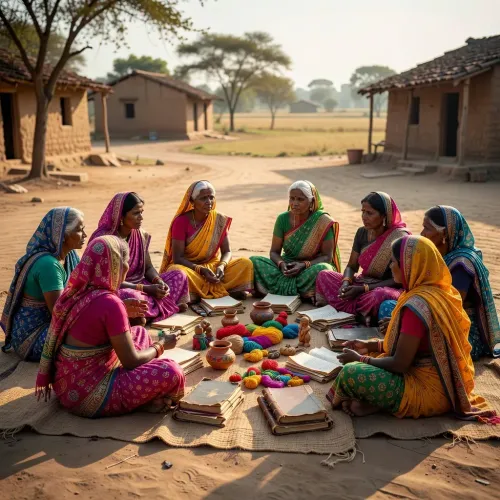
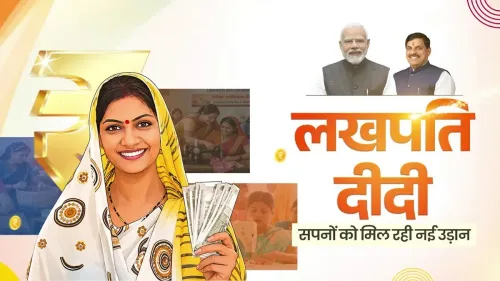
The Lakhpati Didi initiative sits inside the larger architecture of the Deendayal Antyodaya Yojana – National Rural Livelihoods Mission (DAY-NRLM), the central government's flagship rural poverty-alleviation programme first launched in 2011 and restructured in 2015. The scheme organises rural women into Self-Help Groups (SHGs) — community institutions built around thrift, credit, and micro-enterprise — and then works to push household incomes past the Rs 1 lakh annual mark through skill training, market linkages, and diversified livelihoods. A woman who clears that bar earns the 'Lakhpati Didi' designation. It is a measurable outcome, not just a membership count.
The national ambition is steep: the government announced a target of two crore Lakhpati Didis across India during the 2023-24 Budget cycle. Bihar's reported tally of over 43 lakh represents a substantial slice of that goal from a single state.
Bihar's JEEViKA edge
Bihar has not arrived at this number by accident. The state runs JEEViKA, its own dedicated NRLM implementation body, which began scaling SHG coverage from 2007 onward with World Bank support. Over nearly two decades, JEEViKA has built one of India's densest rural women's networks — the organisational spine that makes a figure like 43 lakh credible. The programme has progressively moved women from basic savings and credit into higher-value activities: agri-enterprise, livestock management, food processing, and rural retail — the exact pathways that generate the income jumps needed to reach Lakhpati status.
Chouhan's post reflects the centre's strategy of using state-level milestones as proof-of-concept for the broader national mission. When a state with Bihar's historical development challenges posts numbers of this scale, it becomes a political and policy talking point simultaneously.
The next test will be whether the Ministry of Rural Development releases updated national and state-wise Lakhpati Didi data — and whether the next Union Budget raises the two-crore target further. Bihar has already shown what aggressive SHG mobilisation looks like. The question now is whether the rest of rural India can match the pace.
Point of View
Electorally significant state with a historically high poverty rate, making its SHG numbers both a genuine development story and a potent optics win. The minister's framing also signals continued centre-state convergence on the NRLM agenda, even as the two-crore national target demands sustained momentum from every state. Tracking whether updated national figures are released soon will reveal how close the mission is to its headline goal.
NationPress
5 Oct 2026
Frequently Asked Questions
What is a Lakhpati Didi?
A 'Lakhpati Didi' is a woman member of a Self-Help Group under the DAY-NRLM scheme who earns at least Rs 1 lakh per year through sustainable livelihood activities such as agri-enterprise, livestock, or food processing.
How many Lakhpati Didis are there in Bihar?
According to Union Minister Shivraj Singh Chouhan's post on 20 August 2026, Bihar has produced over 43 lakh 27 thousand Lakhpati Didis under its self-help group campaign.
What is the JEEViKA programme in Bihar?
JEEViKA is Bihar's state-level implementation body for the DAY-NRLM mission. Launched in 2007 with World Bank support, it organises rural women into Self-Help Groups and links them to credit, skills training, and livelihood opportunities.
What is the national Lakhpati Didi target?
The central government announced a national target of two crore Lakhpati Didis during the 2023-24 Union Budget cycle, aiming to scale the milestone across all states through the DAY-NRLM framework.