CM Samrat Choudhary hails women-led development under Modi
Synopsis
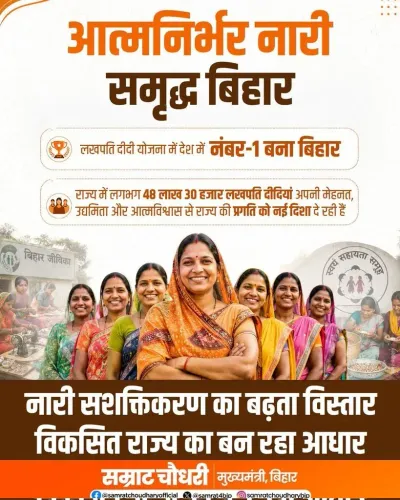
Bihar Chief Minister Samrat Choudhary on 29 May 2026 hailed India's women as the greatest strength of Viksit Bharat, crediting PM Modi's Lakhpati Didi campaign, SHGs, startup access and digital empowerment for transforming women from farm workers to fighter-jet pilots and corporate leaders.
Key Takeaways
Bihar CM Samrat Choudhary posted on 29 May 2026 calling women in the workforce the 'greatest strength' of a developed India.
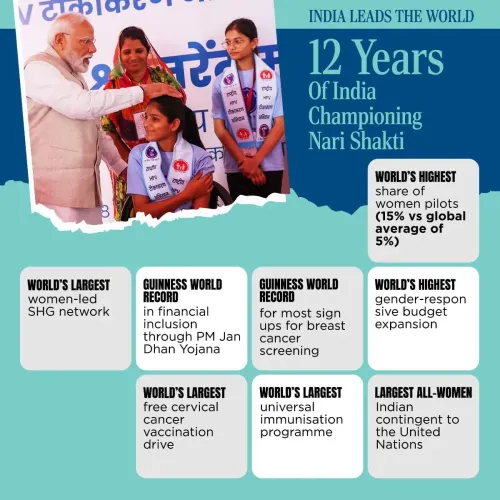
He credited PM Narendra Modi 's government with 'historic steps' toward women's self-reliance through SHGs, the Lakhpati Didi campaign, startups, and digital empowerment.
The Lakhpati Didi scheme under DAY-NRLM targets rural women in self-help groups to earn at least one lakh rupees per year.
The Nari Shakti Vandan Adhiniyam (2023) reserves one-third of seats for women in the Lok Sabha and state assemblies.
Beti Bachao Beti Padhao , launched in 2015 , and the Atmanirbhar Bharat framework of 2020 form the broader policy spine underpinning Choudhary's remarks.
The post is tagged #WomenLedDevelopment and #AtmanirbharBharat , reflecting coordinated BJP messaging on gender as a development driver.
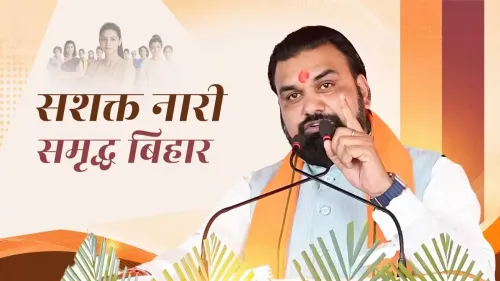
Bihar Chief Minister Samrat Choudhary on Friday, 29 May 2026, took to X to celebrate the growing role of women in India's workforce, describing female participation as the single greatest strength of a 'Viksit Bharat' and crediting Prime Minister Narendra Modi's leadership for a series of what he called historic policy steps toward women's self-reliance and empowerment.
Context
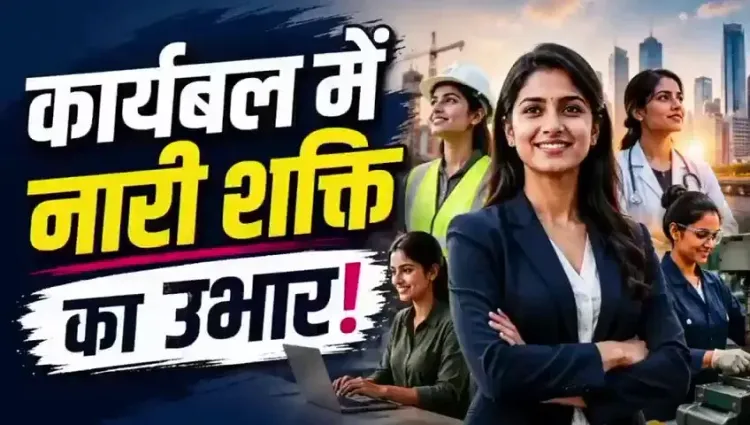
In his post, Choudhary wrote — 'कार्यबल में बढ़ती नारी शक्ति आज विकसित भारत की सबसे बड़ी ताकत बन चुकी है' ['The rising Nari Shakti in the workforce has today become the greatest strength of a developed India']. He pointed to self-help groups, the Lakhpati Didi campaign, startups, and digital empowerment as vehicles through which women are now playing a leading role in the country's development journey.
The Chief Minister also drew a vivid arc — from farm fields to fighter jets, and from drone technology to corporate leadership — to argue that Indian women today embody confidence, capability, and the identity of a new India. The post carried the hashtags #WomenLedDevelopment and #AtmanirbharBharat.
Policy Backdrop
The post anchors itself in a cluster of central government initiatives that have framed women's empowerment as both a social imperative and an economic multiplier since 2014. The Lakhpati Didi campaign, run under the Deendayal Antyodaya Yojana–National Rural Livelihoods Mission (DAY-NRLM), targets rural women in self-help groups, enabling each to earn at least one lakh rupees annually through skill-linked livelihood activities.
Earlier milestones include the Beti Bachao Beti Padhao scheme launched in 2015 to improve the child sex ratio and girls' education, and the landmark Nari Shakti Vandan Adhiniyam passed in 2023, which reserves one-third of seats for women in the Lok Sabha and state legislative assemblies. The broader Atmanirbhar Bharat framework, announced in 2020, incorporates explicit targets for women's economic participation, startup access, and technology adoption.
Stakeholders and Impact
The primary beneficiaries of the policies cited are rural women enrolled in self-help group networks and women entrepreneurs tapping startup and digital ecosystems. Bihar, one of India's most populous states, has a large rural SHG base, making the convergence of central schemes with state-level delivery particularly consequential for women in the Gangetic plains.
The reference to fighter jets and drone technology signals the government's effort to highlight women's entry into defence and precision-agriculture sectors — domains historically dominated by men. Senior BJP leaders have increasingly used such imagery to communicate a broadened definition of women's empowerment that goes beyond welfare transfers to professional and technological leadership.
What's Next
Observers will watch whether Bihar announces state-specific convergence plans with central SHG programmes or drone-technology training initiatives in the coming assembly sessions. The rollout of Lakhpati Didi targets at the district level in Bihar and the implementation timeline for women's reservation under the Nari Shakti Vandan Adhiniyam remain the two most concrete policy markers to track. Choudhary's messaging aligns with a broader BJP communication pattern that positions gender as a development multiplier — a theme likely to intensify ahead of future electoral cycles.
Point of View
Where welfare schemes are reframed as economic and national-security assets rather than social transfers. By invoking fighter jets and drone technology alongside Lakhpati Didi, he deliberately bridges rural beneficiaries and aspirational urban professionals — a coalition-building move with electoral utility. The timing, ahead of potential assembly-session announcements in Bihar, suggests the messaging may precede concrete state-level policy announcements. Choudhary's alignment with the central government narrative also reinforces his positioning as a loyalist chief minister who amplifies New Delhi's development branding within the state.
NationPress
12 Oct 2026
Frequently Asked Questions
What is the Lakhpati Didi scheme?
Lakhpati Didi is a campaign under the Deendayal Antyodaya Yojana–National Rural Livelihoods Mission that aims to help rural women in self-help groups earn at least one lakh rupees per year through skill-linked livelihood activities. Bihar CM Samrat Choudhary cited it as a key pillar of women's empowerment under PM Modi.
What did Bihar CM Samrat Choudhary say about women's empowerment?
On 29 May 2026, Choudhary posted on X that rising female participation in the workforce is the greatest strength of Viksit Bharat, and credited PM Modi's government for historic steps through SHGs, the Lakhpati Didi campaign, startups, and digital empowerment.
What is the Nari Shakti Vandan Adhiniyam?
The Nari Shakti Vandan Adhiniyam, passed in 2023, reserves one-third of seats for women in the Lok Sabha and state legislative assemblies. It is one of the landmark legislative measures Choudhary's post implicitly references in the context of women's political empowerment.
How does Atmanirbhar Bharat relate to women's empowerment?
The Atmanirbhar Bharat framework, launched in 2020, includes targets for women's economic participation, startup access, and technology adoption. Bihar CM Choudhary used the hashtag #AtmanirbharBharat to situate women-led development within this national self-reliance agenda.
What is Beti Bachao Beti Padhao?
Beti Bachao Beti Padhao is a central government scheme launched in 2015 to improve the child sex ratio and promote girls' education and empowerment. It forms part of the broader policy lineage that Bihar CM Choudhary's remarks on women's progress draw upon.