Odisha CMO: Over 26 Lakh Women Now 'Lakhpati Didi'
Synopsis
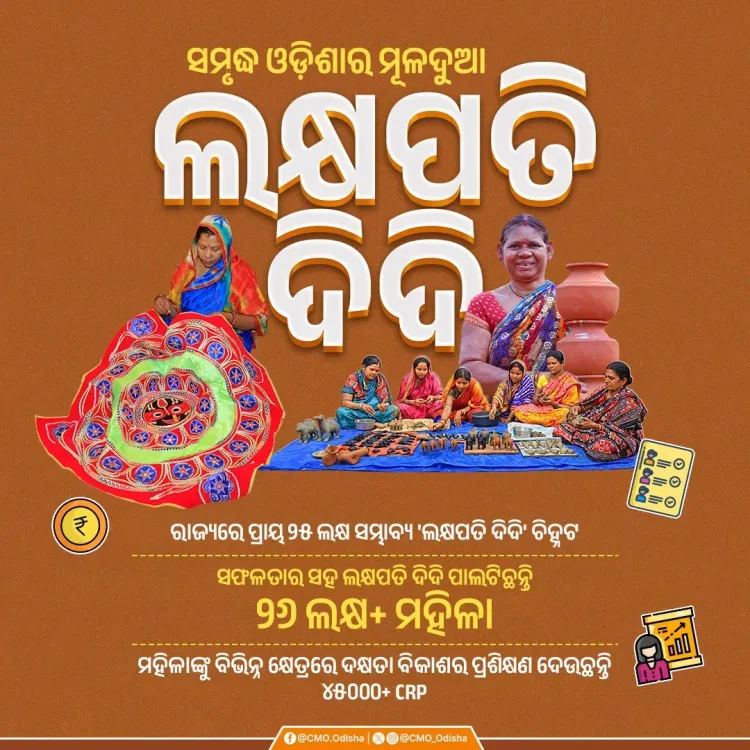
The Chief Minister's Office of Odisha announced on 24 June 2026 that over 26 lakh women in the state have achieved 'Lakhpati Didi' status under CM Mohan Charan Majhi, through skill training and SHG-linked livelihood activities aimed at annual incomes of at least Rs 1 lakh.
Key Takeaways
The Chief Minister's Office of Odisha announced on 24 June 2026 that more than 26 lakh women have achieved 'Lakhpati Didi' status in the state.
The scheme, operating under the DAY-NRLM framework, targets women in self-help groups to earn at least Rs 1 lakh annually .
Skill development training across multiple sectors is being provided to boost women's competence, confidence, and income.
Chief Minister Mohan Charan Majhi , in office since June 2024 , has positioned women's economic empowerment as a core state priority.
The government's stated goal is 'Empowered women, prosperous families, and a developed Odisha.' Similar income-target SHG schemes are being scaled across Bihar , Jharkhand , and Uttar Pradesh , reflecting a national pattern.
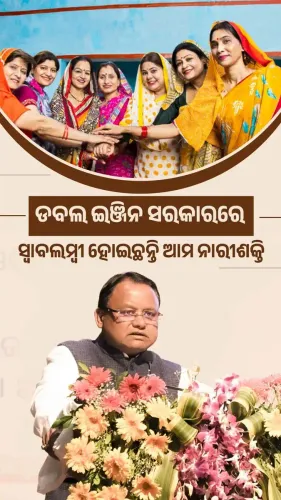
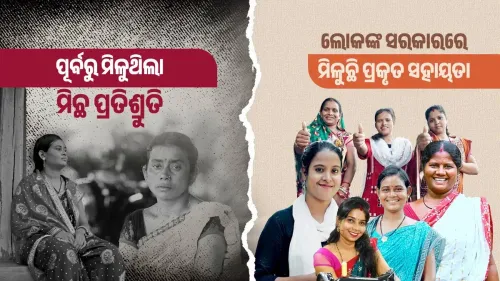
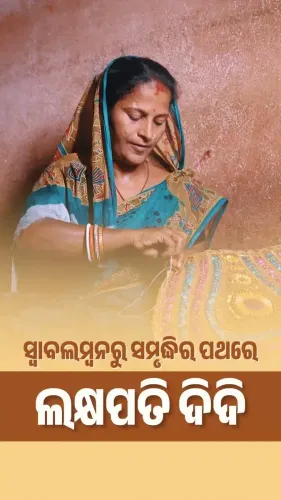
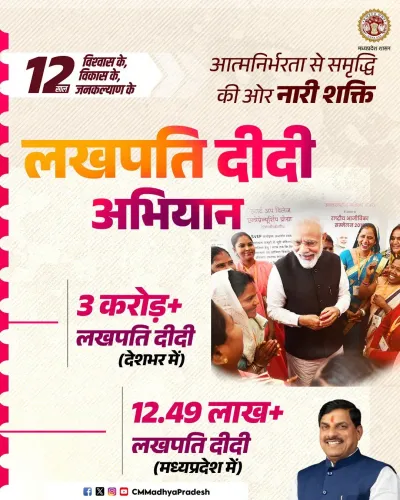
The Chief Minister's Office of Odisha, on Wednesday, 24 June 2026, highlighted the growing reach of the 'Lakhpati Didi' scheme under Chief Minister Mohan Charan Majhi, stating that more than 26 lakh women across the state have successfully achieved the 'Lakhpati Didi' status, marking a new chapter in women's financial self-reliance.
Context
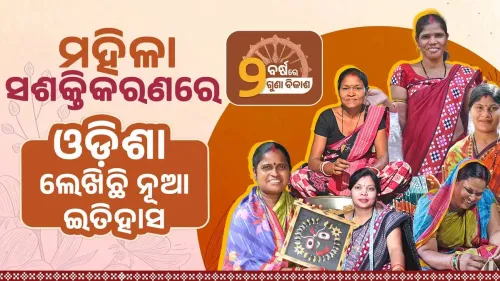
The official post, shared from the Chief Minister's Office handle, declared in Odia: 'ମହିଳା ସଶକ୍ତିକରଣ ହେଉଛି ସମୃଦ୍ଧ ଓଡ଼ିଶା ଗଠନର ମୂଳ ଆଧାର' ('Women's empowerment is the fundamental foundation for building a prosperous Odisha'). The post credited CM Majhi's leadership for driving the scheme's expansion and underscored that skill development training across multiple sectors is being provided to strengthen women's competence, confidence, and income levels.
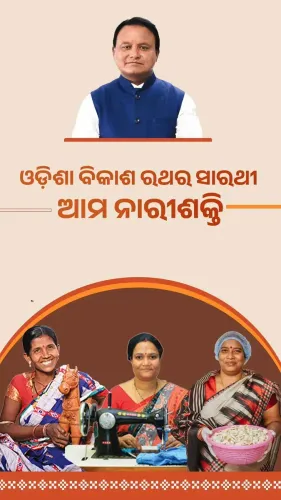
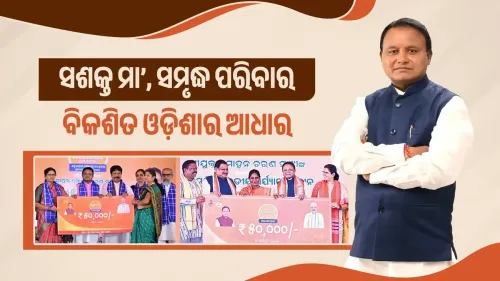
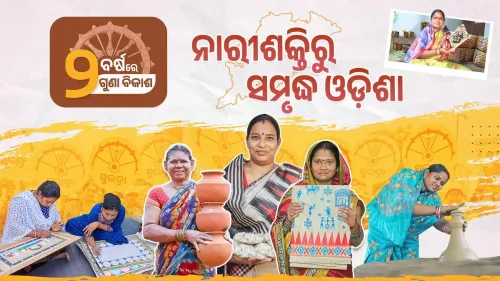
The 'Lakhpati Didi' framework targets women enrolled in self-help groups (SHGs), enabling them to earn at least Rs 1 lakh annually through structured livelihood activities. The CMO's statement frames this milestone as central to the state government's broader vision of 'Sashakta Nari, Samruddha Parivara, Vikashita Odisha' — ('Empowered women, prosperous families, and a developed Odisha').
Policy Backdrop
The 'Lakhpati Didi' scheme is rooted in the Deendayal Antyodaya Yojana – National Rural Livelihoods Mission (DAY-NRLM), a central government programme launched in 2011 to mobilise rural poor through SHG networks and provide them with sustainable income pathways. The specific 'Lakhpati Didi' income target was formally incorporated into the national mission framework in 2023, giving states a measurable benchmark for women's economic inclusion.
Odisha has maintained one of the more robust SHG ecosystems in eastern India since the early 2000s. The state's current push combines credit linkage, market access facilitation, and multi-sector skill training to push household incomes above the one-lakh threshold — a model also being pursued in Bihar, Jharkhand, and Uttar Pradesh.
Stakeholders and Impact
The primary beneficiaries are rural women SHG members spread across Odisha's 30 districts. Achieving 'Lakhpati Didi' status signals that a woman's household income from SHG-linked activities has crossed the Rs 1 lakh per year mark — a threshold designed to lift families out of subsistence-level poverty. The CMO's post emphasises that skill development training is ongoing, suggesting the 26 lakh figure represents a cumulative count rather than a final target.
For the state government led by CM Majhi, who took office in June 2024, scaling women-centric welfare schemes is a visible policy priority. The programme's reach also has downstream effects on children's nutrition, education spending, and household savings within participating families.
What's Next
Attention will now turn to whether the state provides updated coverage numbers and budget allocations for skill training in the next Odisha Legislative Assembly session or through the annual action plan under NRLM. The government's stated commitment — described in the post as moving forward with 'firm resolve' — suggests further expansion targets are likely to be announced. Analysts will watch whether Odisha sets a higher beneficiary ceiling or introduces new sectoral training verticals to deepen the scheme's impact beyond headline beneficiary counts.
Point of View
Which is less than two years old and keen to establish a welfare identity distinct from its predecessor. Framing 26 lakh beneficiaries as proof of 'firm resolve' is as much a political statement as a policy update — it signals that the BJP-led government in Odisha is investing in the same women-centric SHG vocabulary that the central government has championed nationally since 2023. The convergence of state and central messaging on 'Lakhpati Didi' makes it harder to disentangle credit, but it also means Odisha benefits from national programme infrastructure and funding. The real test will come when audited income data — not just beneficiary headcounts — is placed before the legislature.
NationPress
23 Sept 2026
Frequently Asked Questions
What is the Lakhpati Didi scheme in Odisha?
The Lakhpati Didi scheme in Odisha is part of the central government's DAY-NRLM programme that helps women in self-help groups earn at least Rs 1 lakh per year through skill training, credit linkage, and livelihood activities.
How many women have become Lakhpati Didi in Odisha?
According to the Chief Minister's Office of Odisha, more than 26 lakh women in the state have successfully achieved 'Lakhpati Didi' status as of June 2026.
Who launched the Lakhpati Didi scheme?
The Lakhpati Didi income target was incorporated into the national DAY-NRLM framework in 2023 by the central government. In Odisha, the scheme is being implemented under Chief Minister Mohan Charan Majhi.
What does Lakhpati Didi mean?
'Lakhpati Didi' literally means 'sister who earns a lakh' — it refers to a woman from a self-help group whose annual household income from SHG-linked activities has crossed Rs 1 lakh.
What is DAY-NRLM and how does it relate to women's empowerment in India?
DAY-NRLM, or Deendayal Antyodaya Yojana – National Rural Livelihoods Mission, was launched in 2011 to organise rural poor into self-help groups and provide sustainable livelihoods. It forms the backbone of women's economic inclusion programmes like Lakhpati Didi across Indian states.