CM Majhi: Over 26 Lakh Odisha Women Empowered Under Lakhpati Didi
Synopsis
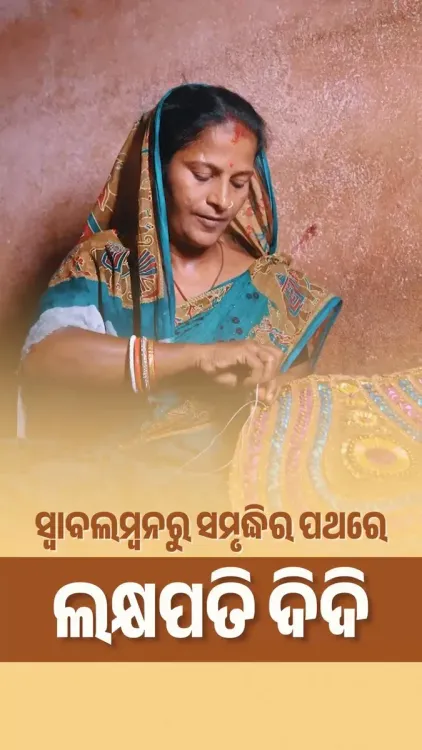
Odisha Chief Minister Mohan Charan Majhi announced on June 25, 2026, that over 26 lakh rural women have become self-reliant under the Lakhpati Didi Yojana, with thousands of Community Resource Persons being trained to expand the scheme's reach statewide.
Key Takeaways
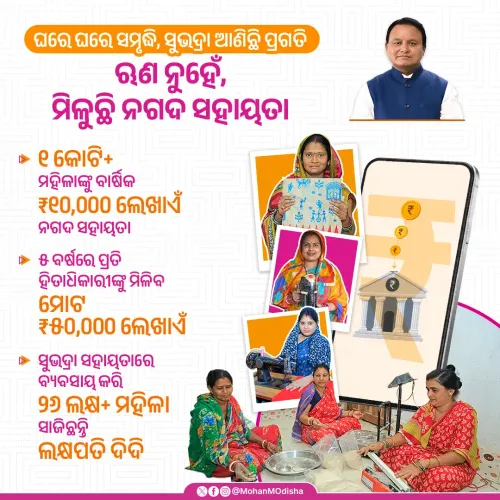
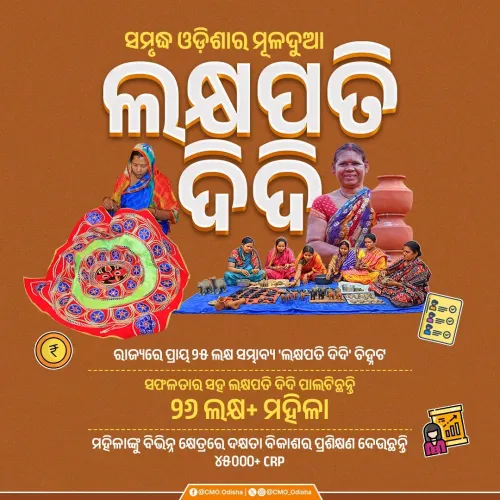
CM Mohan Charan Majhi stated that over 26 lakh rural women in Odisha have achieved financial self-reliance under the Lakhpati Didi Yojana .
Thousands of Community Resource Persons (CRPs) are being trained in skill development across multiple sectors to widen the scheme's reach.
The state is actively identifying new potential beneficiaries to expand the programme further.
The scheme builds on Odisha's Mission Shakti (launched 2001 ) and aligns with the national DAY-NRLM Lakhpati Didi initiative announced in 2023 .
The BJP government's goal is 'self-reliant women, prosperous families, and a developed Odisha.'
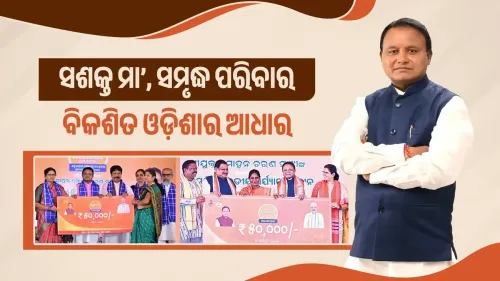
Odisha Chief Minister Mohan Charan Majhi on Thursday, June 25, 2026, highlighted the progress of the Lakhpati Didi Yojana, stating that more than 26 lakh rural women in the state have successfully achieved financial self-reliance through the scheme, and announced efforts to expand its reach by identifying new beneficiaries and training thousands of Community Resource Persons (CRPs) in skill development.
Context
Posting in Odia on X (formerly Twitter), CM Majhi wrote that the Lakhpati Didi scheme has given the economic development of Odisha's rural women 'a new direction' — 'ଏକ ନୂଆ ଦିଗ' [a new direction] — with over 26 lakh women having become self-reliant. He added that thousands of CRP women are being provided skill development training across various sectors to widen the campaign further. The post concluded with the resolve: 'Self-reliant women, prosperous families, and a developed Odisha — our women power leads this great mission.'
The announcement underscores the BJP-led Odisha government's continued push on women's economic empowerment since CM Majhi assumed office in June 2024 following the party's victory in the state assembly elections.
Policy Backdrop
The Lakhpati Didi component was introduced nationally under the Deendayal Antyodaya Yojana – National Rural Livelihoods Mission (DAY-NRLM) in 2023, with a target of making two crore Self-Help Group (SHG) women financially self-reliant by ensuring a minimum annual household income of Rs 1 lakh. Odisha's own version of this scheme builds on the state's long-standing Mission Shakti programme, which was launched in 2001 and has since federated over 70 lakh women into SHGs across the state.
After the 2011 merger of Mission Shakti with the NRLM framework, Odisha expanded its SHG ecosystem significantly, linking women's groups to credit, enterprise promotion, and livelihood training. The current emphasis on CRP capacity-building reflects a deeper layer of that architecture — training community-level facilitators who in turn support SHG members in accessing markets, skills, and financial services.
Stakeholders and Impact
The primary beneficiaries are rural women enrolled in Self-Help Groups across Odisha's districts, particularly in economically lagging regions where female workforce participation has historically been low. CRPs — themselves drawn from within SHG federations — serve as a critical link between the government's programme machinery and grassroots beneficiaries.
Broader stakeholders include state rural development departments, the Odisha Livelihood Mission, and central ministries channelling NRLM funds. For rural households, a member crossing the Rs 1 lakh annual income threshold can meaningfully reduce dependence on informal credit and improve nutrition, education, and savings outcomes. Eastern India, including Odisha, has been identified as a high-priority geography under national livelihoods policy given its large rural female workforce potential.
What's Next
Attention will now turn to the scale and pace of CRP skill-training rollouts across Odisha's districts, and whether the state sets fresh numerical targets for new beneficiary identification in upcoming budget or review cycles. The government's ability to sustain momentum beyond initial enrolment — through market linkages, enterprise support, and credit access — will determine whether the 26 lakh figure translates into durable income gains. Observers will also watch for any convergence announcements between Lakhpati Didi and other central or state schemes targeting women in agriculture, handicrafts, and micro-enterprise sectors.
Point of View
If substantiated, would represent a significant share of Odisha's rural female population and position the state as a front-runner in eastern India's livelihoods story. The emphasis on CRP training suggests the government is investing in programme depth, not just headline numbers, which could strengthen grassroots delivery over time. This messaging also fits a broader BJP pattern of amplifying women-centric welfare achievements ahead of local body and panchayat election cycles.
NationPress
23 Sept 2026
Frequently Asked Questions
What is the Lakhpati Didi Yojana in Odisha?
The Lakhpati Didi Yojana is a scheme aimed at making rural women financially self-reliant by helping Self-Help Group members achieve a minimum annual household income of Rs 1 lakh. In Odisha, it builds on the existing Mission Shakti SHG network and aligns with the central DAY-NRLM Lakhpati Didi initiative launched in 2023.
How many women have benefited from Lakhpati Didi in Odisha?
According to CM Mohan Charan Majhi's post on June 25, 2026, over 26 lakh rural women in Odisha have successfully become self-reliant under the Lakhpati Didi Yojana.
Who are CRPs in the context of Odisha's women empowerment scheme?
CRPs, or Community Resource Persons, are women drawn from within SHG federations who are trained to support other Self-Help Group members in accessing skills, markets, and financial services. The Odisha government is currently training thousands of CRPs across various sectors to expand the Lakhpati Didi scheme.
What is Mission Shakti Odisha?
Mission Shakti is Odisha's flagship women's Self-Help Group programme launched in 2001. It has federated over 70 lakh women into SHGs across the state and was later aligned with the national NRLM framework to expand credit linkage and livelihood support.
What is the national Lakhpati Didi initiative?
The national Lakhpati Didi initiative was announced under DAY-NRLM in 2023 with a target of making two crore SHG women across India financially self-reliant, each earning at least Rs 1 lakh annually through skill-based livelihoods and enterprise support.