CM Majhi Govt Doubles Down on Women's Economic Empowerment in Odisha
Synopsis
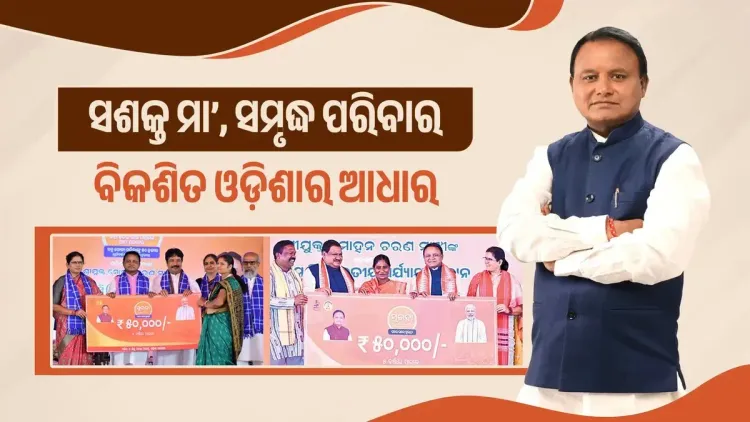
The Chief Minister's Office of Odisha has reaffirmed women's empowerment as the government's core priority, spotlighting the Subhadra Yojana, Lakhpati Didi Abhiyan and SHG incentives as key tools to build a Viksit Odisha by 2036 under CM Mohan Majhi's leadership.
Key Takeaways
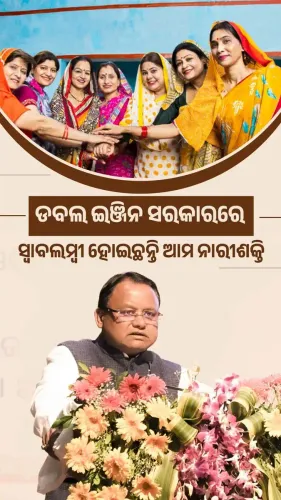
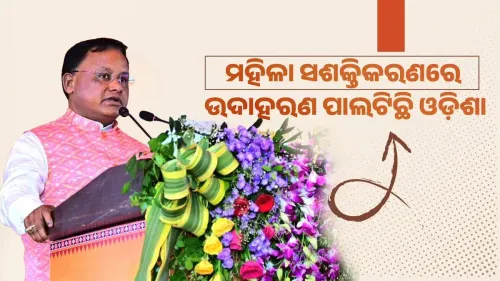
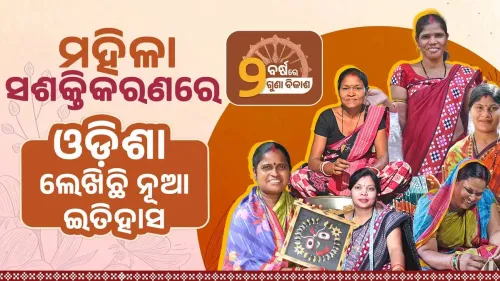
The CMO Odisha on June 25, 2026 reaffirmed women's dignity, safety and financial empowerment as the top governance priority under CM Mohan Charan Majhi .
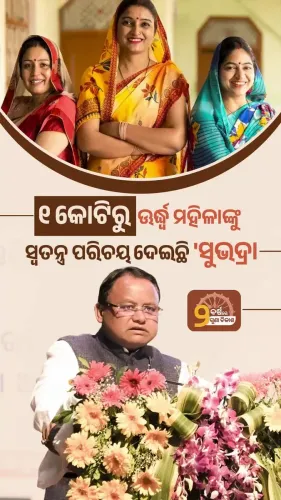
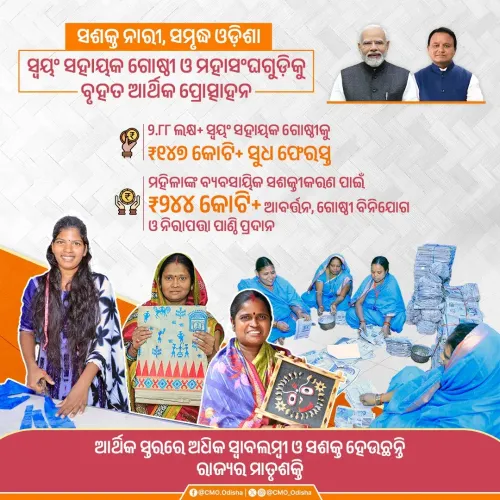
Three flagship initiatives are central to the push: Subhadra Yojana , Lakhpati Didi Abhiyan , and large-scale financial incentives for Self-Help Groups .
The government aims to elevate women beyond lakhpati status to Mahalakhpati and Kotipati Didi — women entrepreneurs crossing crore-level incomes.
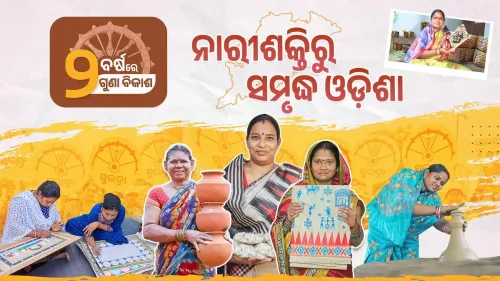
Women are positioned as the 'nucleus of economic development' under Odisha Vision 2036 , the state's long-term socio-economic roadmap.
Mission Shakti , launched in 2001 , provides the foundational SHG infrastructure on which these newer schemes are built.
The stated goal is an 'empowered mother, prosperous family, developed Odisha' — framing women's economic gains as a household-level multiplier.
The Chief Minister's Office of Odisha reaffirmed on Thursday, June 25, 2026 that women's dignity, safety, and financial empowerment remain the top priority of the Mohan Majhi-led BJP government, highlighting three flagship initiatives aimed at making women the central drivers of the state's economic growth.
Context
The post, shared by the official CMO Odisha handle, states in Odia: 'ରାଜ୍ୟର ସାମାଜିକ ଓ ଆର୍ଥିକ ପ୍ରଗତିରେ ମାତୃଶକ୍ତିଙ୍କ ଭୂମିକା ଅତୁଳନୀୟ' — meaning, 'The role of women's power in the social and economic progress of the state is unparalleled.' The government positioned Chief Minister Mohan Charan Majhi as the architect of a policy environment that places women at the centre of Viksit Odisha (Developed Odisha).
The message specifically names three instruments: the Subhadra Yojana, the Lakhpati Didi Abhiyan, and large-scale financial incentives to Self-Help Groups (SHGs). Together, these are framed as the pillars of women's self-reliance in the state.
Policy Backdrop
Odisha's Mission Shakti, launched in 2001, was the foundational programme that organised rural women into SHGs focused on thrift, credit, and micro-enterprise. Over two decades, it built one of India's largest SHG networks and became a model for other states.
The Lakhpati Didi Abhiyan draws from the national Deendayal Antyodaya Yojana – National Rural Livelihoods Mission (DAY-NRLM), announced by the Government of India in 2023, which targets scaling women SHG members' annual household income to Rs 1 lakh or more. Odisha's state-level version amplifies this with localised targets and incentives.
The Subhadra Yojana is a state-specific scheme introduced under the current government to provide direct financial support and incentives to women beneficiaries, reinforcing economic independence at the household level. The CMO's post signals the government's intent to extend this further — aiming to create not just 'Lakhpati Didis' (women earning over a lakh annually) but 'Mahalakhpati' and 'Kotipatidis' — women entrepreneurs crossing crore-level income milestones.
Stakeholders and Impact
The primary beneficiaries are rural women across Odisha, particularly those enrolled in SHGs under Mission Shakti. The government's stated goal is to transform these women into successful entrepreneurs, a step-change from earlier welfare-only approaches that focused on subsistence support.
The broader framing ties women's empowerment directly to Odisha Vision 2036, the state's long-term socio-economic roadmap. By positioning women as 'the nucleus of economic development,' the government is signalling that household-level income growth through women is a structural strategy — not a standalone welfare measure.
Women entrepreneurs, SHG federations, and rural credit institutions stand to benefit most from expanded financial incentives. The post's emphasis on 'empowered mother, prosperous family, developed Odisha' reflects an intent to make women's economic gains a household-level multiplier.
What's Next
Observers will watch for concrete rollout metrics: the number of Subhadra Yojana beneficiaries enrolled, the count of women crossing lakhpati and crorepati income thresholds, and the pace of SHG credit disbursement. These figures will be the real test of whether the government's stated priorities translate into measurable outcomes against the 2036 vision targets.
As states across India compete to demonstrate women-centric development credentials, Odisha's multi-scheme approach — linking Mission Shakti's legacy infrastructure to newer national and state-level programmes — could serve as a benchmark, provided implementation data backs the ambition.
Point of View
Signalling competitive differentiation from the Centre's own narrative. The linkage to Odisha Vision 2036 is notable: it frames women's empowerment not as charity but as a structural economic strategy, which could shield the policy from being dismissed as populism. Whether the ambition survives contact with implementation will depend on disbursement data and income-tracking mechanisms that are yet to be publicly detailed.
NationPress
23 Sept 2026
Frequently Asked Questions
What is the Subhadra Yojana in Odisha?
Subhadra Yojana is an Odisha state government scheme that provides direct financial support and incentives to women to promote their economic independence and self-reliance.
What is the Lakhpati Didi Abhiyan?
The Lakhpati Didi Abhiyan is a campaign targeting women in self-help groups to help them achieve an annual household income of Rs 1 lakh or more through skill-building, credit access and enterprise support.
What is Odisha Vision 2036?
Odisha Vision 2036 is the state government's long-term socio-economic development roadmap that places women at the centre of economic growth as key agents of a 'Viksit Odisha' (Developed Odisha).
What is Mission Shakti in Odisha?
Mission Shakti is Odisha's flagship self-help group programme launched in 2001 that organises rural women into groups for thrift, credit and micro-enterprise, forming the backbone of women's economic empowerment in the state.
Who is the Chief Minister of Odisha in 2026?
Mohan Charan Majhi is the Chief Minister of Odisha, leading a BJP government since 2024 with a stated focus on women-centric welfare and economic development.