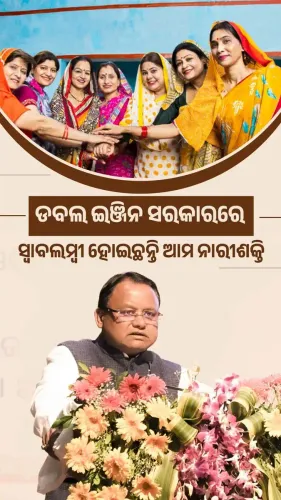
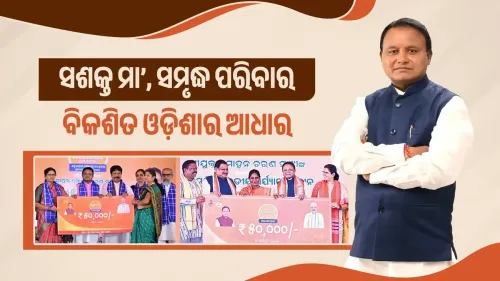
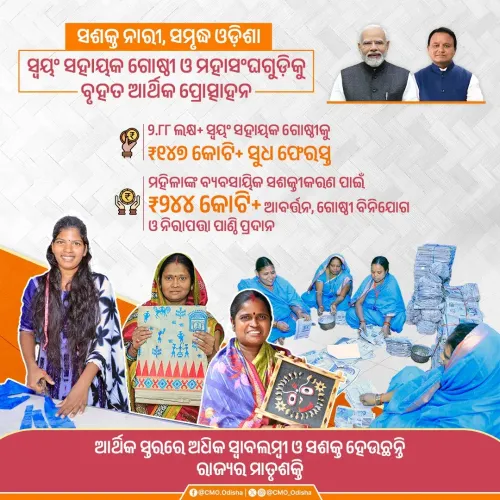
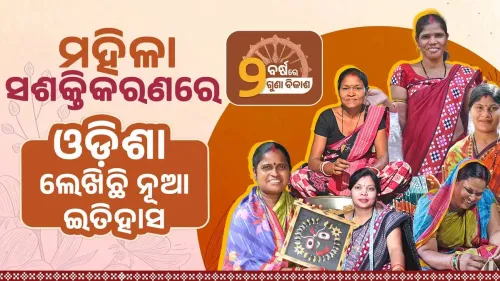
CM Majhi marks 2 years with push for women's self-reliance in Odisha
Synopsis
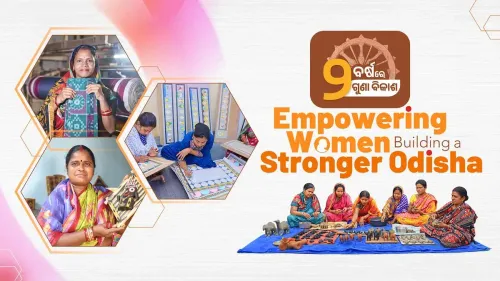
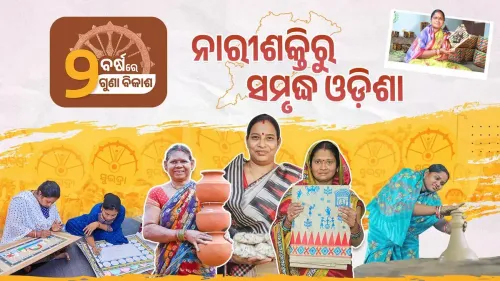
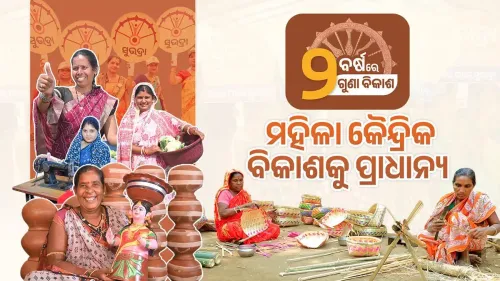
Odisha CM Mohan Charan Majhi marked two years of BJP rule on 26 June 2026 by championing the state's Lakhpati Didi drive, framing women's empowerment as a 'sacred movement' of direct self-reliance support rather than political sloganeering.
Key Takeaways
CM Mohan Charan Majhi posted on 26 June 2026 to mark two years of the BJP government in Odisha, centring women's empowerment as a flagship achievement.
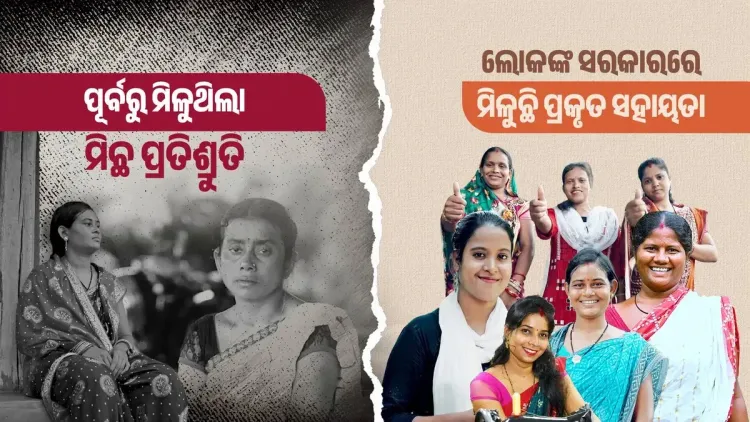
He declared that Lakhpati Didis — women earning at least Rs 1 lakh annually — are being created across Odisha, writing a 'new history of self-reliance.' The post contrasts the current government's direct-support approach with years of 'meetings, rallies, and slogans' under previous administrations.
The national Lakhpati Didi scheme under DAY-NRLM , announced in 2023 , targets sustainable enterprise income for women SHG members.
Odisha's Mission Shakti programme, originally launched in 2001 , underpins the state's extensive women's self-help group network that the BJP government is building upon.
CM Majhi is Odisha's first tribal Chief Minister, and women's economic inclusion has been a central theme of his administration since June 2024 .
Odisha Chief Minister Mohan Charan Majhi on Friday, 26 June 2026, invoked the state's women-empowerment record to mark two years of the BJP government in Odisha, declaring that his administration had moved 'Nari Shakti' from slogans to measurable self-reliance — including the creation of Lakhpati Didis (women earning at least Rs 1 lakh annually) across the state.
Context
Writing in Odia on X, CM Majhi stated that for years women's empowerment had been 'confined to meetings, rallies, and slogans,' but that the reality of Odisha's women — matrushakti (mother-power) — had now changed under his government. He described the effort not as a policy statement but as a pabitr andolan — a 'sacred movement' — in which women are being given direct support for genuine self-reliance rather than mere credit access. The post carried the hashtags #2YearsofLokankaSarakar, #BikasharaDharaOdishaSara, and #2YearsofNariShakti, signalling a coordinated communication campaign around the government's second anniversary.
Policy backdrop
Odisha's Mission Shakti programme, launched in 2001 under the previous BJD government, built one of India's largest networks of women's self-help groups (SHGs), providing micro-credit and livelihood linkages to rural women across the state. The BJP government, which came to power in June 2024 ending the BJD's 24-year run, has sought to build on and reframe that legacy by aligning it with the national Lakhpati Didi initiative under the Deendayal Antyodaya Yojana – National Rural Livelihoods Mission (DAY-NRLM). The national scheme, announced in 2023, targets enabling women SHG members to earn at least Rs 1 lakh per year through sustainable enterprise and skill support. CM Majhi's post claims that Odisha is actively creating Lakhpati Didis and 'writing a new history of self-reliance.'
Stakeholders and impact
The primary beneficiaries are rural women organised into self-help groups across Odisha's districts, particularly those from marginalised and tribal communities. CM Majhi, himself the first tribal Chief Minister of Odisha, has consistently positioned women's economic inclusion as central to his government's identity. His post emphasises both individual and collective empowerment — 'byaktigat heu ba goshthi gata' ('whether individual or collective') — suggesting the administration sees SHG-linked programmes and direct beneficiary schemes as complementary tracks. The framing also carries a political dimension: the implicit contrast with the previous government positions the BJP as delivering on promises where earlier administrations only offered rhetoric.
What's next
The government's stated commitment to matrushakti — honouring, protecting, and advancing the rights of women — will be tested in upcoming state budget sessions, where allocations for women-centric enterprises and SHG support will indicate whether the political messaging translates into expanded fiscal commitments. Progress reports on Lakhpati Didi targets in Odisha — including the number of women who have crossed the Rs 1 lakh annual income threshold — are expected to be key metrics by which the government's two-year record is assessed. Any supplementary budgetary announcements or scheme expansions in the months ahead will signal whether this anniversary communication marks a policy inflection point or a milestone consolidation.
Point of View
Which the BJP now seeks to reframe as unfulfilled promise. By anchoring the message in the nationally resonant Lakhpati Didi brand, the state government ties its own narrative to the BJP's broader Nari Shakti arc, lending it both ideological coherence and electoral utility ahead of future cycles. The emphasis on direct support over credit access signals a subtle policy shift — from SHG micro-finance to enterprise-linked income targets — that will require sustained budgetary backing to substantiate. Whether the Lakhpati Didi numbers in Odisha match the political ambition will determine how durable this narrative proves.
NationPress
25 Sept 2026
Frequently Asked Questions
What is Lakhpati Didi and how does it work in Odisha?
Lakhpati Didi is a national initiative under DAY-NRLM that aims to help women in self-help groups earn at least Rs 1 lakh per year through skill development and sustainable enterprises. In Odisha, CM Majhi's government has aligned state women's SHG networks with this programme to push rural women toward measurable income self-reliance.
What is Mission Shakti in Odisha?
Mission Shakti is an Odisha state programme launched in 2001 to organise women into self-help groups, providing them access to micro-credit, livelihoods support, and socio-economic empowerment. It created one of India's largest SHG networks and now forms the foundation for newer income-focused schemes under the BJP government.
Why did CM Majhi post about women's empowerment on 26 June 2026?
The post marks two years of the BJP government in Odisha, which came to power in June 2024. CM Majhi used the occasion to highlight women's self-reliance as a key achievement, framing it as a shift from rhetoric to tangible outcomes through the Lakhpati Didi drive.
Who is Mohan Charan Majhi?
Mohan Charan Majhi is the Chief Minister of Odisha and a BJP leader who took office in June 2024 after the party ended the BJD's 24-year rule. He is the first person from a tribal community to serve as Odisha's Chief Minister.
What does Nari Shakti mean in Indian government policy?
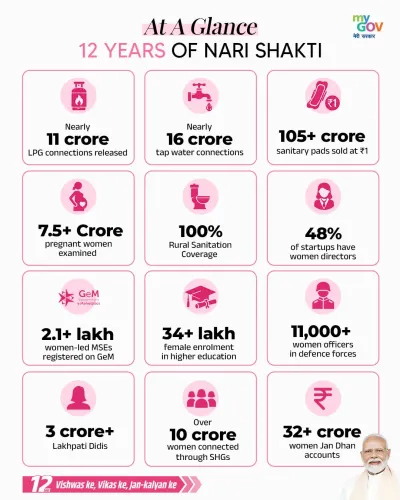
Nari Shakti, meaning 'women's power,' is a term used by the BJP-led central and state governments to describe a cluster of policies aimed at women's economic, social, and political empowerment, including schemes like Lakhpati Didi, Beti Bachao Beti Padhao, and SHG-linked livelihood programmes.