CM Majhi Marks 2 Years of BJP Govt With Women Empowerment Push
Synopsis
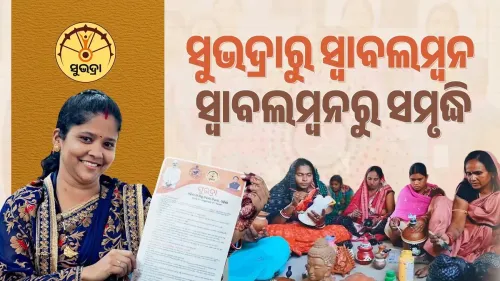
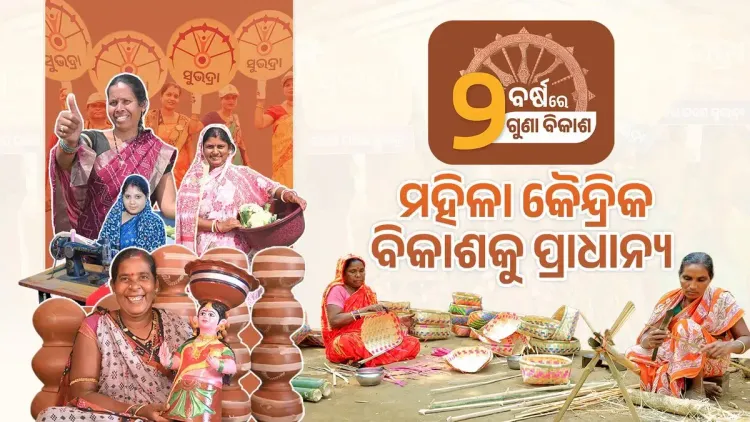
On the second anniversary of the BJP government in Odisha, Chief Minister Mohan Charan Majhi credited Subhadra Yojana, Lakhpati Didi creation, Shakti Shree App and a new menstrual leave policy with making Odisha a national leader in women's self-reliance.
Key Takeaways
CM Mohan Charan Majhi marked two years of the BJP government in Odisha on 13 June 2026 with a focus on women's empowerment.
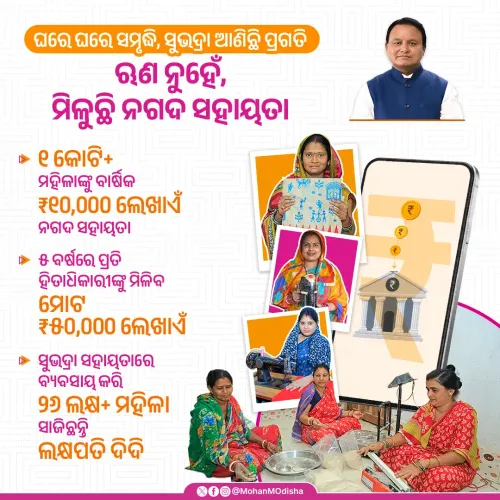
The Subhadra Yojana has been positioned as the flagship scheme providing financial assistance to women from weaker sections to promote self-reliance.
The government claims to have created a large number of 'Lakhpati Didis' — women earning over one lakh rupees annually — placing Odisha at the top nationally in female self-reliance.
Additional menstrual leave for working women, the Shakti Shree App , Subahak Yojana , and Kanya Su-Mangal are cited as complementary measures covering health, safety and education.
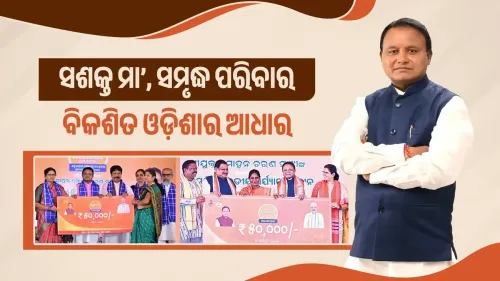
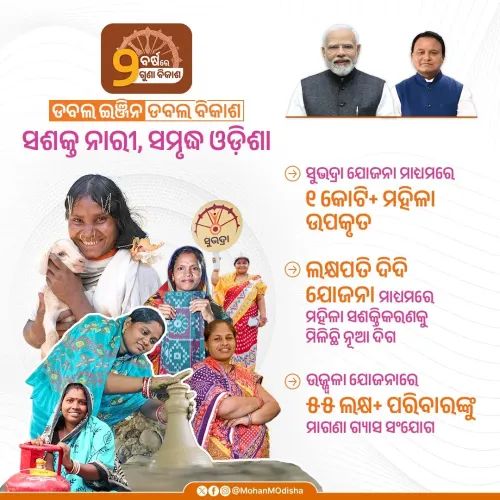
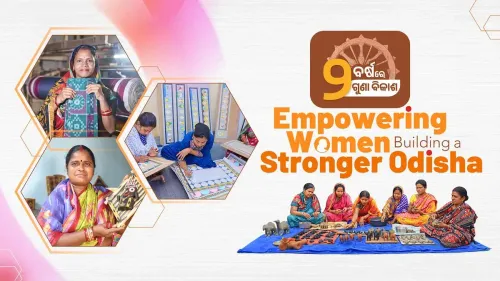
The government's overarching slogan is 'Sashakta Nari, Samriddha Odisha' — 'Empowered Women, Prosperous Odisha'.
The BJP ended 24 years of BJD rule in Odisha after the June 2024 assembly election victory.
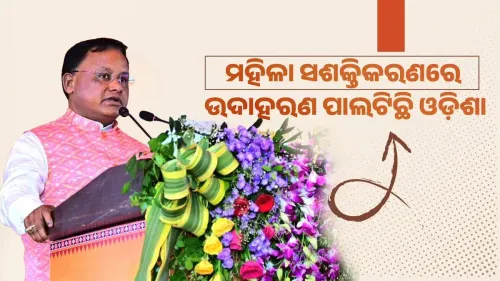
Odisha Chief Minister Mohan Charan Majhi on Saturday, 13 June 2026 highlighted women's empowerment as the defining achievement of his government's first two years in office, crediting flagship initiatives such as the Subhadra Yojana and the creation of 'Lakhpati Didis' (women entrepreneurs earning over one lakh rupees annually) with placing Odisha at the top of the country in female self-reliance.
Context
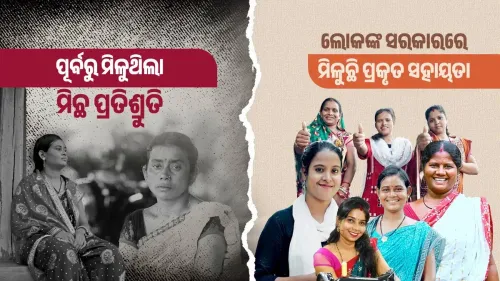
Posting in Odia on the second anniversary of what his government calls 'Lokanka Sarkar' (the people's government), CM Majhi declared that 'Nari Shakti' — women's power — has become the primary driver of Odisha's progress. He framed the occasion not merely as a political milestone but as evidence of a structural shift in how the state delivers welfare to women. The post, pinned to his official profile, carried the hashtags #2YearsofLokankaSarakar, #BikasharaDharaOdishaSara, and #2YearsofNariShakti.
Translated, the Chief Minister wrote: 'On the occasion of completing two years of success of the people's government, Odisha's 'Nari Shakti' has become the chief charioteer of progress. Our mother-power is today creating a new identity of self-respect as a strong bridge of a developed Odisha.'
Policy Backdrop
The BJP came to power in Odisha in June 2024, ending 24 years of Biju Janata Dal rule. The party had campaigned heavily on welfare reform and women's economic inclusion, positioning the Subhadra Yojana — a financial assistance scheme for women from weaker sections — as its headline promise. The scheme is designed to promote self-reliance among women who had historically been excluded from formal credit and income networks.
Beyond direct cash support, the government has also rolled out the Subahak Yojana, the Kanya Su-Mangal programme for girls, and the Shakti Shree App, a digital platform aimed at supporting women's safety, health and empowerment. In a step described by the Chief Minister as path-breaking, the government extended additional menstrual leave entitlements to working women — a policy that has drawn attention across India as states compete to strengthen workplace protections.
Odisha has a pre-existing ecosystem of women's self-help groups, built over two decades under the earlier Mission Shakti programme. The current administration has sought to build on that infrastructure while rebranding its approach around the national 'Lakhpati Didi' framework championed by the BJP-led central government.
Stakeholders and Impact
CM Majhi stated that 'lakhs of women' have been empowered through the Subhadra Yojana and that a large number of 'Lakhpati Didis' have been created, though independent verification of specific beneficiary figures remains pending. Working women in the state are the direct beneficiaries of the expanded menstrual leave policy, which applies across government and eligible private-sector roles.
The Shakti Shree App targets women seeking access to government services, safety resources and health information through a single digital interface. The Kanya Su-Mangal scheme focuses on girls' welfare, adding an intergenerational dimension to the government's women-centred agenda. Together, these measures are intended to address health, education, security and dignity — the four pillars CM Majhi explicitly named in his post.
What's Next
The government's stated resolve is to realise the vision of 'Sashakta Nari, Samriddha Odisha' — 'Empowered Women, Prosperous Odisha' — a slogan that is likely to anchor BJP's messaging in Odisha through the next budget cycle and beyond. Upcoming assembly budget sessions and scheme review reports will be closely watched for updated beneficiary data, disbursement figures under the Subhadra Yojana, and any possible expansion of the menstrual leave framework to a wider set of employers.
As multiple Indian states race to establish credibility on women's welfare, Odisha's two-year record under CM Majhi will serve as an early benchmark — and a political asset the BJP is clearly keen to consolidate ahead of future electoral contests.
Point of View
Signalling ideological continuity between Bhubaneswar and New Delhi. By foregrounding the Subhadra Yojana and Lakhpati Didi numbers — even before independent audits are complete — the government is setting the narrative terms for how its welfare record will be judged. The inclusion of workplace-specific measures like menstrual leave suggests the administration is reaching beyond rural self-help group beneficiaries to urban and semi-urban working women, broadening its coalition. If the beneficiary data holds up to scrutiny, Odisha's post-2024 model could become a template that other BJP-governed states look to replicate.
NationPress
25 Sept 2026
Frequently Asked Questions
What is the Subhadra Yojana in Odisha?
The Subhadra Yojana is a flagship Odisha government scheme that provides direct financial assistance to women from weaker economic sections, aimed at promoting self-reliance and economic independence. It was a key promise of the BJP during the 2024 Odisha assembly elections.
What is a Lakhpati Didi?
A 'Lakhpati Didi' refers to a woman who earns an annual income of at least one lakh rupees, typically through self-help group activities or small enterprises. The Odisha government has claimed to have created a significant number of such women entrepreneurs under its current welfare programmes.
What is the Shakti Shree App in Odisha?
The Shakti Shree App is a digital initiative launched by the Odisha government to support women's safety, health and access to government services through a single platform. It forms part of the broader women's empowerment agenda of the Mohan Charan Majhi administration.
Has Odisha introduced menstrual leave for working women?
Yes, the Odisha government under Chief Minister Mohan Charan Majhi has introduced additional menstrual leave entitlements for working women, a measure the government describes as path-breaking and aimed at ensuring health and dignity in the workplace.
How long has the BJP been in power in Odisha?
The BJP came to power in Odisha in June 2024 after winning the state assembly elections, ending 24 years of Biju Janata Dal rule. Chief Minister Mohan Charan Majhi marked the government's second anniversary on 13 June 2026.