CM Majhi marks 2 years of BJP rule, highlights women's welfare gains
Synopsis
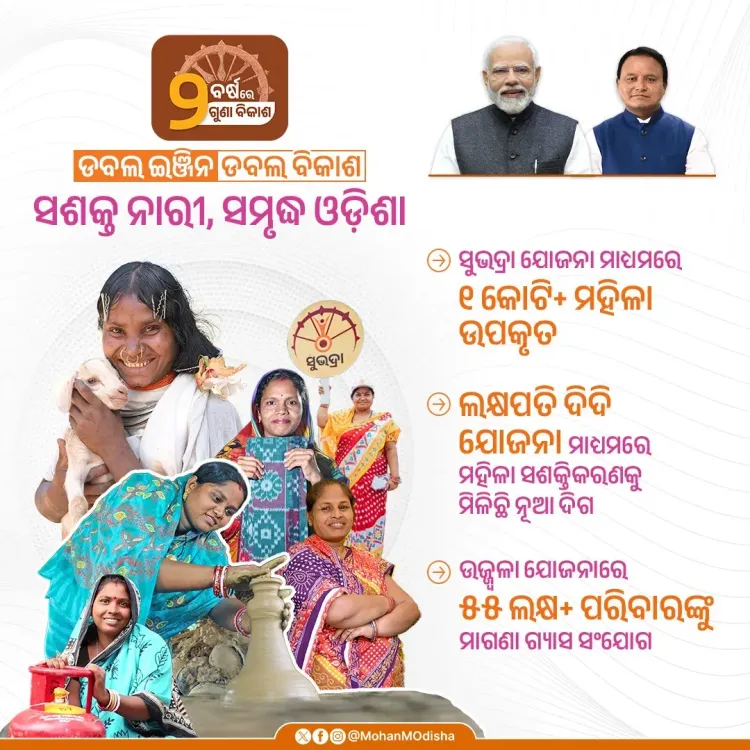
Odisha Chief Minister Mohan Charan Majhi marked two years of BJP rule on 18 June 2026, crediting PM Modi's vision and Centre-state coordination for women's empowerment gains through Subhadra, Lakhpati Didi and Ujjwala Yojana, framing the milestone under the 'double engine, double development' banner.
Key Takeaways
Two-year milestone: The BJP-led Odisha government completed two years in office in June 2026 , ending 24 years of BJD rule when it first came to power in June 2024 .
Three flagship schemes highlighted: CM Majhi specifically named Subhadra , Lakhpati Didi , and Ujjwala Yojana as key drivers of women's self-reliance in the state.
Centre-state convergence: The post emphasises 'unprecedented coordination' between the Central and Odisha state governments as central to development outcomes.
Lakhpati Didi target: The scheme aims to help SHG women earn at least Rs 1 lakh annually through DAY-NRLM livelihood support.
Ujjwala Yojana lineage: The LPG scheme was launched nationally in May 2016 to provide free connections to below-poverty-line households.
Political framing: CM Majhi used the hashtag #DoubleEngineDoubleVikas , consistent with BJP messaging across multiple states won in the 2024 election cycle.
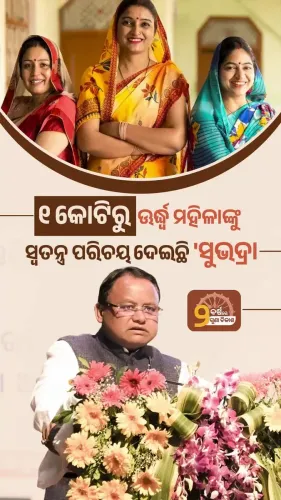
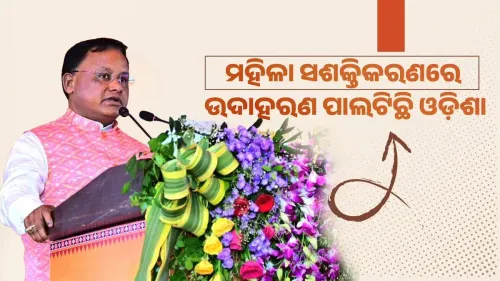
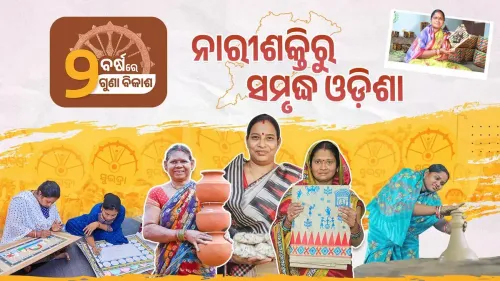
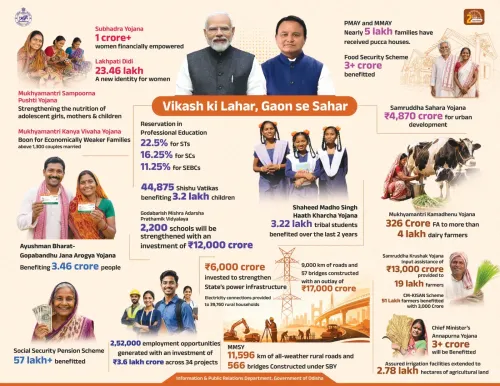
Odisha Chief Minister Mohan Charan Majhi on Thursday, 18 June 2026, took to X to mark two years of the BJP-led state government, crediting Prime Minister Narendra Modi's vision and the 'double engine' coordination between the Centre and state for what he described as a new dawn of development for Odisha. The post, shared under the hashtags #2YearsofLokankaSarakar and #DoubleEngineDoubleVikas, highlighted three flagship schemes aimed at women's empowerment and financial self-reliance.
Context
In his post — written in Odia — CM Majhi stated that the 'visionary guidance of respected Prime Minister Shri Narendra Modi and the unprecedented coordination between the Central and state governments have today brought a new sunrise of development to Odisha.' He specifically named three schemes — Subhadra, Lakhpati Didi, and Ujjwala Yojana — as transformative steps through which, in his words, 'the women power of the state has today become self-reliant and self-respecting.' The post marks the completion of two years since the BJP formed its first-ever government in Odisha in June 2024, ending 24 years of Biju Janata Dal rule.
Policy Backdrop
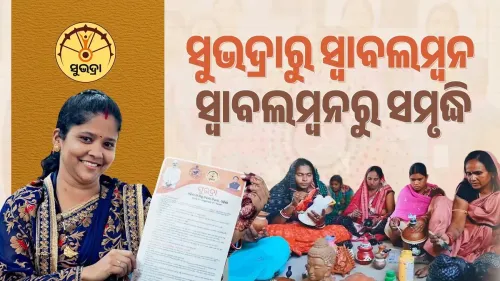
Ujjwala Yojana, launched nationally in May 2016, provides free LPG connections to women from below-poverty-line households, targeting indoor air pollution and women's health. Lakhpati Didi is an initiative under the Deendayal Antyodaya Yojana–National Rural Livelihoods Mission (DAY-NRLM), scaled with explicit targets from 2023 onwards, aimed at enabling women in self-help groups (SHGs) to earn at least Rs 1 lakh annually through structured livelihood support. Subhadra is an Odisha state scheme focused on women's empowerment and financial inclusion, designed to complement central efforts for household-level self-reliance.
The 'double engine government' framing — referring to the same party ruling at the Centre and in the state — has been a consistent BJP messaging device, particularly in states won in the 2024 assembly cycle including Odisha, to argue for faster and more seamless delivery of central welfare programmes.
Stakeholders and Impact
The primary beneficiaries cited in the post are women in Odisha, particularly those in rural self-help groups, below-poverty-line households, and families without clean cooking fuel access. CM Majhi framed the government's work as giving 'true respect to women power' while working firmly for 'the welfare of every family in Odisha.' Similar messaging around the same scheme basket — Ujjwala, Lakhpati Didi, and state-level women's transfers — has been deployed by BJP chief ministers in Madhya Pradesh, Chhattisgarh, and Rajasthan, reflecting a coordinated national narrative on women's economic empowerment.
For Odisha specifically, the post signals the state government's intent to align its political identity with the Centre's women-welfare agenda as a core governance deliverable heading into the second half of its term.
What's Next
Attention will now turn to state budget allocations and physical progress reports on Subhadra and Lakhpati Didi targets within Odisha, as the government's two-year mark invites scrutiny of actual beneficiary numbers and disbursement data. Any forthcoming announcements under the next phase of Pradhan Mantri Ujjwala Yojana or updated NRLM targets will also be watched closely for Odisha-specific figures. The BJP's ability to demonstrate measurable outcomes on women's financial inclusion will be central to its political narrative as the state heads toward the midpoint of its five-year term.
Point of View
Using the two-year anniversary to consolidate the BJP's identity in Odisha around women's welfare — a domain where the party has the most visible and transferable scheme assets. By naming Subhadra alongside central schemes like Lakhpati Didi and Ujjwala, Majhi is weaving a state-Centre continuum that reinforces the 'double engine' proposition to voters. The post fits a broader BJP pattern of synchronising state-level governance narratives with the Centre's flagship welfare vocabulary, particularly in states won in 2024. The real test will come when beneficiary data and disbursement figures are placed against the political claims.
NationPress
20 Sept 2026
Frequently Asked Questions
What is the Subhadra scheme in Odisha?
Subhadra is an Odisha state government scheme focused on women's empowerment and financial inclusion, designed to complement central welfare programmes and promote self-reliance among women in the state. Exact beneficiary numbers and full scope are yet to be officially confirmed in the public record.
What is the Lakhpati Didi scheme?
Lakhpati Didi is an initiative under the Deendayal Antyodaya Yojana–National Rural Livelihoods Mission (DAY-NRLM) that aims to enable women in self-help groups to earn at least Rs 1 lakh per year through structured livelihood and skill support. Explicit national targets for the programme were set from 2023 onwards.
How long has BJP been in power in Odisha?
The BJP formed its first-ever government in Odisha in June 2024, ending 24 years of Biju Janata Dal (BJD) rule. CM Mohan Charan Majhi's post on 18 June 2026 marks the completion of two years of this government.
What is Ujjwala Yojana and who benefits from it?
Pradhan Mantri Ujjwala Yojana is a Central government scheme launched in May 2016 that provides free LPG connections to women from below-poverty-line households, aiming to reduce indoor air pollution and improve women's health.
What does 'double engine government' mean in Indian politics?
'Double engine government' is a BJP phrase referring to situations where the same party governs both at the Centre and in a particular state, arguing that this alignment enables faster and more effective delivery of central welfare schemes and development funds to the state.