CM Majhi marks 2 years of double-engine govt in Odisha
Synopsis
Odisha Chief Minister Mohan Charan Majhi marked two years of the BJP's double-engine government on 9 June 2026, crediting coordinated central-state execution of schemes like Sagarmala, PM-KISAN, Lakhpati Didi, and Gopabandhu Jan Arogya Yojana for accelerating development, with a stated goal of a prosperous, self-reliant Odisha by 2036.
Key Takeaways
Mohan Charan Majhi posted on 9 June 2026 to mark two years of the BJP-led government in Odisha, using the hashtag #2YearsofLokankaSarakar .
The Chief Minister cited Sagarmala , PM-KISAN , Lakhpati Didi , and Ayushman Bharat-Gopabandhu Jan Arogya Yojana as transformative programmes underpinning state development.
An 'unprecedented growth' in Odisha's railway budget was highlighted as a connectivity milestone, though specific figures were not stated.
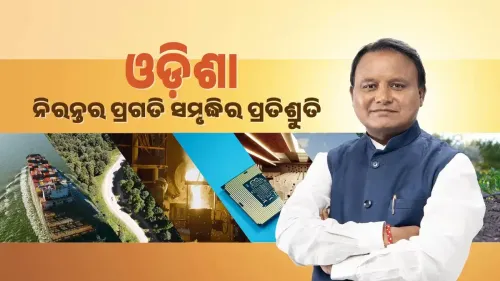
The post commits to building a 'prosperous, self-reliant and developed Odisha' while protecting Odia identity by the year 2036 .
Key beneficiary groups include farmers , women in self-help groups , coastal communities , and households covered under the state health insurance scheme.
The 2036 target aligns with the broader national Viksit Bharat 2047 framework, setting an earlier state-level milestone.
Odisha Chief Minister Mohan Charan Majhi on Tuesday, 9 June 2026 highlighted the combined momentum of the central and state governments in driving development across Odisha, marking two years of the BJP-led 'double engine' administration in the state.
Posting in Odia on X, the Chief Minister wrote: 'କେନ୍ଦ୍ର ଏବଂ ରାଜ୍ୟର ଡବଲ୍ ଇଞ୍ଜିନ ସରକାରର ମିଳିତ ସମନ୍ୱୟ ବଳରେ ଓଡ଼ିଶାର ବିକାଶ ପ୍ରକ୍ରିୟା ଏକ ପ୍ରଭାବଶାଳୀ ଗତି ଦେଇ ଅଗ୍ରସର ହେଉଛି' — [Translation: 'Through the combined coordination of the central and state double-engine government, Odisha's development process is advancing at an impressive pace.']
Context
Majhi took charge as Chief Minister in June 2024, ending nearly two decades of Biju Janata Dal rule in Odisha and aligning the state government with the BJP-led Centre for the first time. The post, tagged #2YearsofLokankaSarakar and #BikasharaDharaOdishaSara, marks the two-year anniversary of that administration. The message emphasises a coordinated federal approach to welfare and infrastructure delivery.
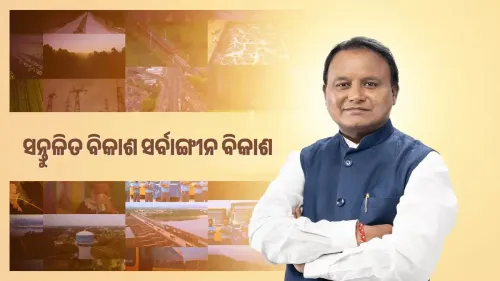
The Chief Minister specifically cited sectors including connectivity, industry, infrastructure, agriculture, women's empowerment, and social security as areas where central schemes are being implemented to 'empower every citizen.' He also committed to building a 'prosperous, self-reliant and developed Odisha' by 2036, while safeguarding Odia identity.
Policy Backdrop
The BJP has promoted the 'double engine' governance model since 2014, arguing that states ruled by the same party as the Centre execute central schemes faster through better coordination. Several flagship programmes cited by Majhi have been operational nationally for years: the Sagarmala port-led coastal development project was approved by the Union Cabinet in 2015; PM-KISAN, the direct income-support scheme for farmers, was launched in February 2019; and Ayushman Bharat was rolled out nationally in 2018.
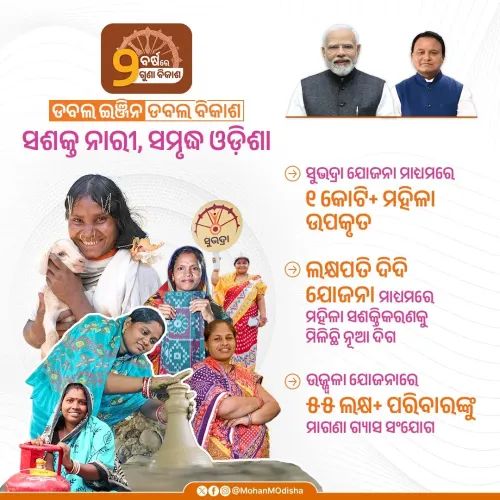
Odisha has integrated the national health coverage scheme with a state-level component named after freedom fighter Gopabandhu Das, branding it Ayushman Bharat-Gopabandhu Jan Arogya Yojana. The Lakhpati Didi scheme, aimed at enabling women in self-help groups to earn at least Rs 1 lakh annually through sustainable livelihoods, is also among the programmes the Chief Minister highlighted. The post additionally cited an 'unprecedented growth' in the railway budget allocated to Odisha, though specific figures were not provided.
Stakeholders and Impact
The schemes named in the post collectively target Odisha's farmers, women in self-help groups, coastal communities, and households seeking healthcare coverage — together representing a substantial share of the state's population. The Sagarmala project has particular relevance given Odisha's long coastline and major ports at Paradip, with potential to generate employment and boost maritime trade. Women's economic empowerment through Lakhpati Didi and the health security net under Gopabandhu Jan Arogya Yojana are positioned as pillars of the state's social protection architecture.
Agricultural households stand to benefit from continued PM-KISAN disbursals, while improved rail connectivity — if allocations translate into project execution — could reduce logistics costs for industry and commuters across the state.
What's Next
The Chief Minister's reference to a '2036' target for a developed Odisha signals an intent to articulate a medium-term vision document, potentially mirroring the national Viksit Bharat 2047 framework at the state level. Observers will watch the 2026-27 state budget and subsequent central-state project announcements for concrete milestones under the listed schemes. The anniversary messaging also sets the political tone ahead of the next cycle of local body and assembly elections, reinforcing the BJP's governance narrative in a state it won for the first time in 2024.
Point of View
And pre-emptively framing the 2036 vision as a measurable promise. By anchoring the message in well-known central schemes rather than state-specific data, the post draws a direct line between the Centre's policy architecture and Odisha's development trajectory — a core BJP argument for the double-engine model. The 2036 milestone is significant: it is short enough to be held accountable within the current political generation yet long enough to allow for gradual delivery, mirroring the strategic horizon of Viksit Bharat 2047 at the national level. Whether the rhetoric translates into verifiable outcomes on scheme saturation and infrastructure completion will determine how this anniversary messaging ages.
NationPress
24 Oct 2026
Frequently Asked Questions
What is the double engine government model in Odisha?
The double engine government model refers to the BJP governing both the state of Odisha and the Centre simultaneously, allowing for closer coordination on scheme implementation and infrastructure funding. Odisha joined this model in June 2024 when the BJP won a majority in the state assembly for the first time.
What is Ayushman Bharat Gopabandhu Jan Arogya Yojana?
It is Odisha's health coverage programme that combines the national Ayushman Bharat Pradhan Mantri Jan Arogya Yojana with a state-level component named after Odia freedom fighter Gopabandhu Das, extending health insurance to eligible families in the state.
What is the Lakhpati Didi scheme?
Lakhpati Didi is a central government scheme designed to help women in self-help groups earn at least Rs 1 lakh annually through sustainable livelihood activities, targeting women's economic empowerment at the grassroots level.
What is the Sagarmala project and how does it benefit Odisha?
Sagarmala is a Union government port-led development initiative launched in 2015 to modernise ports, improve coastal connectivity, and promote economic zones. Odisha, with its long coastline and major ports including Paradip, stands to benefit through enhanced maritime trade and employment generation.
What is Odisha CM Majhi's 2036 vision for the state?
Chief Minister Mohan Charan Majhi has stated a goal of building a prosperous, self-reliant and developed Odisha by 2036, while safeguarding Odia cultural identity. The target aligns with the national Viksit Bharat 2047 framework but sets an earlier milestone for the state.