CM Majhi Hails Double Engine Growth Across Odisha
Synopsis
Odisha Chief Minister Mohan Charan Majhi on June 1, 2026, highlighted continuous progress across industry, education, culture, and rural development in Odisha, citing the BJP's 'double engine' governance model that aligns state and central government priorities for accelerated delivery.
Key Takeaways
Odisha CM Mohan Charan Majhi posted on June 1, 2026 , asserting that the double engine government is delivering double development in the state.
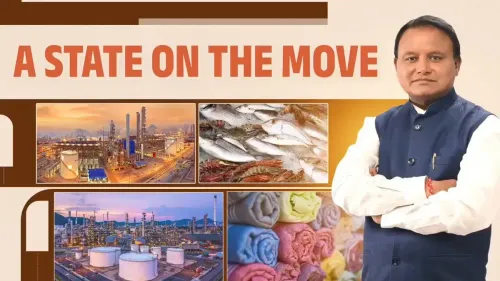
The four sectors highlighted are industry, education, culture, and rural development .
The 'double engine' model refers to political alignment between BJP 's state and central governments, a narrative the party has used since 2014 .
Majhi came to power in June 2024 , ending over two decades of Biju Janata Dal rule in Odisha .
Similar double-engine narratives have been deployed by BJP governments in Uttar Pradesh and Gujarat to highlight faster central scheme execution.
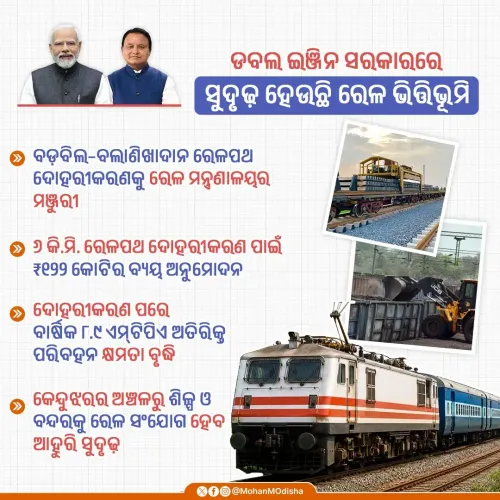
Odisha Chief Minister Mohan Charan Majhi on Monday, June 1, 2026, reaffirmed his government's commitment to accelerated development across industry, education, culture, and rural sectors, invoking the ruling Bharatiya Janata Party's signature 'double engine' governance model.
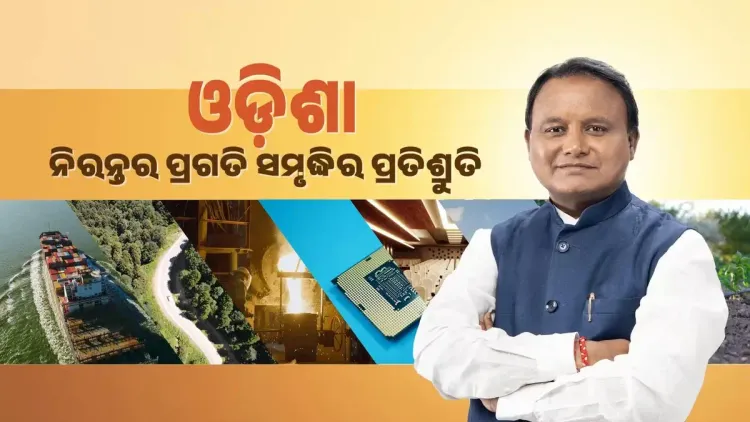
Posting in Odia, the Chief Minister wrote: 'ଡବଲ ଇଞ୍ଜିନ ସରକାରରେ ହେଉଛି ଡବଲ ବିକାଶ' ['Double engine government is delivering double development'], adding that Odisha is registering continuous progress across all sectors — industry, education, culture, and rural development.
Context
The 'double engine' formulation refers to the alignment between a BJP-led state government and the party's government at the centre, with both pulling in the same policy direction. Majhi came to power in June 2024 after BJP ended more than two decades of Biju Janata Dal rule in the state — marking a significant political realignment for Odisha.
The slogan has been a core BJP communication tool since 2014, used to argue that states governed by the same party as the centre benefit from faster scheme execution, smoother fund flows, and reduced bureaucratic friction.
Policy Backdrop
Since taking office, the Majhi government has sought to position Odisha as an investment and development destination, with particular emphasis on industrial growth, educational reform, and rural welfare convergence with central schemes. The four pillars cited in the post — industry, education, culture, and rural development — broadly map onto ongoing state and central government priority areas.
BJP-governed states such as Uttar Pradesh and Gujarat have used similar double-engine narratives to claim accelerated implementation of flagship central programmes. Odisha's post-2024 transition fits this broader pattern of projecting development momentum once state and central governments are politically aligned.
Stakeholders and Impact
The statement is directed at multiple constituencies: Odisha's rural communities who are the primary beneficiaries of centrally sponsored welfare schemes; industrial investors watching the state's policy environment; students and educators tracking education reform; and cultural institutions seeking state patronage.
For BJP's political base, the message reinforces the party's governance narrative ahead of future electoral cycles, framing development continuity as a direct product of its dual hold on state and central power.
What's Next
Observers will watch state assembly sessions for concrete industrial and education policy rollouts, as well as outcomes from any investment summits and the pace of central scheme fund releases through 2025–26. The degree to which Odisha can demonstrate measurable gains across the four sectors cited will determine how effectively the double-engine claim holds up to public scrutiny.
Point of View
The message is designed to signal broad-based momentum rather than sector-specific achievement. This fits a well-established BJP playbook: use the double-engine frame to pre-empt criticism about slow delivery by attributing progress to structural political alignment. The real test will come when concrete outcomes in industrial investment and rural scheme saturation are placed alongside the rhetoric.
NationPress
16 Oct 2026
Frequently Asked Questions
What is the double engine government model in India?
The double engine government model is a BJP concept where the same party governs both the state and the central government, enabling faster coordination on policy, scheme implementation, and fund releases. It was prominently promoted after 2014 and has been used in states like Uttar Pradesh, Gujarat, and now Odisha.
Who is Mohan Charan Majhi and when did he become Odisha CM?
Mohan Charan Majhi is a BJP leader who became Chief Minister of Odisha in June 2024 after the party won the state assembly elections, ending over two decades of Biju Janata Dal rule in the state.
What development sectors did Odisha CM Majhi highlight in his post?
CM Majhi highlighted four sectors: industry, education, culture, and rural development, stating that Odisha is registering continuous progress across all of them under the double engine government.
How long was Biju Janata Dal in power in Odisha before BJP won?
The Biju Janata Dal governed Odisha for over two decades before BJP's victory in the 2024 state assembly elections brought Mohan Charan Majhi to power as Chief Minister.
What will indicate whether Odisha's double engine development claims are credible?
Concrete outcomes such as new industrial investment figures, central scheme fund utilisation rates, rural welfare beneficiary data, and education policy rollouts from state assembly sessions will be key indicators to watch through 2025–26.