Sitharaman in Bangkok: Capex Multiplier Kept India Going

Synopsis
Union Finance Minister Nirmala Sitharaman, speaking in Bangkok, defended India's capex-first fiscal strategy, saying public investment in infrastructure generates a higher economic multiplier than direct cash transfers — the doctrine that has anchored India's budgets since 2021-22.
Key Takeaways
Nirmala Sitharaman made the remarks in Bangkok, Thailand , arguing that capex spending carries a higher economic multiplier than direct transfers to citizens.
India sharply raised central capital expenditure from Union Budget 2021-22 onward as a post-COVID recovery anchor.
The PM Gati Shakti master plan coordinates multi-modal infrastructure spending across roads, railways and logistics corridors.
Sitharaman framed the capex multiplier as the key reason India sustained growth momentum through 'difficult times' globally.
Execution quality and project-completion rates in the next budget cycle will be the critical test of whether the multiplier claim holds at scale.
Even as global headwinds buffeted major economies, Union Finance Minister Nirmala Sitharaman argued in Bangkok, Thailand that India's deliberate bet on public capital expenditure — not direct cash transfers — is precisely what gave the country its growth cushion. The multiplier, she said, is simply different when you build something that lasts.
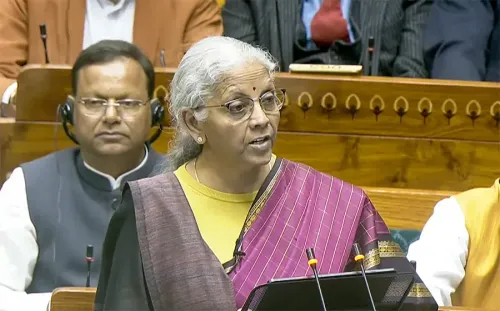
Speaking in Bangkok, Sitharaman was characteristically direct: 'Public spending on capital expenditure has helped us build infrastructure in the country and that has a greater multiplier effect.' Her argument cuts to the heart of a long-running debate in development economics — whether a rupee spent pouring concrete into a national highway does more economic work than a rupee handed directly to a citizen. Her answer is an unequivocal yes.
Why the multiplier argument matters right now
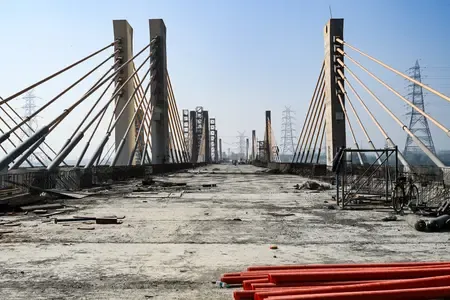
The multiplier concept is not abstract budget-speak. When the government spends on a road, a railway line, or a logistics corridor, it triggers a chain: construction jobs, raw-material demand, faster goods movement, lower logistics costs for businesses, and ultimately higher private investment attracted by better connectivity. A direct transfer, by contrast, boosts consumption — valuable, but the ripple is narrower and shorter-lived.
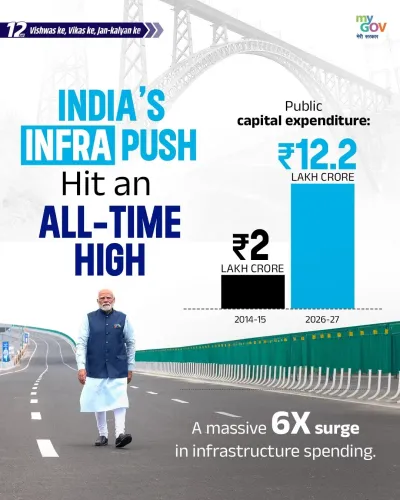
India has leaned hard into this logic since Union Budget 2021-22, when central capital expenditure was sharply raised to anchor the post-COVID recovery. Subsequent budgets — including through 2022-23 and beyond — maintained that elevated capex trajectory, underpinned by the flagship PM Gati Shakti national infrastructure master plan that is designed to coordinate road, rail, port and logistics spending into one coherent grid.
From post-COVID pivot to sustained doctrine
What began as an emergency lever during the pandemic has quietly hardened into a governing fiscal philosophy. Rather than winding back capex once the immediate crisis passed, New Delhi doubled down — treating infrastructure investment as both a growth engine and a structural reform tool. Sitharaman's Bangkok remarks make clear that this is not a temporary posture. 'That way, I think the multiplier has actually worked out and kept us going very well during these difficult times,' she said.
The phrase 'difficult times' does real work in her framing. It acknowledges global turbulence — tightening monetary conditions in advanced economies, subdued trade volumes, geopolitical uncertainty — without conceding that India's fundamentals are fragile. The capex multiplier, in her telling, is the shock absorber.
What the infrastructure-first wager still needs to prove
The strategy is not without its critics. Sceptics argue that sustained high capex crowds out social spending and that the benefits of infrastructure take years to show up in household incomes. Execution quality — whether allocated funds actually translate into completed projects — also remains the decisive variable. Capital expenditure allocations and real-world project-completion rates in the next Union Budget cycle will be the most rigorous test of whether the multiplier has delivered at the scale Sitharaman is claiming.
For now, though, the Finance Minister is taking that case international — making Bangkok the latest stage from which India pitches its infrastructure-led growth model to the world.
Point of View
She is also drawing a line against opposition-backed income-support proposals ahead of the next budget cycle. The durability of this approach will hinge on whether elevated capex allocations continue to translate into on-ground project completions — a gap that has historically been the Achilles heel of Indian public investment. Taking this argument to an international audience signals New Delhi's confidence that the model is ready for global scrutiny.
NationPress
16 Oct 2026
Frequently Asked Questions
What did Nirmala Sitharaman say about capital expenditure in Bangkok?
Sitharaman said that public spending on capital expenditure — building roads, railways and other infrastructure — creates a higher economic multiplier than putting the same money directly in people's hands, and that this approach has helped India sustain growth through difficult global conditions.
What is the capex multiplier effect in simple terms?
The capex multiplier refers to how each rupee the government spends on infrastructure generates additional economic activity — through jobs, raw-material demand, lower logistics costs and private investment — often exceeding the direct output of equivalent consumer transfers.
Why did India increase capital expenditure after COVID-19?
India sharply raised central capex from the 2021-22 Union Budget onward to anchor post-pandemic economic recovery, reasoning that infrastructure investment would stimulate demand, create jobs and raise long-run productivity more effectively than revenue spending.
What is PM Gati Shakti and how does it relate to capex?
PM Gati Shakti is a national infrastructure master plan that coordinates capital spending across roads, railways, ports and logistics corridors to eliminate planning silos, and it underpins India's elevated capex strategy by ensuring investments are integrated rather than fragmented.
Does India prefer infrastructure spending over direct cash transfers?
Under the current fiscal framework, India has prioritised capital expenditure on infrastructure over large-scale direct cash transfers, with Sitharaman arguing the multiplier effect of building assets is superior for sustained, broad-based growth.