Sitharaman: Public Capex Unlocked Private Investment
Synopsis
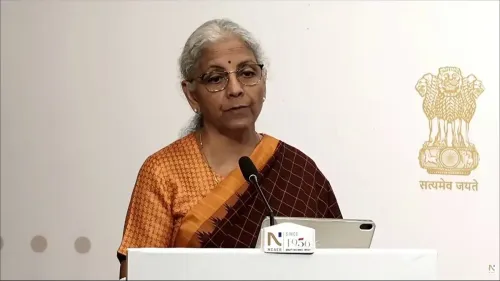
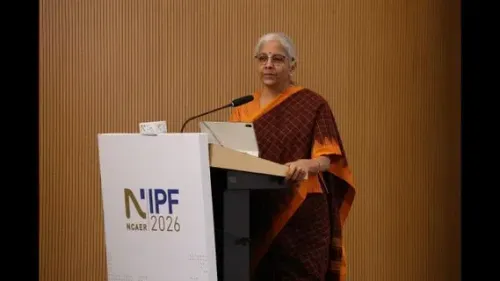
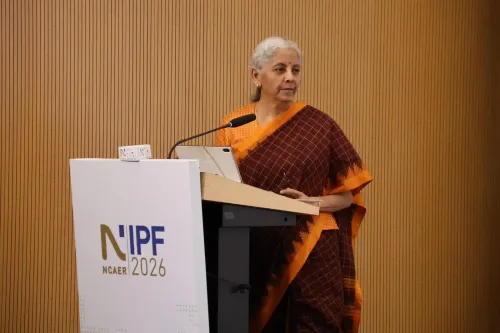
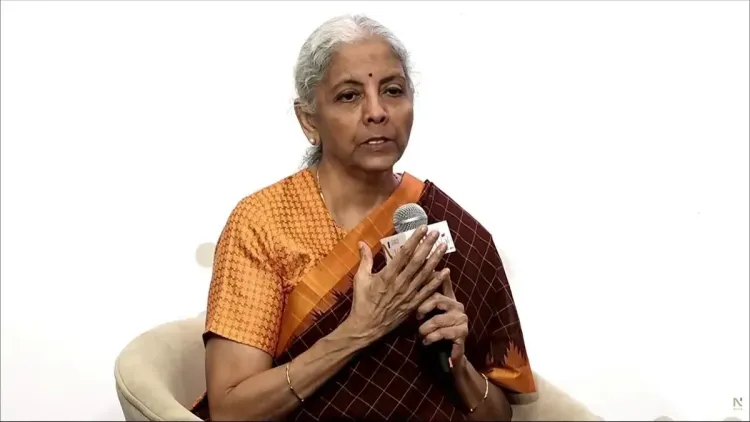
At the CD Deshmukh Lecture 2026 in New Delhi, Finance Minister Nirmala Sitharaman defended India's post-COVID capex strategy, arguing that sustained public investment in asset creation has successfully crowded in private sector risk-taking and investment.
Key Takeaways
Finance Minister Nirmala Sitharaman spoke at the C.D.
Deshmukh Lecture 2026 in New Delhi on 6 August 2026 .
She asserted that the private sector has 'come forward' to invest, countering two years of post-COVID criticism that public spending was carrying the economy alone.
Her core fiscal argument: government borrowing is justified when it funds asset creation — infrastructure, not consumption.
The strategy traces back to the Union Budget 2021-22 and the Atmanirbhar Bharat package of 2020 .
Private players are now 'taking risks and investing,' she said, framing this as the intended outcome of patient public expenditure.
Quarterly private investment data and the next Union Budget's capex allocation will be the key tests of this claim.
Six years after COVID paralysed India's economy, Union Finance Minister Nirmala Sitharaman is making a confident claim: the private sector has finally shown up — and it was government spending that pulled it in.
Speaking at the C.D. Deshmukh Lecture 2026 in New Delhi on 6 August 2026, Sitharaman pushed back against a persistent criticism that dogged the government for the better part of two years after the pandemic — that public investment was doing all the heavy lifting while private capital sat on the sidelines.
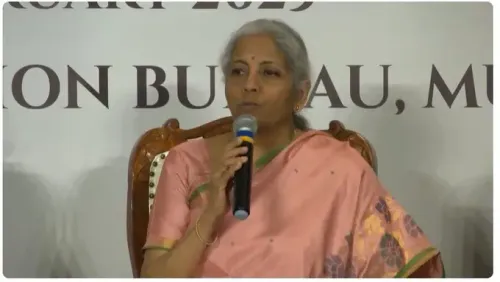
'The private sector has come forward,' she said flatly. 'It is the public expenditure that we kept undertaking all these years, with a lot of confidence that the Indian economy would benefit from it, that has actually helped the private sector come forward.'
The Bet on Borrowing for Assets
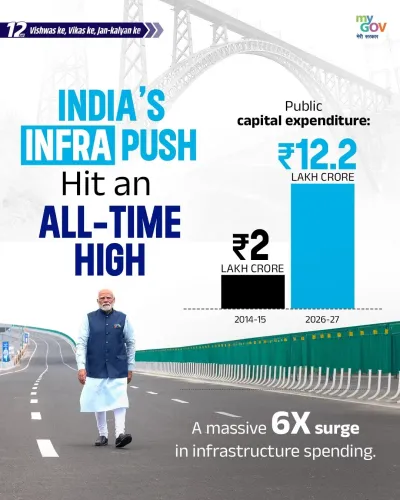
At the heart of her argument is a fiscal philosophy the government has championed since the Union Budget 2021-22: borrow not to fund subsidies or consumption, but to build assets. Roads, railways, ports, power — the logic being that infrastructure creates demand, which eventually de-risks private investment enough to crowd it in. 'When you borrow money, you borrow it for creating assets and you spend it on asset creation,' Sitharaman said. 'This has its rewards, both for you and for the larger public.' The approach was seeded even earlier, through the Atmanirbhar Bharat package of 2020, which combined targeted capital spending with production-linked incentives to jolt manufacturing and infrastructure back to life after the pandemic's body blow.From Scepticism to Risk-Taking
What makes Sitharaman's remarks notable is the timeline she is implicitly defending. For roughly two years post-COVID, the government absorbed the criticism that it was propping up growth numbers through its own balance sheet while corporates hoarded cash. The Finance Minister's rebuttal: that patience was the strategy, not the problem. Private players, she argued, are now 'taking risks and investing so that they can benefit from the growth that India is seeing.' The sequencing, in her telling, was always intentional — public confidence first, private capital to follow. The C.D. Deshmukh Lecture — named after India's first RBI Governor and former Finance Minister — is one of the more substantive annual forums for economic policy thought in the country, making it a deliberate platform for a statement of this weight. The next test of whether the crowding-in thesis is holding will come with quarterly private investment data and the contours of capital expenditure in the next Union Budget. The government's credibility on this argument now rests on those numbers delivering.Point of View
Framing the capex strategy as proven policy rather than ongoing experiment gives the government room to sustain or even expand infrastructure outlays without the political cost of being seen as reckless borrowers. The crowding-in argument, if backed by hard private investment data, also neutralises a long-running opposition critique about jobless or state-dependent growth. Whether the numbers ultimately support the narrative will define how this chapter of India's fiscal history is written.
NationPress
21 Sept 2026
Frequently Asked Questions
What did Nirmala Sitharaman say at the CD Deshmukh Lecture 2026?
She said the private sector has come forward to invest and credited sustained government capital expenditure since the COVID period for building the confidence that made private risk-taking possible.
What is the CD Deshmukh Lecture?
It is an annual lecture series named after C.D. Deshmukh, India's first RBI Governor and a former Finance Minister, focused on economic policy and held in New Delhi.
What is India's capex-led fiscal strategy?
Since the Union Budget 2021-22, the government has sharply increased capital expenditure — spending on infrastructure and asset creation rather than consumption subsidies — with the goal of stimulating broader economic growth and drawing in private investment.
Has the private sector started investing in India after COVID?
Finance Minister Sitharaman claimed in August 2026 that private investors are now taking risks and committing capital, which she attributed to the foundation laid by years of public expenditure on infrastructure.
What is the Atmanirbhar Bharat package?
Launched in 2020 in response to COVID-19, Atmanirbhar Bharat combined targeted capital spending with production-linked incentives to revive Indian manufacturing and infrastructure after the pandemic's economic shock.