Sitharaman invokes trusteeship at CD Deshmukh Lecture 2026
Synopsis
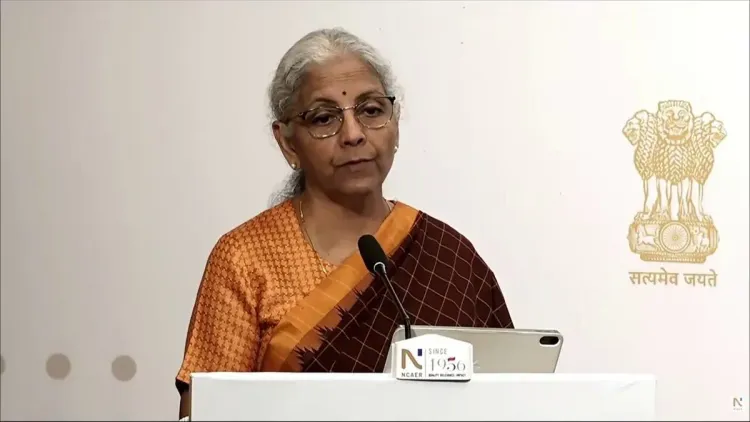
At the CD Deshmukh Lecture 2026 in New Delhi, Finance Minister Nirmala Sitharaman argued that wealth carries societal obligations, framing India's development goal as a civilisational project that pairs enterprise with trusteeship and innovation with cultural wisdom.
Key Takeaways
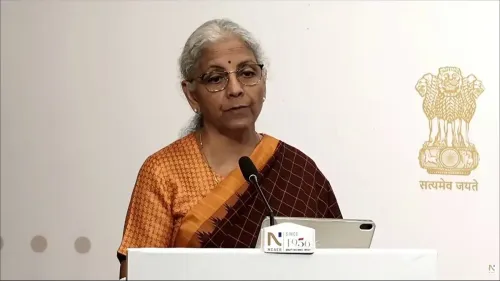
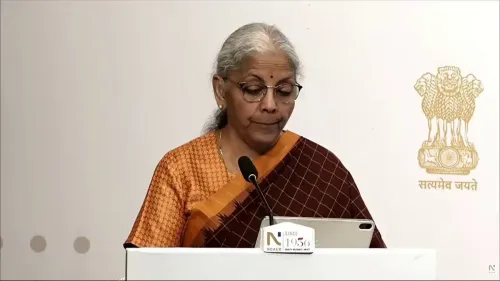
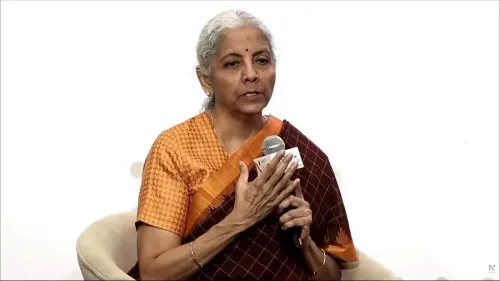
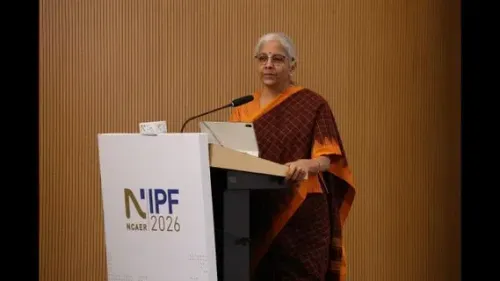
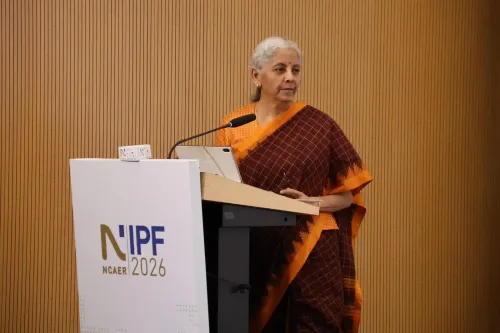
Finance Minister Nirmala Sitharaman delivered the CD Deshmukh Lecture 2026 in New Delhi on 6 August 2026 .
She described India's destiny as becoming 'a developed civilisation' — not merely a developed economy.
The lecture explicitly invoked the concept of trusteeship: wealth-holders as stewards for society and future generations, echoing Gandhian economic philosophy of the 1940s-50s.
She paired six sets of seemingly opposing values: prosperity with trusteeship, enterprise with responsibility, innovation with civilisational wisdom, global leadership with cultural rootedness, environmental stewardship with economic progress, and individual success with collective welfare.
The speech aligns with the government's Viksit Bharat 2047 vision of a fully developed India by independence's centenary, adding an ethical and civilisational dimension to that framework.
The lecture is named after C.D.
Deshmukh , India's first Indian-born RBI Governor and a former Finance Minister, whose legacy links statecraft with institutional and moral seriousness.
Wealth is not ownership — it is obligation. Delivering the CD Deshmukh Lecture 2026 in New Delhi on 6 August 2026, Union Finance Minister Nirmala Sitharaman laid out a sweeping civilisational vision for India, one that places the ethics of trusteeship at the very centre of economic ambition.
Speaking at the prestigious annual lecture named after C.D. Deshmukh — independent India's first Indian-born RBI Governor and a Union Finance Minister — Sitharaman argued that prosperity without responsibility is a betrayal of the future. 'Wealth and resources carry obligations to society and to generations yet unborn,' she said. 'We may enjoy what we inherit, but we, as trustees, are not entitled to exhaust it.'
The trusteeship argument and its deep roots
The framing is deliberate and historically loaded. The idea that wealth-holders act as trustees — not owners — for society traces back to Mahatma Gandhi's economic philosophy of the 1940s and 1950s, which held that capital must serve collective welfare rather than private accumulation alone. Sitharaman's invocation of this principle at one of India's most prominent economic lecture series signals a conscious effort to anchor contemporary growth discourse in that older moral tradition. She described India's destiny as becoming 'a developed civilisation' — a phrase that goes meaningfully beyond the familiar GDP-driven definition of development. The formula she outlined pairs seemingly opposite imperatives: prosperity with trusteeship, enterprise with responsibility, innovation with civilisational wisdom, global leadership with cultural rootedness, environmental stewardship with economic progress, and individual success with collective welfare.Where Viksit Bharat meets civilisational framing
The speech lands squarely within the broader Viksit Bharat 2047 framework — the government's stated ambition of making India a fully developed economy by the centenary of independence. But Sitharaman's lecture adds a philosophical layer that budget documents and GDP targets rarely carry. The explicit linkage of economic progress with 'civilisational wisdom' and 'cultural rootedness' reflects a pattern visible in recent Economic Surveys and international addresses, where ministerial communication has increasingly woven ethical and cultural arguments into the architecture of economic goals. The CD Deshmukh Lecture itself is a fitting stage for this kind of address. Chintaman Dwarkanath Deshmukh shaped the institutional foundations of post-independence India's economy — his legacy is precisely the idea that statecraft and moral seriousness belong together. Whether the full lecture text surfaces specific policy instruments — on taxation, inheritance, environmental regulation, or corporate governance — remains to be seen. But the register Sitharaman chose is itself a signal: India's economic leadership is increasingly comfortable making a values argument, not just a numbers argument. That is a posture worth watching as the next budget cycle approaches.Point of View
Inheritance, or environmental accountability.
NationPress
21 Sept 2026
Frequently Asked Questions
What did Nirmala Sitharaman say at the CD Deshmukh Lecture 2026?
Finance Minister Nirmala Sitharaman argued that wealth and resources carry obligations to society and future generations, invoking the concept of trusteeship. She described India's goal as becoming a 'developed civilisation' that combines prosperity with responsibility, enterprise with ethical grounding, and economic progress with environmental stewardship.
What is the CD Deshmukh Lecture?
The CD Deshmukh Lecture is a prestigious annual lecture series named after Chintaman Dwarkanath Deshmukh, independent India's first Indian-born RBI Governor and a former Union Finance Minister, who shaped the country's post-independence economic institutions.
What is the Gandhian concept of trusteeship that Sitharaman referenced?
Gandhian trusteeship, articulated by Mahatma Gandhi in the 1940s and 1950s, holds that those who hold wealth do not own it absolutely but act as trustees for society at large. Sitharaman's lecture drew on this idea to argue that India's prosperity must serve collective welfare and future generations.
How does Sitharaman's speech connect to Viksit Bharat 2047?
The Viksit Bharat 2047 vision aims to make India a fully developed economy by the centenary of its independence. Sitharaman's lecture extends that framework by adding a civilisational and ethical dimension — framing development not just as a GDP target but as a balance of prosperity, cultural rootedness, and environmental responsibility.
Where was the CD Deshmukh Lecture 2026 held?
The CD Deshmukh Lecture 2026 was held in New Delhi on 6 August 2026, where Finance Minister Nirmala Sitharaman delivered the keynote address.