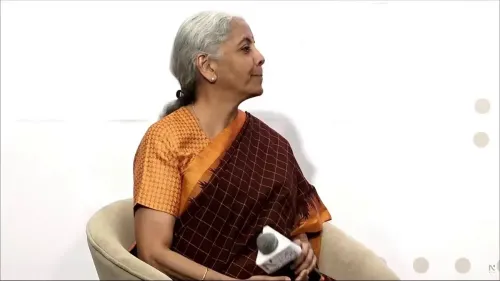
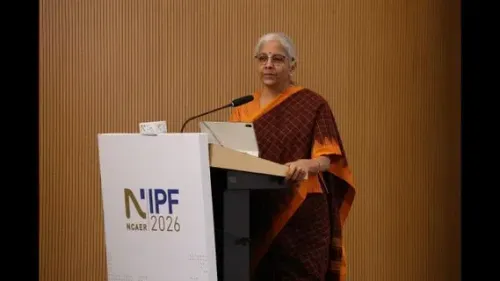
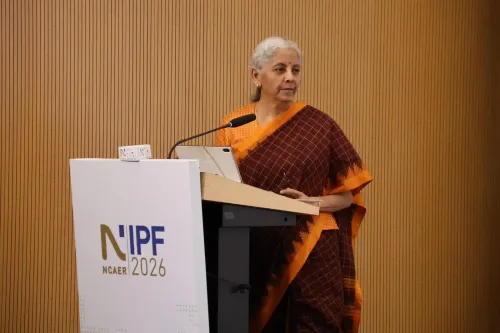
Sitharaman at CD Deshmukh Lecture: Prosperity Without Materialism
Synopsis
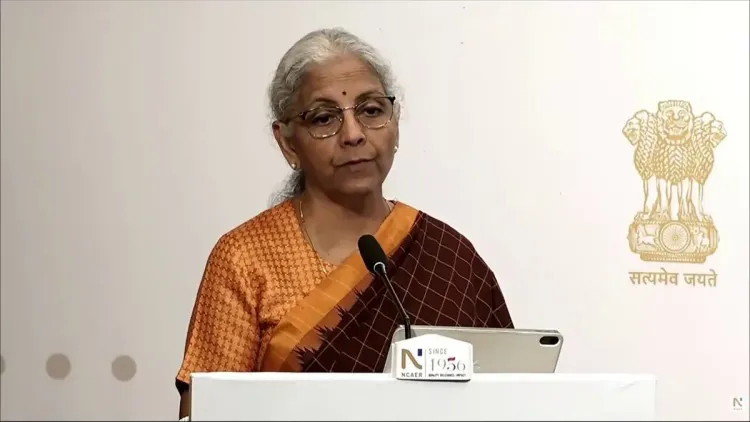
At the CD Deshmukh Lecture 2026 in New Delhi, Finance Minister Nirmala Sitharaman articulated a vision of Indian development that rejects consumerism and materialism, calling for prosperity anchored in civilisational heritage and global success without cultural loss.
Key Takeaways
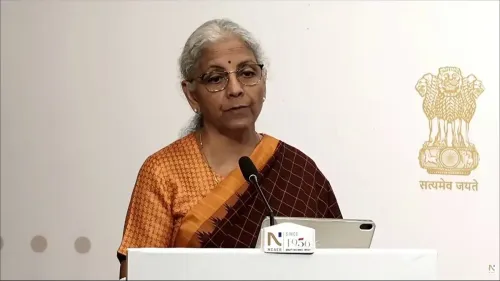
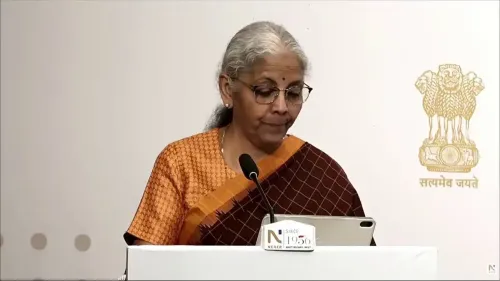
Union Finance Minister Nirmala Sitharaman delivered remarks at the CD Deshmukh Lecture 2026 in New Delhi on 6 August 2026 .
She called for India to become 'prosperous without becoming consumerist, wealthy without becoming materialistic.' The lecture is named after C.D.
Deshmukh , independent India's first Indian-born RBI Governor and later Finance Minister.
Sitharaman framed India's development as a distinct civilisational project, not a replication of Western consumer models.
The post was marked '1/n', indicating further segments of the lecture address are expected.
A vision that cuts against the grain of conventional development thinking arrived in New Delhi on 6 August 2026, when Union Finance Minister Nirmala Sitharaman used the prestigious CD Deshmukh Lecture 2026 to articulate what she called India's civilisational destiny — wealth without losing its soul.
Speaking at the annual lecture series named after C.D. Deshmukh — independent India's first Indian-born Reserve Bank Governor and later Finance Minister — Sitharaman drew a deliberate line between economic ambition and cultural identity. 'Our ambition is to create a society where modern progress is anchored in our civilisational heritage,' she said, framing prosperity not as an end in itself but as a means of preserving what she described as India's civilisational character.
The Three Rejections at the Heart of the Argument
The Finance Minister's formulation was built on three explicit contrasts: becoming 'prosperous without becoming consumerist, wealthy without becoming materialistic, and globally successful without losing our civilisational character.' Each pairing is a direct rebuttal of the assumption — common in development economics — that rising incomes inevitably reshape culture in the image of Western consumer societies. Sitharaman was, in effect, proposing a different model: growth that is both globally competitive and rooted in Indian tradition. The choice of the CD Deshmukh platform amplifies the message. Deshmukh himself was a figure who straddled colonial administration and independent India's early economic architecture — a man of deep learning who helped shape the RBI and later the finance ministry. Invoking that lineage at this lecture is its own argument: that India's economic institutions were never simply imported templates, but were shaped by men and women who thought in civilisational terms.A Recurring Thread in Sitharaman's Public Addresses
This is not the first time Sitharaman has paired growth targets with cultural rootedness. The framing is a recognisable strand in her public addresses — one that positions India's development not as catch-up with the West but as the realisation of a distinct civilisational project. What made the CD Deshmukh Lecture 2026 notable is the directness of the formulation: prosperity, yes; consumerism, no. The lecture thread was posted as part one of a series, signalling that fuller policy detail — or at least a more complete articulation of the argument — is expected in subsequent segments. The question the Finance Minister has now put on the table is sharper than it sounds: can a government simultaneously deliver double-digit aspiration and single-digit materialism? India's answer, if it comes, will be watched well beyond its borders.Point of View
Not just economically. By explicitly rejecting consumerism alongside poverty, she is staking out ideological ground that distinguishes India's growth model from both Western liberal capitalism and purely state-directed development. This framing has appeared before in her addresses, but the directness here — three paired contrasts in a single sentence — suggests a more deliberate effort to codify it as doctrine. The platform, a lecture honouring a figure central to India's early financial architecture, lends institutional weight to what might otherwise read as rhetorical flourish.
NationPress
21 Sept 2026
Frequently Asked Questions
What did Nirmala Sitharaman say at the CD Deshmukh Lecture 2026?
Sitharaman said India's ambition is to create a society where modern progress is anchored in civilisational heritage — prosperous without becoming consumerist, wealthy without becoming materialistic, and globally successful without losing its civilisational character.
What is the CD Deshmukh Lecture?
The CD Deshmukh Lecture is an annual series named after C.D. Deshmukh, independent India's first Indian-born Reserve Bank Governor and a former Finance Minister, honouring his contributions to India's economic institutions.
Who was C.D. Deshmukh?
C.D. Deshmukh was the first Indian-born Governor of the Reserve Bank of India and later served as Finance Minister, playing a foundational role in shaping India's early post-independence economic architecture.
What is Nirmala Sitharaman's vision for India's economic development?
Sitharaman has consistently framed India's development as a civilisational project — one that pursues global competitiveness and prosperity while retaining cultural identity and rejecting the materialism associated with Western consumer societies.
Where was the CD Deshmukh Lecture 2026 held?
The CD Deshmukh Lecture 2026 was held in New Delhi.