Sitharaman: States Must Be Empowered to Realise India's Ambitions
Synopsis
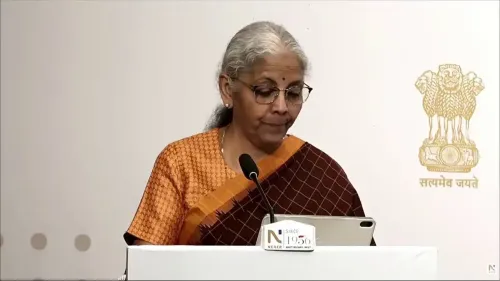
At the C.D. Deshmukh Lecture 2026 in New Delhi, Union Finance Minister Nirmala Sitharaman argued that India's development aspirations require the Centre to set direction while empowering every state — not just the advanced ones — with resources and capacity-building support.
Key Takeaways
Union Finance Minister Nirmala Sitharaman spoke at the C.D.
Deshmukh Lecture 2026 in New Delhi on 6 August 2026 .
She argued the Centre must set investment direction and policy, but cannot substitute for state-level implementation.
She stressed that every state — not just leading ones — must be empowered with resources and capacity to meet India's aspirations.
The lecture honours C.D.
Deshmukh , India's first Indian-born RBI Governor and a former Finance Minister.
Her remarks echo the policy arc from NITI Aayog's founding (2015) , the GST Council (2017) , and the 15th Finance Commission recommendations on higher tax devolution to states.
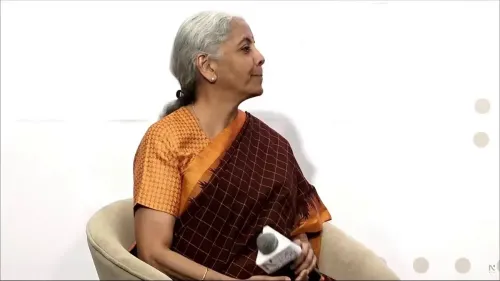
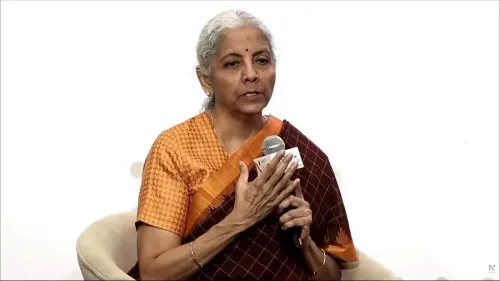
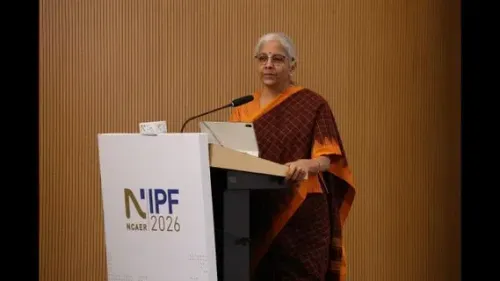
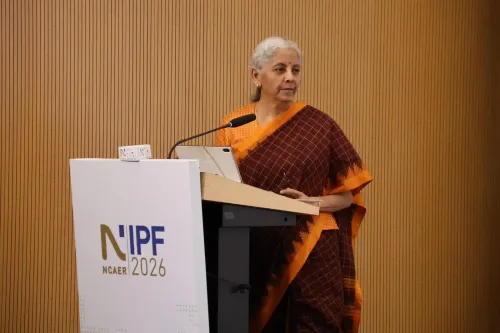
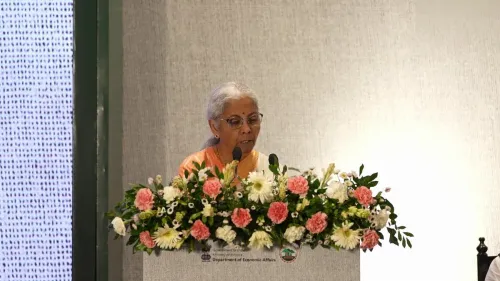
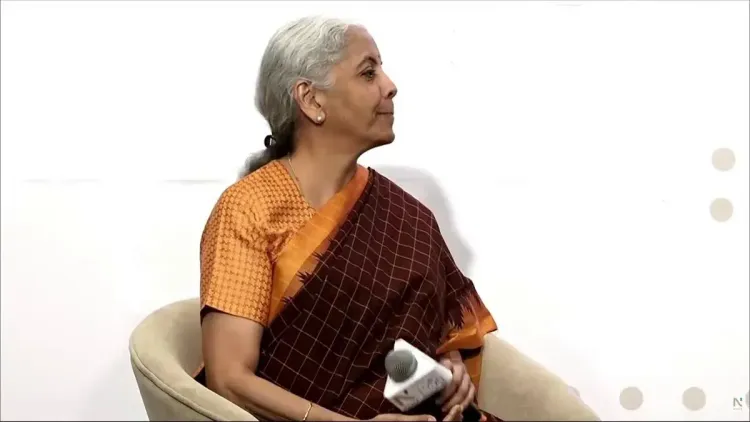
India cannot close its regional development gaps unless every single state — not just the prosperous few — is given the resources, the tools, and the capacity to grow. That was the sharp, unambiguous message Union Finance Minister Nirmala Sitharaman delivered at the C.D. Deshmukh Lecture 2026 in New Delhi on 6 August 2026, in remarks that cut to the heart of India's federalism debate.
The Centre's role — and its hard limits
Sitharaman drew a clear line between what the Centre can and cannot do. 'You need to have a Centre setting the right direction for attracting investments, framing the right policies and ensuring that parts of this country which have remained underdeveloped for a long time are brought on board to catch up with the rest of the country,' she said. The Centre, in her framing, is the architect — but it cannot be the builder in every state simultaneously.
'That role cannot be played by one or two states — never,' she added, a pointed acknowledgment that India's growth story cannot rest on the shoulders of its most advanced economies alone. The aspiration belongs to the whole country, or it belongs to no one.
Every state, not just the frontrunners
The Finance Minister's sharpest argument was about inclusion within the federal structure itself. Unless each state — her emphasis — is empowered, given resources, and equipped with the means to build capacity, she said, 'the aspirations of India cannot be met.' It is a formulation that implicitly calls out the uneven pace of development across India's 28 states and 8 Union Territories, where some states have raced ahead while others have lagged for decades.
The remarks carry institutional weight. The lecture series honours C.D. Deshmukh, India's first Indian-born RBI Governor (1943–1949) and later Finance Minister (1950–1956) — a figure who himself navigated the earliest tensions of Centre-State fiscal relations in independent India.
Cooperative federalism's unfinished business
Sitharaman's address sits within a decade-long policy arc. The Planning Commission was replaced by NITI Aayog in 2015 precisely to give states a greater voice in national planning. The GST rollout in 2017 created a constitutional body — the GST Council — where Centre and States negotiate tax policy together. The 15th Finance Commission recommendations, covering 2020–21 onwards, pushed higher tax devolution to states to widen their fiscal room.
Yet the gap between policy intent and ground-level capacity in lagging states remains a live tension — one that the Finance Minister's remarks at the Deshmukh Lecture put squarely back on the national agenda.
The real test of cooperative federalism is not how well it works for states that are already winning — it is whether it can lift the ones that have been left behind. Sitharaman just made clear she knows the difference.
Point of View
She implicitly signals that the Centre's investment-attraction agenda cannot succeed if lagging states remain structurally weak. This positions the Finance Ministry ahead of what could be a consequential cycle of GST Council negotiations and pre-Budget consultations on state grants. The framing also deflects opposition charges of centralisation by placing the onus of delivery back on states while reaffirming the Centre's enabling role.
NationPress
21 Sept 2026
Frequently Asked Questions
What did Nirmala Sitharaman say at the CD Deshmukh Lecture 2026?
She said the Centre must set the right direction for investment and policy, but that India's aspirations cannot be met unless every state — not just advanced ones — is empowered with resources and capacity-building support.
What is the CD Deshmukh Lecture?
It is an annual lecture series named after C.D. Deshmukh, India's first Indian-born RBI Governor (1943–1949) and Finance Minister (1950–1956), honouring his contributions to Indian economic governance.
What is cooperative federalism in India?
Cooperative federalism refers to the framework where the Centre and States work together on policy and implementation. Key institutions include NITI Aayog (2015), the GST Council (2017), and Finance Commission devolution recommendations.
Which states is Sitharaman referring to as underdeveloped?
She did not name specific states, but her remarks broadly refer to regions that have historically lagged in development indicators compared to more prosperous Indian states.
How does the 15th Finance Commission relate to state empowerment?
The 15th Finance Commission recommended increased tax devolution to states from the central divisible pool, giving them greater fiscal autonomy to fund development programmes — directly aligned with the capacity-building argument Sitharaman made.