Sitharaman Urges GCC-State Govt Partnerships at CII Summit
Synopsis
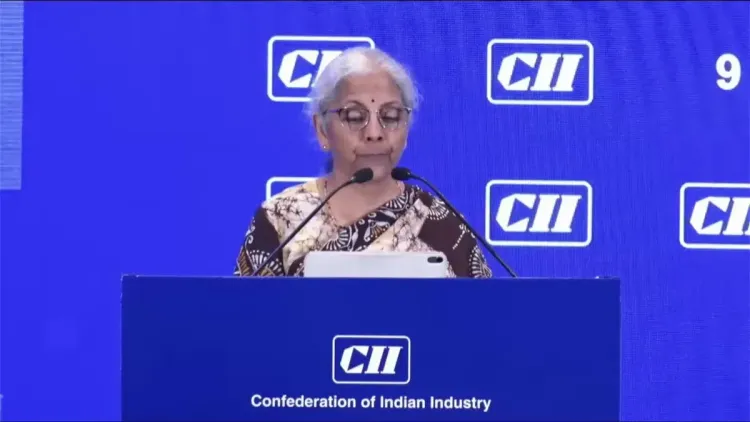
Finance Minister Nirmala Sitharaman, speaking at the CII National GCC Business Summit 2026, called on Global Capability Centers to deepen partnerships with state governments and city administrations to align infrastructure, skills, and institutional support with industry needs, citing CII's National and State Frameworks as tools for collaborative policymaking.
Key Takeaways
Finance Minister Nirmala Sitharaman addressed the CII National GCC Business Summit 2026 on 9 July 2026 .
She urged GCCs expanding into newer locations to engage actively with state governments and city administrations .
Such partnerships, she said, should shape infrastructure , skills , and institutional support in line with industry requirements.
The minister highlighted CII's National and State GCC Frameworks as valuable inputs for collaborative policymaking.
The remarks reflect India's broader federal approach to GCC-led FDI and high-value employment growth beyond traditional metro hubs.
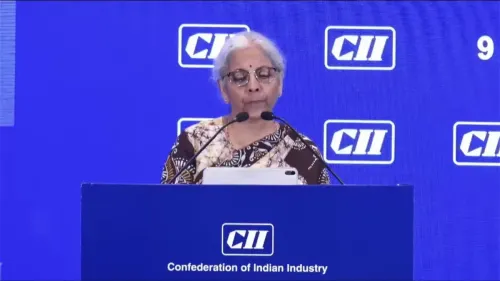
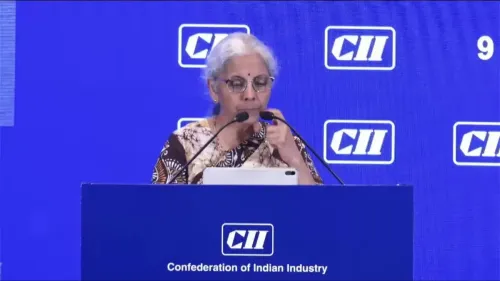
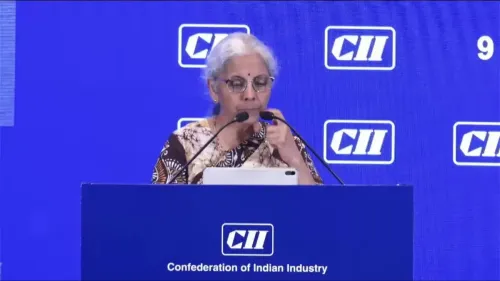
Union Finance Minister Nirmala Sitharaman on Thursday, 9 July 2026 called for deeper engagement between Global Capability Centers and state governments and city administrations, speaking at the CII National GCC Business Summit 2026. She urged that as GCCs expand into newer locations, such partnerships should help shape infrastructure, skills, and institutional support aligned with industry requirements.
Context
Addressing the summit, Sitharaman said the engagements between GCCs and local administrations would help policymakers 'appreciate the importance of GCCs.' She also highlighted the role of frameworks developed by the Confederation of Indian Industry (CII), describing the National and State Frameworks as providing 'valuable inputs for collaborative policymaking.'
The remarks were shared as part of a thread by her official handle, marked as the fourth in a series of posts from the summit, signalling a structured and multi-point address to the industry gathering.
Policy Backdrop
India has increasingly positioned Global Capability Centers as a significant driver of foreign direct investment, high-value employment, and technology transfer. Growth in the GCC sector has been spreading from traditional hubs such as Bengaluru, Hyderabad, and Pune to emerging cities, making sub-national partnerships more critical than ever.
CII has developed National and State GCC frameworks in recent years, designed to guide location decisions, talent pipelines, and regulatory support for multinational centers. These frameworks reflect a federal approach to investment facilitation that successive governments have encouraged industry associations to lead.
The emphasis on state and city-level coordination mirrors similar policy efforts in electronics manufacturing and data-centre development, where centre-state co-operation has been identified as a key enabler of scale.
Stakeholders and Impact
State governments and city administrations stand to gain from structured engagement with GCC operators, as the minister's remarks point toward a model where industry needs directly inform local infrastructure planning and skilling programmes. For GCC operators, formalised partnerships could reduce friction in setting up operations in non-metro locations.
The CII frameworks, positioned by Sitharaman as a ready resource, give states a template to adapt without building policy architecture from scratch. This is particularly relevant for smaller states and emerging cities competing to attract high-value technology and services investment.
What's Next
Attention will now turn to whether individual state governments adopt or adapt the CII National and State GCC Frameworks into their own investment and industrial policies. Any central incentives or regulatory changes for GCCs announced in the next Union Budget will also be closely watched by the industry.
The minister's call for greater sub-national engagement suggests that the Government of India sees federal co-operation — not just central policy — as the next lever for scaling the GCC ecosystem across the country.
Point of View
The Finance Ministry is effectively delegating the next phase of GCC growth to state capitals and city halls. This mirrors the playbook used in electronics manufacturing, where state competition for investment became the primary engine of scale. The political subtext is equally notable: with several state elections on the horizon, a GCC-friendly policy posture offers BJP-ruled and non-BJP states alike a shared economic agenda to rally around.
NationPress
8 Oct 2026
Frequently Asked Questions
What did Nirmala Sitharaman say at the CII GCC Summit 2026?
Finance Minister Nirmala Sitharaman urged Global Capability Centers to engage more deeply with state governments and city administrations to align infrastructure, skills, and institutional support with industry requirements, and highlighted CII's National and State GCC Frameworks as tools for collaborative policymaking.
What is a Global Capability Center or GCC in India?
A Global Capability Center (GCC) is an offshore unit set up by a multinational company in India to deliver technology, analytics, finance, or other high-value services. India hosts hundreds of GCCs, making it one of the world's largest GCC destinations.
What is the CII GCC framework?
The Confederation of Indian Industry (CII) has developed National and State GCC Frameworks that guide location decisions, talent pipelines, and regulatory support for multinational centers, providing states with a ready template to attract and support GCC investments.
Why is GCC expansion into newer cities important for India?
As GCCs move beyond traditional hubs like Bengaluru and Hyderabad into emerging cities, they bring high-value employment, technology spillovers, and FDI to a wider geography, making state and city-level partnerships critical for infrastructure and skills readiness.
What should states do to attract GCCs according to the Finance Minister?
According to Finance Minister Sitharaman, state governments and city administrations should actively engage with GCC operators to shape infrastructure, skills development, and institutional support, using frameworks like those developed by CII as a foundation for policy.