Sitharaman: Next GCC Wave to Go Beyond Metros
Synopsis
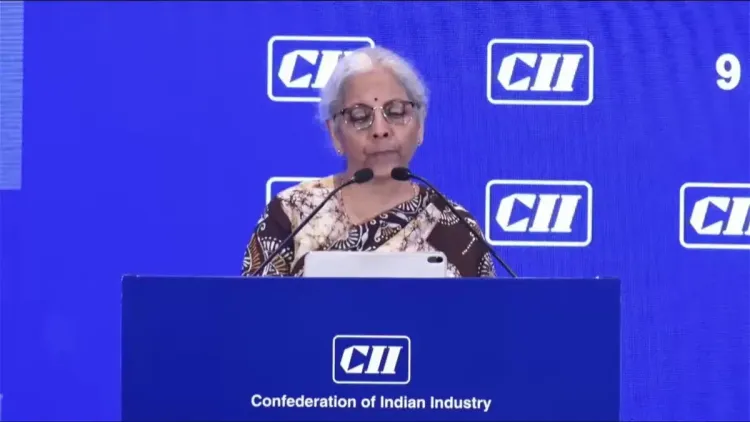
Finance Minister Nirmala Sitharaman told the CII National GCC Business Summit on 9 July 2026 that India's next wave of Global Capability Centres will spread well beyond traditional metros, with cities like Varanasi, Visakhapatnam and Tiruchirappalli emerging as competitive innovation hubs offering lower operating costs and deep engineering talent.
Key Takeaways
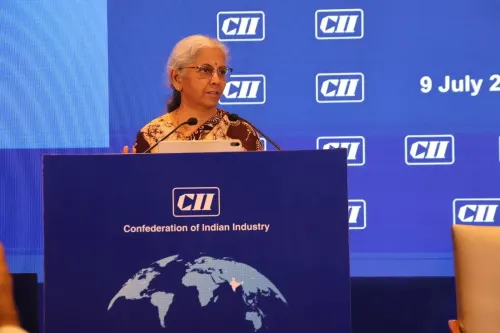
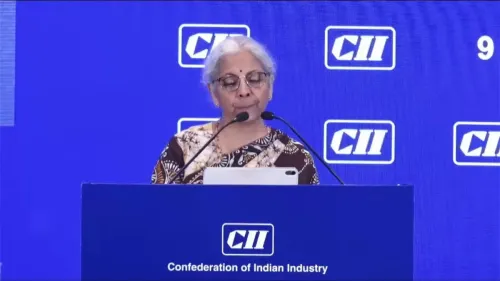
Finance Minister Nirmala Sitharaman addressed the CII National GCC Business Summit, 2026 on 9 July 2026 .
She stated that the first wave of roughly 2,000 GCCs was concentrated in metropolitan centres, but the next wave will be geographically far more diverse.
Cities named as emerging GCC destinations include Varanasi , Chandigarh , Visakhapatnam , Tiruchirappalli and Mysuru .
Sitharaman highlighted competitive operating costs and maturing innovation ecosystems as key drivers for tier-2 city growth.
The shift dovetails with infrastructure upgrades under the Smart Cities Mission and improved air connectivity across secondary cities.
State-level incentive policies and industry location reports in 2026–27 will be key indicators of whether the dispersal gains real traction.
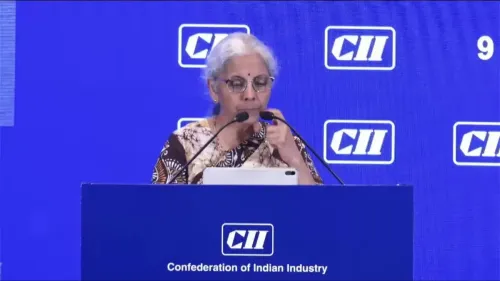
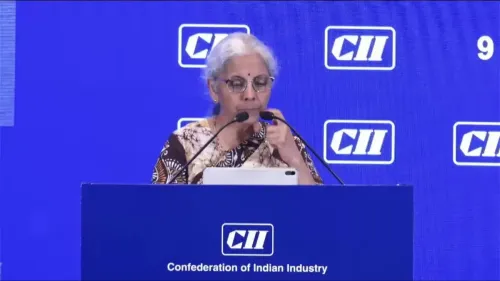
Union Finance Minister Nirmala Sitharaman on Thursday, 9 July 2026 called for a geographic broadening of India's Global Capability Centre ecosystem, arguing that cities such as Varanasi, Chandigarh, Visakhapatnam, Tiruchirappalli and Mysuru are poised to rival established tech hubs in attracting high-value multinational investment. She made the remarks while addressing the CII National GCC Business Summit, 2026.
Context
Speaking at the summit organised by the Confederation of Indian Industry (CII), Sitharaman observed that while the first wave of roughly 2,000 GCCs was concentrated in metropolitan centres, the next phase of growth would be 'geographically far more diverse.' She framed this not merely as a policy aspiration but as a structural shift: 'The geography of global value creation itself is changing.'
Her remarks singled out Varanasi, Chandigarh, Visakhapatnam, Tiruchirappalli and Mysuru as cities capable of producing breakthroughs in artificial intelligence, engineering design and product development — domains previously associated almost exclusively with Bengaluru, Hyderabad and Gurugram. She also cited competitive operating costs and rapidly maturing innovation ecosystems as twin drivers of this shift.
Policy Backdrop
India's GCC sector expanded sharply after 2014, when successive rounds of FDI policy liberalisation and ease-of-doing-business reforms lowered barriers for multinationals to set up captive operations. The country now hosts several thousand such centres, making it the world's leading destination for offshore capability hubs across technology, finance, engineering and research functions.
The push to decentralise GCC growth beyond the traditional Bengaluru–Hyderabad–Gurugram triangle has been a recurring theme in Union and state-level industrial policy. Infrastructure programmes including the Smart Cities Mission and expanded air connectivity have improved the operating environment in tier-2 cities, while engineering colleges in smaller state capitals continue to produce large graduate cohorts that multinationals find attractive.
Stakeholders and Impact
For multinational corporations, the Finance Minister's signal reinforces a cost-diversification rationale: real-estate and talent costs in Bengaluru and Hyderabad have risen sharply, making secondary cities increasingly competitive on a total-cost-of-operations basis. For tier-2 city professionals, a genuine GCC wave could mean access to global-standard roles without relocating to a metro.
State governments stand to benefit through direct employment, tax revenue and ancillary economic activity. Cities such as Visakhapatnam — already an emerging industrial and port hub — and Tiruchirappalli, home to established engineering institutions, are seen as natural early beneficiaries of any policy-backed dispersal effort.
What's Next
Attention will now turn to whether state budgets for 2026–27 translate the Finance Minister's vision into concrete incentive frameworks — land allocation, power tariff concessions and skill-development partnerships targeted specifically at GCC investors. Industry trackers at CII and allied bodies are expected to release location reports monitoring actual headcount additions outside the top three metros in the coming months.
If secondary cities do absorb a meaningful share of new GCC mandates, it would mark one of the more consequential structural shifts in India's services-sector geography since the IT boom of the late 1990s — and a validation of the long-standing policy goal of distributing high-value employment more equitably across the country.
Point of View
She is effectively signalling to state governments that the Centre views tier-2 GCC growth as a priority, which could accelerate competitive incentive-setting among states. The framing around artificial intelligence and engineering design is deliberate: it positions India's secondary cities not as back-office alternatives but as genuine innovation nodes, a narrative upgrade that matters for attracting higher-value mandates. Whether the rhetoric translates into binding policy — through Union budget allocations or state-level frameworks — will determine how consequential this speech ultimately proves.
NationPress
8 Oct 2026
Frequently Asked Questions
What did Nirmala Sitharaman say at the CII GCC Summit 2026?
Finance Minister Nirmala Sitharaman said that while the first roughly 2,000 Global Capability Centres were concentrated in metros, the next wave of GCC growth will be geographically far more diverse, with cities like Varanasi, Chandigarh, Visakhapatnam, Tiruchirappalli and Mysuru emerging as competitive innovation hubs.
Which tier-2 cities did Sitharaman mention for GCC growth?
She specifically named Varanasi, Chandigarh, Visakhapatnam, Tiruchirappalli and Mysuru as cities capable of hosting next-generation GCC activity in artificial intelligence, engineering design and product development.
Why are tier-2 cities becoming attractive for Global Capability Centres in India?
Tier-2 cities offer competitive operating costs compared to metros like Bengaluru and Hyderabad, and they are rapidly developing as innovation centres with large pools of engineering talent and improving infrastructure.
What is a Global Capability Centre (GCC)?
A Global Capability Centre is a captive offshore unit set up by a multinational corporation to handle technology, finance, engineering, research or other specialised functions. India is the world's leading destination for GCCs.
What will determine if India's GCC decentralisation succeeds?
State-level incentive policies in the 2026–27 budget cycle — including land, power and skill-development support — and industry location reports tracking actual headcount additions outside the top three metros will be the key indicators to watch.