Rajasthan Q1 FY2026-27 revenue hits ₹33,969 crore, up 11.54% year-on-year
Synopsis
Rajasthan's Q1 FY2026-27 revenue hit ₹33,969 crore — an 11.54% jump year-on-year — as CM Bhajan Lal Sharma ordered a sweeping enforcement push across excise, mining, transport, and GST departments. The state is already India's first to deploy faceless GST scrutiny and ranks third nationally in return filing, signalling a rare combination of fiscal growth and administrative modernisation.
Key Takeaways
Rajasthan recorded revenue receipts of ₹33,969 crore in Q1 FY 2026-27 , up 11.54% year-on-year.
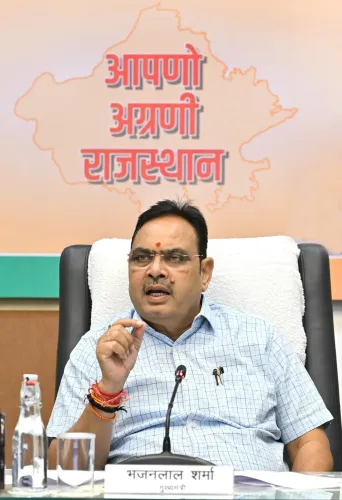
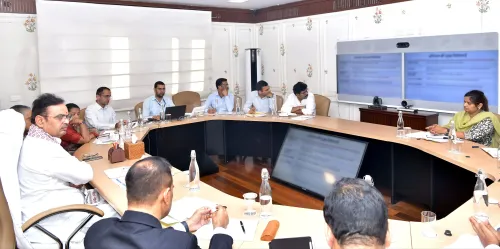
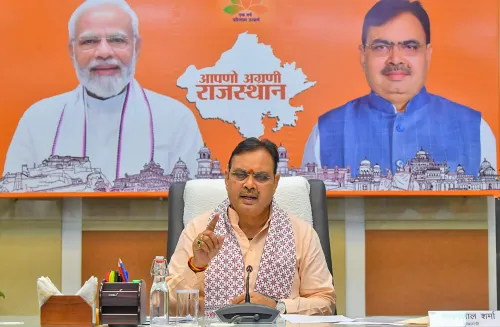
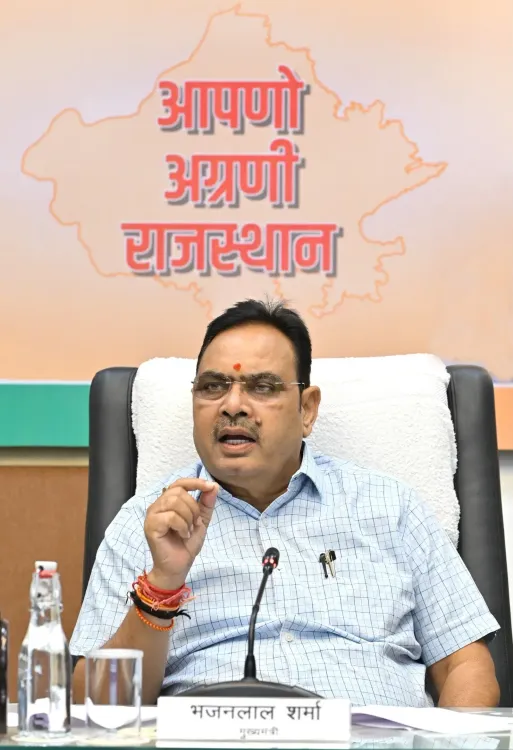
Chief Minister Bhajan Lal Sharma chaired a high-level review on 9 July and directed all revenue departments to intensify anti-evasion action.
Rajasthan is the first state in India to implement faceless GST scrutiny and ranks third nationally in GST return filing.
The Mines and Petroleum Department was directed to use GPS and CCTV under the e-Ravanna platform to curb illegal mining.
Chief Minister Sharma directed Urban Improvement Trusts (UITs) to develop new residential schemes with modern civic amenities.
The state serves 8.5 crore citizens ; all departments were asked to coordinate to meet annual revenue targets for FY 2026-27.
Rajasthan recorded revenue receipts of ₹33,969 crore in the first quarter of FY 2026-27, marking an 11.54% rise over the corresponding period last year, officials informed a high-level review meeting chaired by Chief Minister Bhajan Lal Sharma in Jaipur on Thursday, 9 July. The figures signal a sustained upswing in the state's fiscal momentum as the government doubles down on anti-evasion enforcement across key revenue departments.
CM Sharma's Directives at the Review Meeting
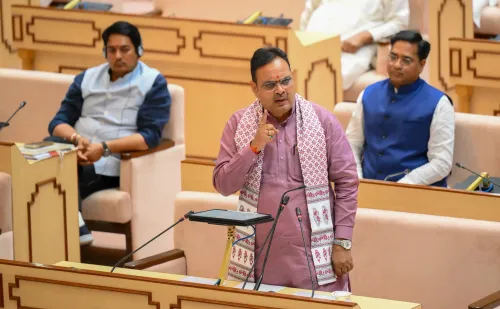
Chief Minister Bhajan Lal Sharma directed all revenue-generating departments to sustain consistent collection momentum throughout the financial year and ensure annual targets are met without deviation. He called for strict, visible action against tax evaders and asked departments to deploy technology, innovation, and decoy operations to tighten enforcement. Sharma also instructed officials to study best practices adopted by other states and integrate advanced technologies to make tax administration more efficient and transparent.
He stressed timely disposal of GST-related cases, effective legal representation in pending court matters, and rigorous enforcement of GST return filing compliance.
Department-Wise Action Plan
The Chief Minister directed the Excise Department to intensify its campaign against illicit liquor and ensure time-bound disposal of seized vehicles. The Registration and Stamps Department was asked to expand geo-tagging and expedite registration-related case disposal.
To curb illegal mining, the Mines and Petroleum Department was instructed to strengthen monitoring through GPS and CCTV-enabled systems under the e-Ravanna platform. The State Transport Department was directed to act against illegal vehicles and unregistered vehicle body-building units, with fixed accountability for enforcement officials.
The Labour Department was told to strengthen cess collection from construction activities to ensure adequate funding for labour welfare schemes, with monthly monitoring of ongoing construction projects mandated to improve compliance.
Technology-Driven Reforms and National Rankings
Officials told the meeting that Rajasthan has become the first state in India to implement faceless GST scrutiny and currently ranks third nationally in GST return filing. The state government is also leveraging digital initiatives — including the Excise Department's informer scheme, e-registration services, and GPS-based monitoring of mining activities — to improve transparency and plug revenue leakages.
Notably, this comes amid a broader national push by states to modernise tax administration and reduce dependence on Centre transfers, making Rajasthan's technology-first approach a potential model for others.
Urban Development and Land-Use Reforms
Reviewing urban development, Chief Minister Sharma directed Urban Improvement Trusts (UITs) to prepare new residential schemes equipped with modern civic amenities, including drinking water, sewerage, electricity, parks, and parking facilities. He also asked the Revenue Department to simplify and make land-use change procedures more transparent and time-bound.
What's Next
State Chief Secretary V. Srinivas and senior officials from the Finance, Revenue, Mines, Transport, Urban Development, and other departments attended the meeting. The Chief Minister emphasised that every department must work in coordination to fulfil the aspirations of the state's 8.5 crore citizens and contribute to building a developed Rajasthan. With Q1 targets showing strong growth, sustained enforcement and technology adoption will be critical to maintaining the trajectory through the remaining three quarters of FY 2026-27.
Point of View
But the real story is whether Rajasthan's enforcement-first posture translates into structural compliance gains or merely front-loads collections. Being the first state to deploy faceless GST scrutiny is a genuine institutional milestone — but third place in return filing nationally leaves room to question depth of coverage. The directive to study best practices from other states suggests the administration is aware of its own gaps. The test will be Q2 and Q3 numbers, when the novelty of crackdowns fades and only systemic reforms sustain growth.
NationPress
9 Jul 2026
Frequently Asked Questions
How much revenue did Rajasthan collect in Q1 FY 2026-27?
Rajasthan recorded revenue receipts of ₹33,969 crore in the first quarter of FY 2026-27, representing an 11.54% increase over the same period last year. The figures were presented at a high-level review meeting chaired by Chief Minister Bhajan Lal Sharma on 9 July.
What actions did CM Bhajan Lal Sharma order at the revenue review meeting?
Chief Minister Bhajan Lal Sharma directed all revenue-generating departments to intensify action against tax and revenue evasion using technology, innovation, and decoy operations. He also ordered the Excise Department to crack down on illicit liquor, the Mines Department to deploy GPS and CCTV monitoring, and the Transport Department to act against illegal vehicles.
What makes Rajasthan's GST administration nationally significant?
Rajasthan is the first state in India to implement faceless GST scrutiny, reducing human interface and improving transparency. The state currently ranks third nationally in GST return filing compliance, according to officials at the review meeting.
How is Rajasthan using technology to improve revenue collection?
The state is deploying GPS and CCTV-enabled systems under the e-Ravanna platform to monitor mining activities, using e-registration services for the Registration and Stamps Department, and running an informer scheme through the Excise Department. Geo-tagging is also being expanded to expedite property registration cases.
Who attended the high-level revenue review meeting in Jaipur?
State Chief Secretary V. Srinivas and senior officials from the Finance, Revenue, Mines, Transport, Urban Development, and other departments attended the meeting chaired by Chief Minister Bhajan Lal Sharma on 9 July in Jaipur.